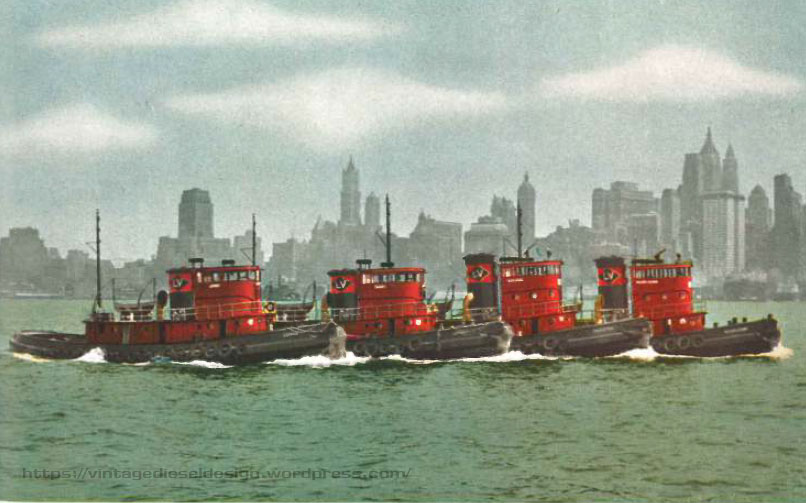
In 1948, the Lehigh Valley Railroad put in an order for a quartet of tugboats. The tugs, designed by TAMS Inc. Naval Architects under Richard Cook and Joseph Hack, were a typical 106’ harbor tug. I will get into this more in a future topic (or whenever I get my damn book finished!). The Diesel-Electric tugs were powered through a package put together by General Motors Diesel – Cleveland Diesel main engine, Detroit Diesel generators, Allis-Chalmers main generator, Westinghouse propulsion motor, and electrical gear provided by Lakeshore Electric. Construction of the tugs began in early 1949 at Jakobson Shipyard in Oyster Bay, Long Island. The tugs would be named the “Wilkes-Barre”, “Hazleton”, “Cornell”, and “Lehigh”. The 4 tugs were identical, with the exception that “Cornell” and “Lehigh” had wheelhouses slightly lower than the other pair for serving the isolated terminals on the Harlem River.
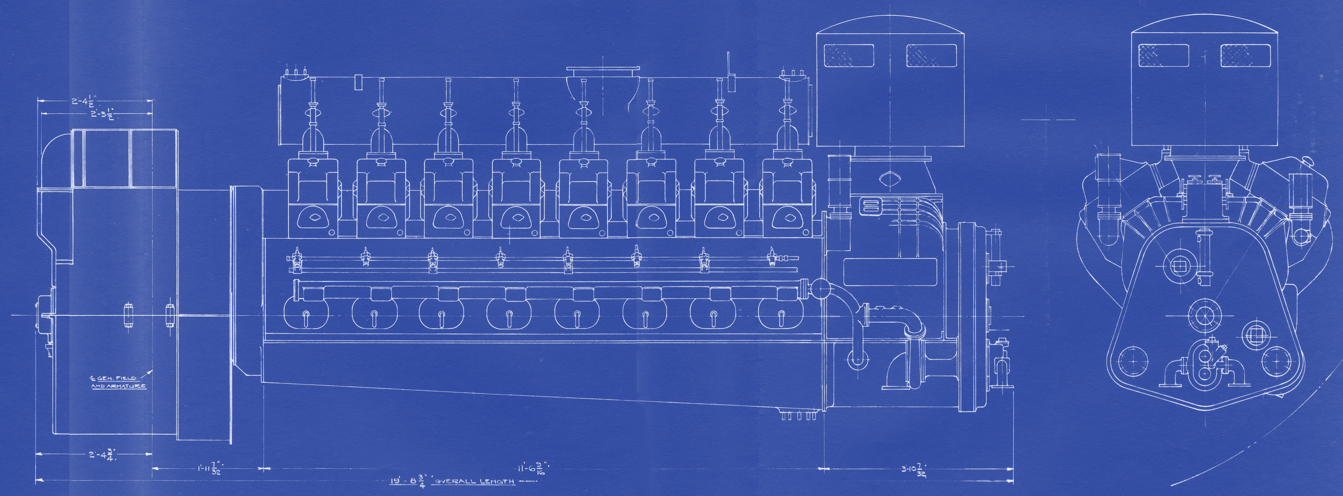
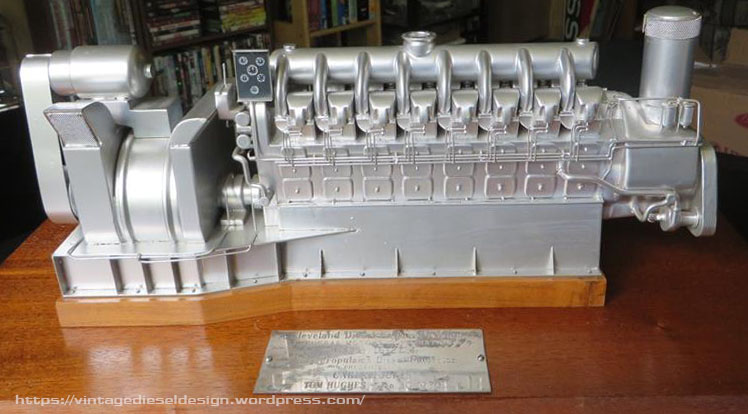
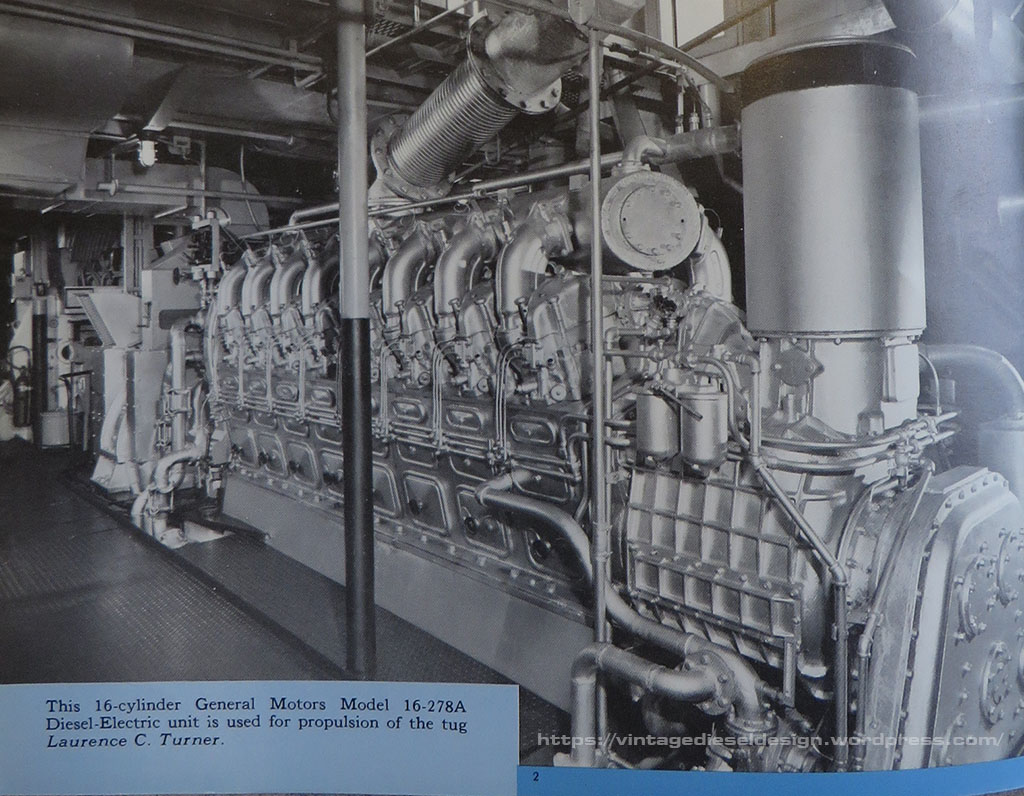
The tugs were powered by the typical Cleveland Diesel Navy Propulsion Package. A 16-278A engine, rated at 1655HP driving an Allis-Chalmers 1090kW DC generator, mounted on a common base. In turn, this powered a Westinghouse 1380HP propulsion motor, driving a 10’ propeller through a Farrel-Birmingham 4.132:1 reduction gear. At the time, WWII surplus equipment was vast. Cleveland Diesel was acquiring little used engines from various craft and giving them a complete rebuild to as new condition, complete with new serial numbers. The main generators and propulsion motors were both surplus Destroyer-Escort surplus equipment as well.
“Cornell” was launched on April 4th, 1950. After launching, diver Edward Christiansen went down to remove launching timbers. One of the large pieces of wood broke and not only pinned him against the tug, but also pinched off his airline. His son Norman led a rescue effort, and in 21 minutes were able to get him back up to the surface after using a yard crane to roll the tug slightly. Once on the surface, firefighters were able to revive Edward, and he was taken to the hospital.
Cleveland Diesel order #5782 consisted of the following engines:
“Wilkes Barre”– Original engine #55341, installed in US Navy “LSM-277”, shipped 9/5/1944. Engine removed upon decommissioning, factory rebuilt, and assigned new engine #55944 upon being shipped 5/13/1949 for use by LV.
“Hazleton”– Original engine #55342, installed in US Navy “LSM-277”, shipped 9/5/1944. Engine removed upon decommissioning, factory rebuilt, and assigned new engine #55945 upon being shipped 5/13/1949 for use by LV.
“Cornell”– Original engine #12001, installed in US Navy DE-526 “Inman”, shipped 10/15/1943. Engine removed upon decommissioning, factory rebuilt, and assigned new engine #55946 upon being shipped 8/29/1949 for use by LV. This engine was replaced 12/1950 with factory rebuilt engine #55956 (engine only, less base & generator, shipped 12/15/1950), originally from “LSM-184”, engine #55347, shipped 9/7/1944.
“Lehigh”– Original engine #55654, installed in US Navy “LSM-436”, shipped 1/23/1945. Engine removed upon decommissioning, factory rebuilt, and assigned new engine #55946 upon being shipped 3/21/1950 for use by LV. In the early 1990s, while owned by Moran Towing, the “Lehigh” (then called “Swan Point”) received the engine from the scrapped NY Cross Harbor tug “Brooklyn III”, the former New Haven tug “Cordelia”, which was a WWII surplus engine like all of the rest, originally in Navy DE-259 “William C. Miller”, which is ironic, as the Bethlehem below, also received one of her engines.
Lehigh Valley would return in 1951/53 for two more tugs of the same design, with some slight differences. These tugs were powered by the same propulsion package, of WWII surplus equipment.
Cleveland Diesel order #8112:
“Capmoore”– Original engine #11734, installed in US Navy DE-259 “Wm. C. Miller” , shipped 5/1/1943. Engine removed upon decommissioning, factory rebuilt, and assigned new engine #55964 upon being shipped 4/19/1951 for use by LV.
Cleveland Diesel order #314
“Bethlehem”– Original engine #11736, installed in US Navy DE-259 “Wm. C. Miller”, shipped 5/1/1943. Engine removed upon decommissioning, factory rebuilt, and assigned new engine #55966 upon being sold for commercial use. Original order canceled, reassigned engine #55991 upon being shipped 5/8/1953 for use by LV. “Bethlehem” was re-powered by an Alco 16-251 in the early 1990s, and is the only other surviving LVRR tug, now working in Guyana.
Naturally, with the downfall of the railroads maritime traffic, the railroad would start selling the tugs off starting in the early 1960s. “Cornell” would last until 1970, with Bethlehem being the final LV tug, sold off in 1976. As noted above, for an unknown reason, the engine in the “Cornell” failed almost immediately after delivery and the bare engine (no base or generator) was replaced by Cleveland.
————————————————————–
The US Fleet Tug “USS Cabezon” – SS 334, slid down the ways of Electric Boat in Groton, CT on August 27th, 1944, sponsored by Mrs. T. Ross Cooley. “Cabezon” was on the tail end of WWII sub construction, specifically part of the 120 boat Balao class. Construction started with her keel laying on November 18th, 1943. She was placed into service on December 30th, 1944, and after training went on to Pearl Harbor in April of 1945, under the command of George W. Lautrup Jr., making this his 10 WWII patrol.


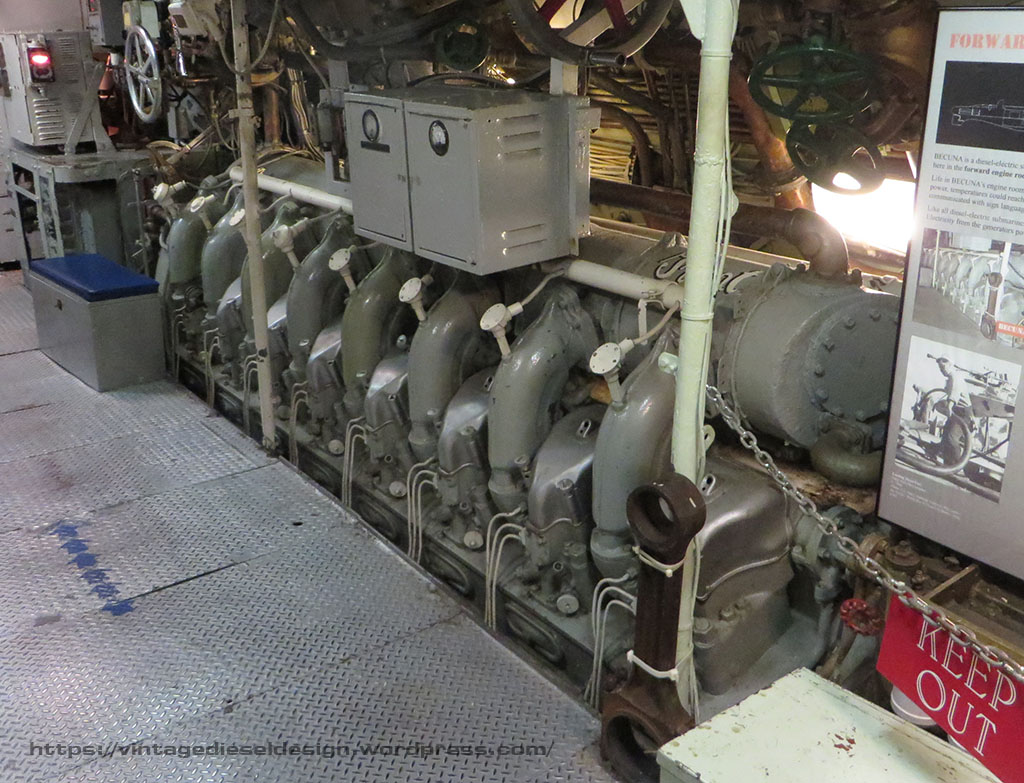
“Cabezon” was powered by 4 Cleveland Diesel, 1600HP 16-278A engines, driving 4 GE 1100kW DC generators, with 4 GE 1375HP propulsion motors, rated for 5400HP on the surface and 2740 submerged. She had a single Cleveland 8-268A 300kW auxiliary diesel, and 256 Exide VLA47B battery’s.
After arriving in Pearl, “Cabezon’s” crew underwent more training. During which an accident occurred. The 4 outer rear torpedo tube doors were opened, while 2 of the inner doors were open. The sub immediately began to flood. Reid Harrison Peach Jr., TM1c, William Cliffard Markland, TM1c and Brownie Walter Szozygiel, TM1c were each awarded the Navy Marine Corps medal for their action in saving the sub.

“Cabezon” went on her first WWII patrol starting May 25th, 1945, in the Okhotsk Sea and Kurile Islands, operating in attack task group 17.15 with subs “USS Apogon”, “USS Dace” and “USS Manta”. “Cabezon’s” war patrol report is fairly tame, being so late into the war. On June 1st, they spotted a floating mine, which they sunk with the .50 caliber machine gun. A second was spotted June 6th, which exploded after they hit it with the .50 cal. On June 18th, “Apogon” made contact with a Japanese convoy, attacked and sunk 3 ships by midnight. At 0130, another contact was made, in range of “Cabezon”. After 30 minutes of pursuit, she launched 3 Mk. 18-2 torpedoes from 2250 yards. Two hits were observed from the bridge, as well as 3 timed explosions, and the contact was reported sinking at 0223. June 29th – Another contact made at 2145, lasting until 0025, when it was discovered a shorting out heater was the cause. “Cabezon’s” war patrol ended July 10th, when she arrived at Midway.
“Cabezon” would be credited with sinking one unidentified Japanese escort (Later identified as the “Zaosan Maru”), rated at 4000 tons. 103,485 gallons of fuel were used during the trip, which covered 10,275 miles. She had 21 torpedoes, 32,510 gallons of fuel and provisions left for 15 days. “Cabezon” went on to Pearl for her refit period and left for Saipan on August 4th. Hours before leaving for her 2nd patrol, WWII ended. “Cabezon” stayed in the area, providing targeting practice for surface ships, before leaving for the Philippine Islands in early September to become part of the new Submarine Squadron 5, with subs “USS Chub”, “USS Brill”, “USS Bugara”, “USS Bumper”, “USS Sea Dog”, “USS Sea Devil” and “USS Sea Fox”. In December, Squadron 5 returned to Manilla, and joined up with the “USS Chanticleer” and Destroyer Escorts “Earl K. Olsen” and “Slater” (Now a fantastic museum ship in Albany) for training exercises. “Cabezon” would go on to do a short stint in San Diego, and later Pearl Harbor, doing trips for the Naval Reserve. In 1947, she took part in Operation Blue Nose, exploring under the Polar Ice Caps along with subs “USS Boarfish”, “USS Caiman” and tender “USS USS Nereus”. “Cabezons” final trips would be in two reconnaissance patrols, one in March-July of 1950, and the 2nd April-October of 1952 between Hokkaido Japan, and Sakhalin, USSR.
“Cabezon” would set out for Mare Island in April of 1953 where she was laid up in the Pacific Reserve Fleet. She was recommissioned in April of 1960 as a Naval Reserve Training boat in Tacoma Washington, and reclassed in 1962 as an Auxiliary Research Submarine, until being decommissioned in 1970. She was struck from the roster on May 15th, 1970, and sold for scrap to Zidell Explorations, of Portland Oregon in December of 1971, for $69,230.
While on Patrol, “Cabezon” had a unique engine failure, as outlined in her war patrol report below. #4 main engine, is one of the Portside engines on the sub, on the after end (#2 and #4 are Port, #1 and #3 Starboard). The port engines are both left hand rotation engines.

————————————————————–
In 1970, Lehigh Valley sold the tug to Ross Towboat, of Boston Massachusetts, keeping her original name in the process. Ross was actively engaged in Ship Docking, as well as barge towing in Boston, as well as all New England. Ross would do some slight modifications to the tug, including adding an internal staircase to access the pilothouse, as well as add a full galley and staterooms to have a full-time crew on board, whereas the tug did only 8-hour day work for LVRR. In early 1972 the tug had a catastrophic main engine failure. Thanks to my friend Douglas Della Porta of Eastern Towboat, he recounted the story of what happened.

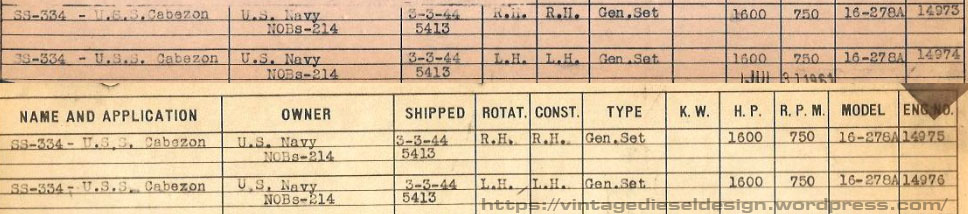
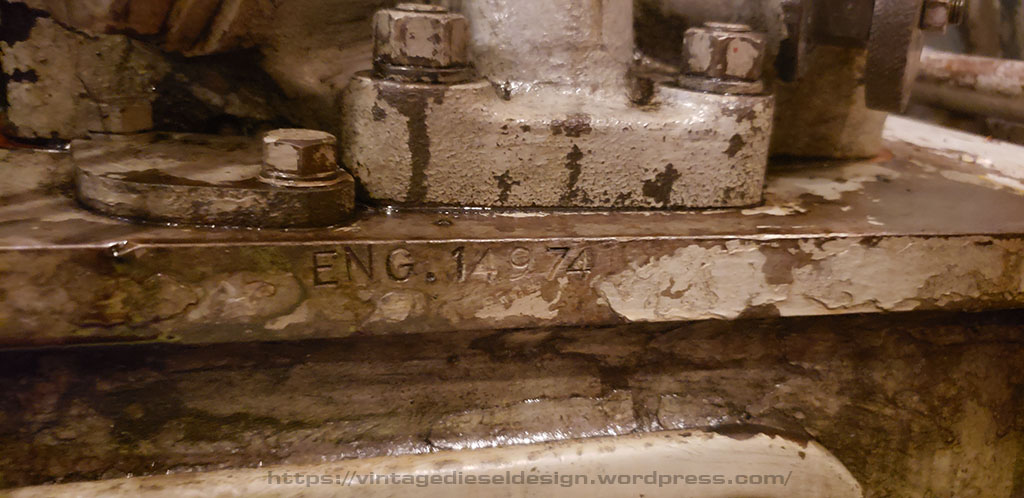
While transiting the Cape Cod Canal, the tug lost oil pressure. Unfortunately, they needed to keep moving, and thus at the end of the day, the engine was destroyed. Ross found an engine out West – Engine 14974, and installed it in the tug as a replacement – The 3rd engine in the “Cornell” (same exact model every time). This is the engine still in the “Cornell” today. Several years ago, my good friend J. Boggess presented me with the Cleveland records above, which is when we found out the engine in the “Cornell”, was actually from the “Cabezon”. There is a 50/50 shot that this is the engine that was almost destroyed while in the “Cabezon” as noted above.

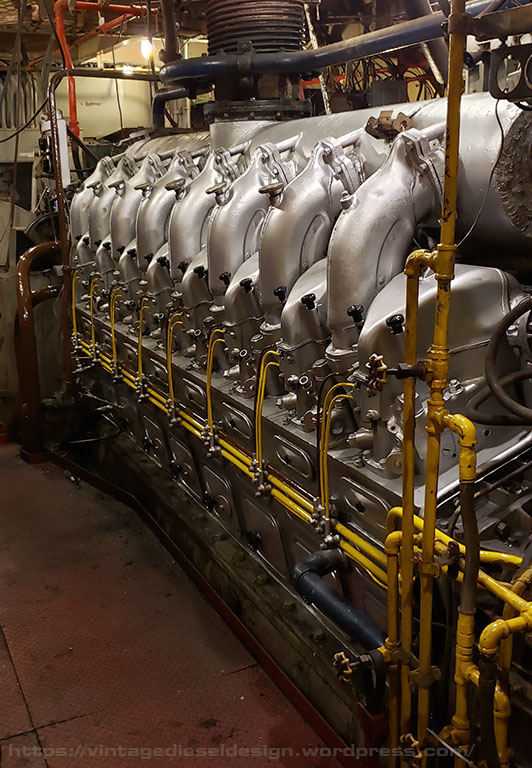
This past July I embarked on a project I have been planning for some time – To repaint the engine finally. “Cornell” was a working boat – And shes a leaker (like all 278’s…EMD learned from this mistake, and put a box around them all!), thus painting was never a huge priority. Since being retired from towing service this year, and with some downtime, I got to it. The project commenced on the Starboard side, with 2 gallons of de-greaser, and lots of rags. I opted to paint her in Aluminum, the original color Cleveland Diesel painted all of their engines. Ill tell you – it was bright. Many years ago, one of the first things I painted on “Cornell” was the fuel lines on the block. Tugs typically have a good portion of the pipelines color coded for easy spotting of what they do – thus yellow for fuel. After repainting the fuel lines yellow, and the over speed trip line brown, I painted the hand hole knobs black, just to help break it up a bit, and give it a bit of her own character.


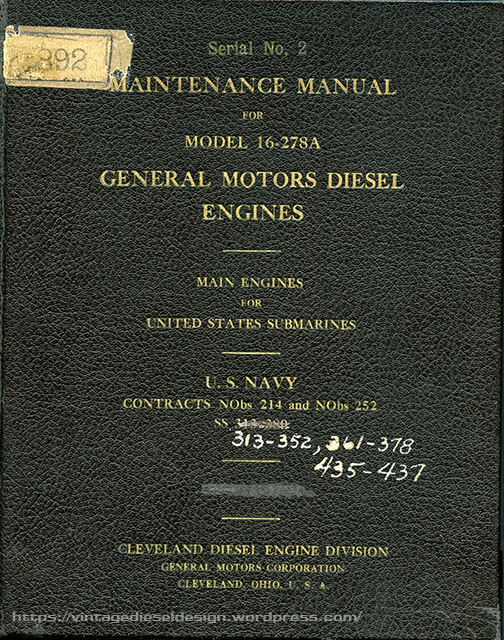
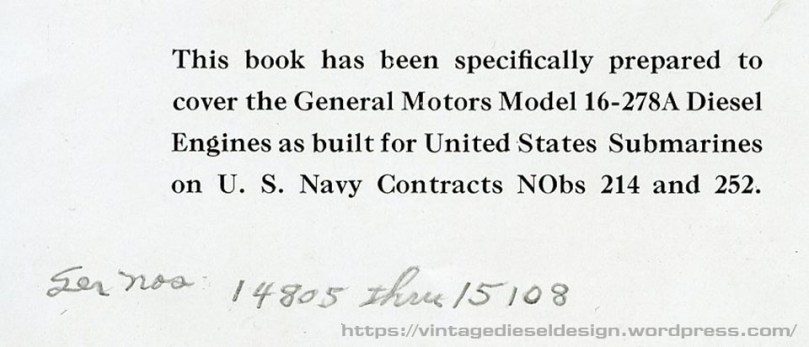
Something on my wish list for several years has been a Cleveland Diesel issued 278A manual, specifically for a submarine. I was able to track one down earlier this year, and best of all, it is specific to the engine in the Cornell.


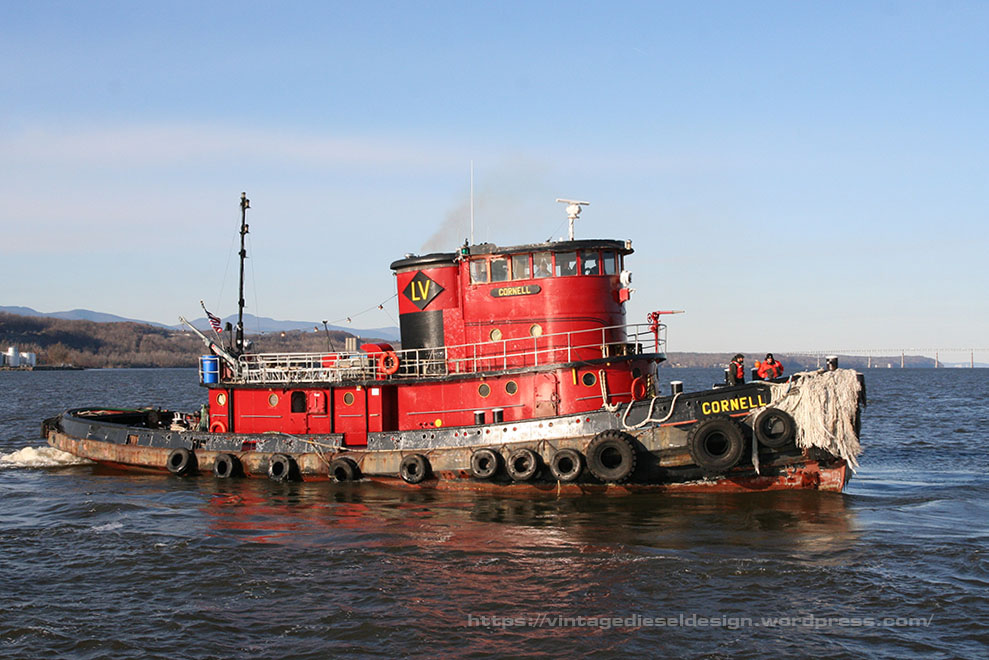
“Cornell” spent the better part of the 1970’s for Ross, doing all kinds of odd jobs, including a long trip up to Sturgeon Bay, Wisconsin to pick up the Boston Aquariums new barge. Not long after the engine was swapped, the main generator, quite literally let loose while towing a barge, and was also swapped out. She would go on to work for Boston Fuel Transport/Boston Towing until being sold privately in 2003, and ultimately to Lehigh Maritime Corp. in 2007.
Ill close this post out with a photo of the “Cornell” at work. Now I just need to paint the other side of the engine…and everything else down there…
A few sources:
Navsouce page on USS Cabezon
Wiki page on USS Cabezon
Wreck of the Zaosan Maru
Museum Ship “Slater”
“The Fleet Submarine in the US Navy” by Commander John H. Alden
USS Cabezon Report of War Patrol #1




 Vintage Diesel Design