Tug Profiles II – Thomas E. and William J. Moran

3rd in our series of Historic Boat Profiles – Links to the others will be on the bottom of this posting.

New York City is home to one of the most recognizable towing companies in the world – Moran Towing & Transportation.  Moran was founded back in 1860 by Michael Moran.  The company would become one of the largest tugboat firms on the east coast.   But, this is not a history of Moran Towing – for that I defect to the company history on Tugboatinformation: https://tugboatinformation.com/company.cfm?id=59

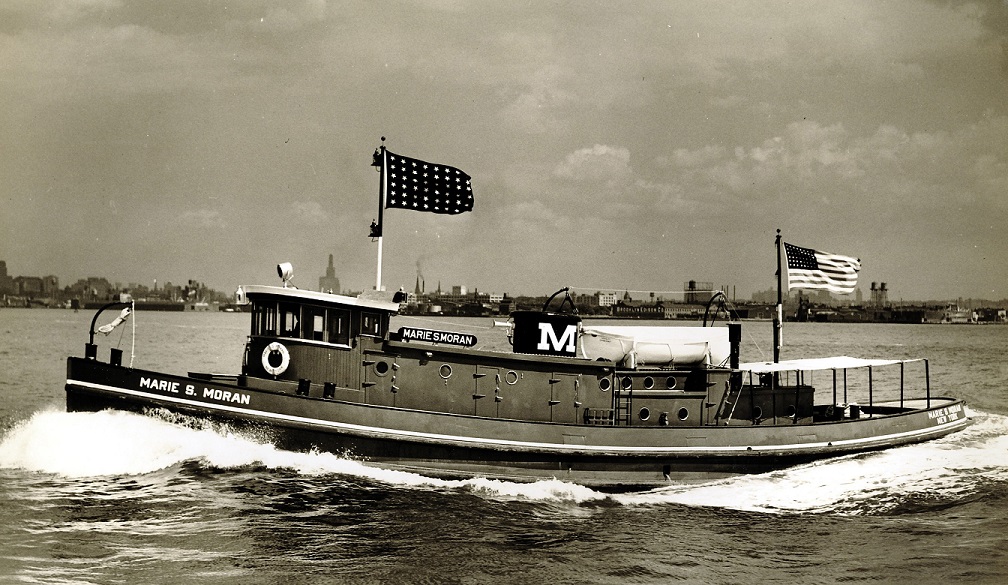
In 1936, Moran was operating a fleet of around 40 tugboats, from small Canal tugs, to larger ocean going and everything in-between.   A new era opened in the fall of 1936 – The Marie S. Moran was launched.  She would become Moran’s very first diesel powered tug. 
555
Winton publicity photo of the brand new Marie S. Moran. Courtesy of the Dave Boone Collection.

The Marie would be powered by a single direct reversing Winton 6-164 engine, a huge 15”x22” engine making a mere 550HP at 275RPM.  The 89’ tug was designed by Edmund J. Moran himself, and built at Pennsylvania Shipyards in Beaumont, Texas.  The low profile tug was designed for use in the New York State Barge canal, composed of the Erie, Champlain, Oswego, Cayuga & Seneca canals, all of which required the low profile due to numerous low bridges and whatnot.  When Marie S. Moran was constructed, Diesel engines were still being “figured out” so to speak, and companies would tend to try different engines and combinations.  Like many tugs of the era, the Marie would be retrofitted with a retractable wheelhouse later in her life (more on this later), and the original Winton would be replaced with a more reliable 12-567 engine.  The tug was sold foreign in 1961.  Two more similar tugs would be built in 1937, the Eugenia M. Moran and Elizabeth W. Moran, powered by Alco-Sulzer engines. Both of these would also be sold foreign in 1950’s as well.

 Skip ahead just a few more years to 1938.  Electro-Motive, under GM introduced the new 567 engines, and Moran was looking for some more canal tugs, so the two would become one with the introduction of Thomas E. and William J. Moran.  A new relationship would be born as well, Moran Towing working with Tam’s Inc. and General Motors. 

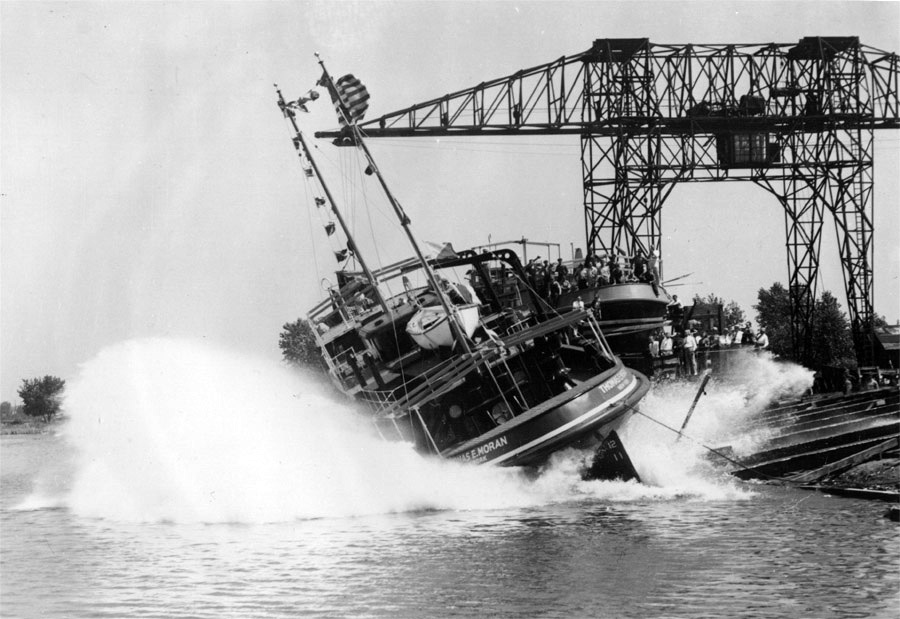
The Thomas E. Moran on is on the slipways in Bay City, Michigan. It looks like both tugs were launched the same day! Click for larger. Courtesy of the Dave Boone Collection

The tugs would mark another milestone – breaking Tam’s, Inc. into the world of tugboats. While I do not know if they were the very first ones, they would be the ones that really set the pace. Tam’s was well versed in yacht design, as well as being a broker and insurance company. Working with Winton on yacht design would start the relationship with GM as well, being that GM now owned Winton. Beginning in 1938, and lasting for only about a year, General Motors marketed all three engine divisions (Winton {soon to become Cleveland}, EMC and Detroit) under the single “General Motors Diesel Engine Division”, even though the three companies were still operating individually.

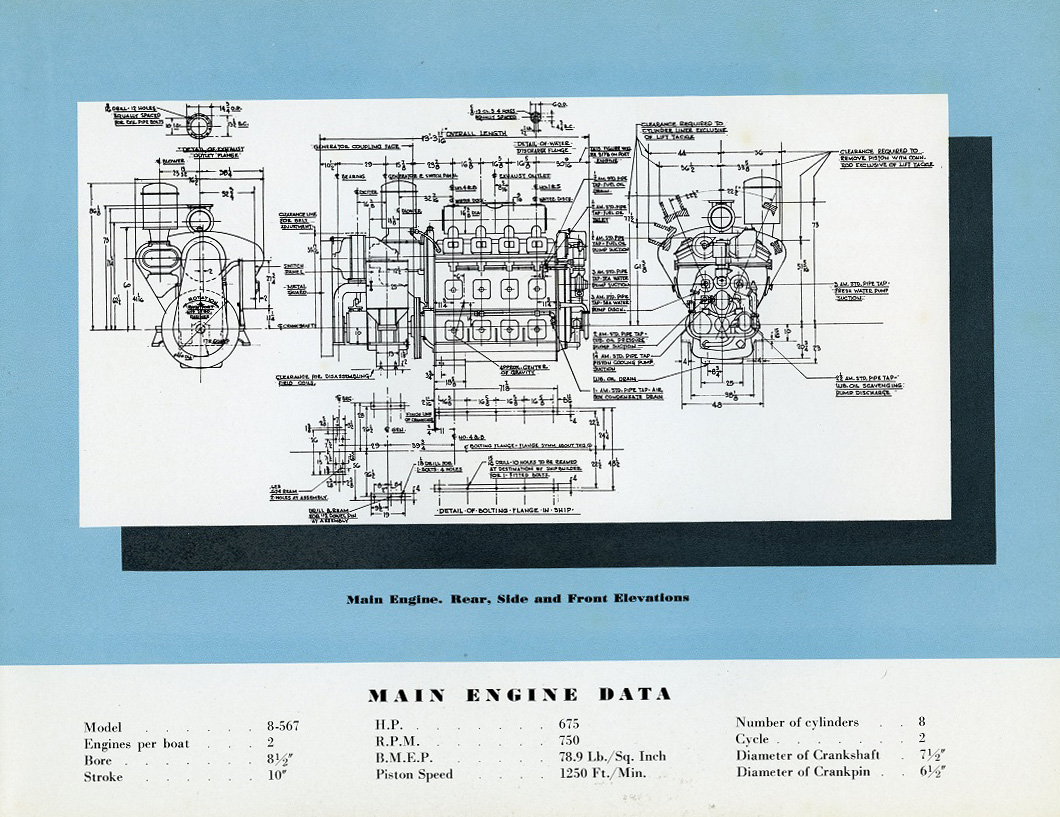
The Thomas & William were featured in the 1940’s booklet “Diesel-Electric Vessels Powered by Cleveland Diesel”. Click for larger.
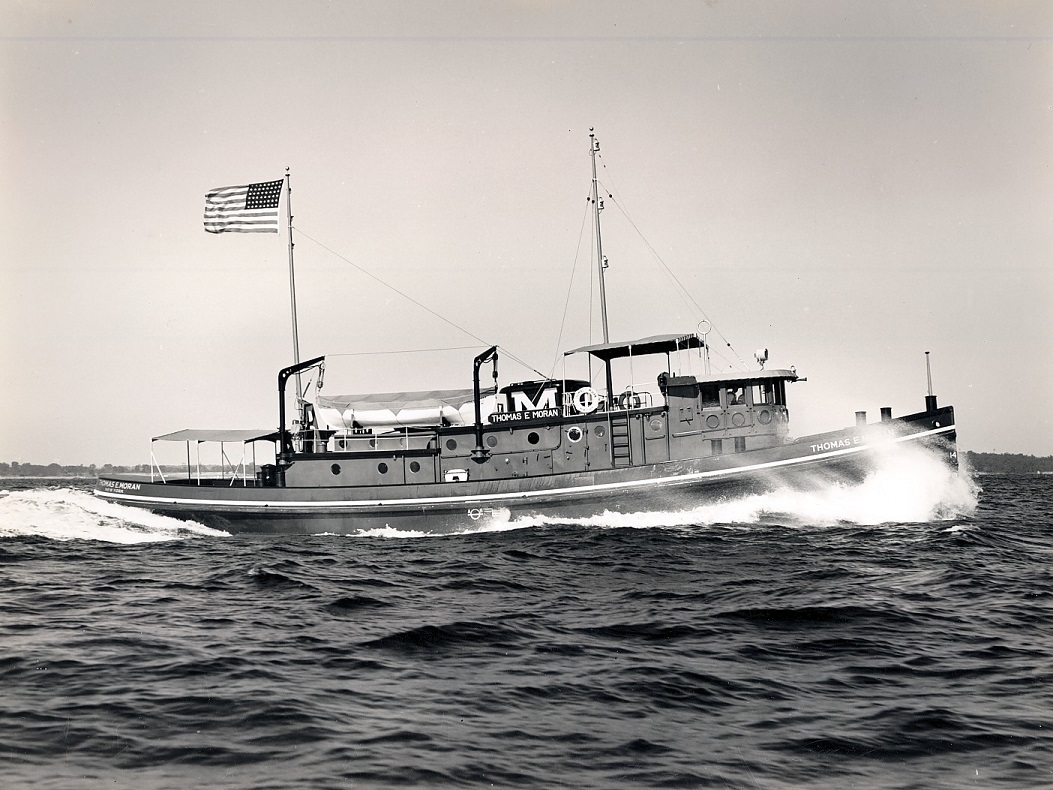
The brand new Thomas E. Moran on her sea trials, likely somewhere in Saginaw Bay. Click for larger. Courtesy of the Dave Boone Collection.

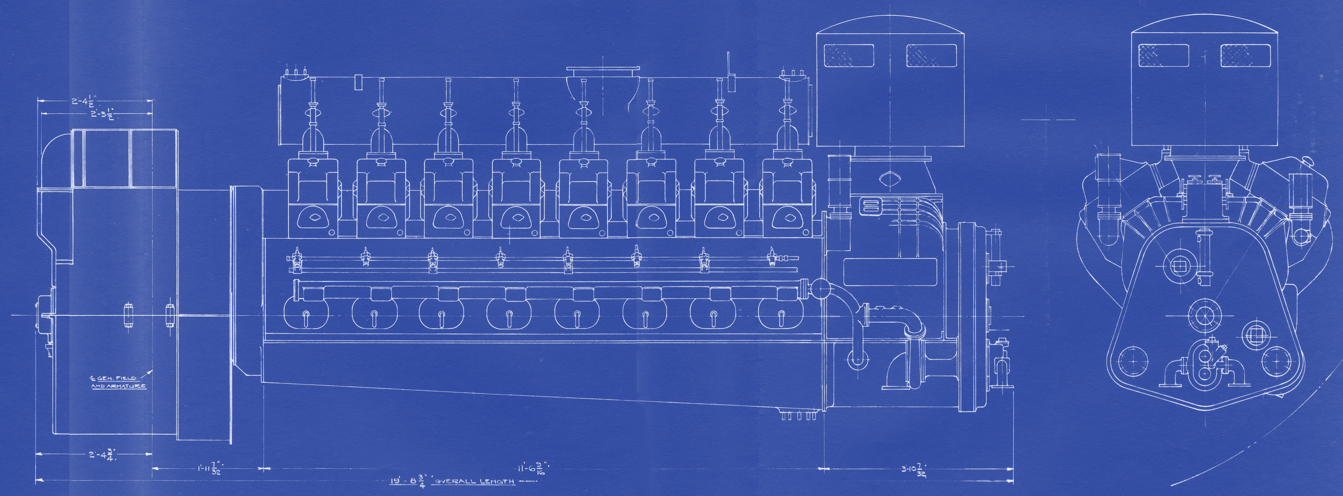
I was first introduced to the Thomas & William in detail when my partner in Cleveland research Jay Boggess showed me a scan of a GM booklet he had: “A New Conception of Diesel-Electric Drive”, which featured the two tugs in depth. Designed under Richard Cook at Tam’s, the tugs were 94′ 4 1/2″ long, with a 25′ beam. The all welded tugs were built in Bay City, Michigan at Defoe Boat & Motor Works. Diesel-Electric drive was not a new concept by any means, however using it with newer, medium speed engines was. Electro-Motive developed the new 567 engine in 1937 for railroad use, having learned from the lessons of the Winton 201A. However, interestingly enough, the first production 567 engines would be used in the Thomas and William, as quoted in EMD’s WWII era book “Diesel War Power”. The tugs used a pair of V8 567 engines, rated at 660HP at 750RPM each.

Photos of the engines from the “New Conception of Diesel-Electric Drive” booklet. Note how the engines do not look anything like the 567 we all know. While they did have a welded block, they did use more cast pieces in their construction, as well as individual covers for each power assembly. Click for larger.

Build sheet date for the engines. More on the name change shortly..

Thomas & William at home in the NYS Canal System. Click for larger. Courtesy of the Dave Boone Collection.

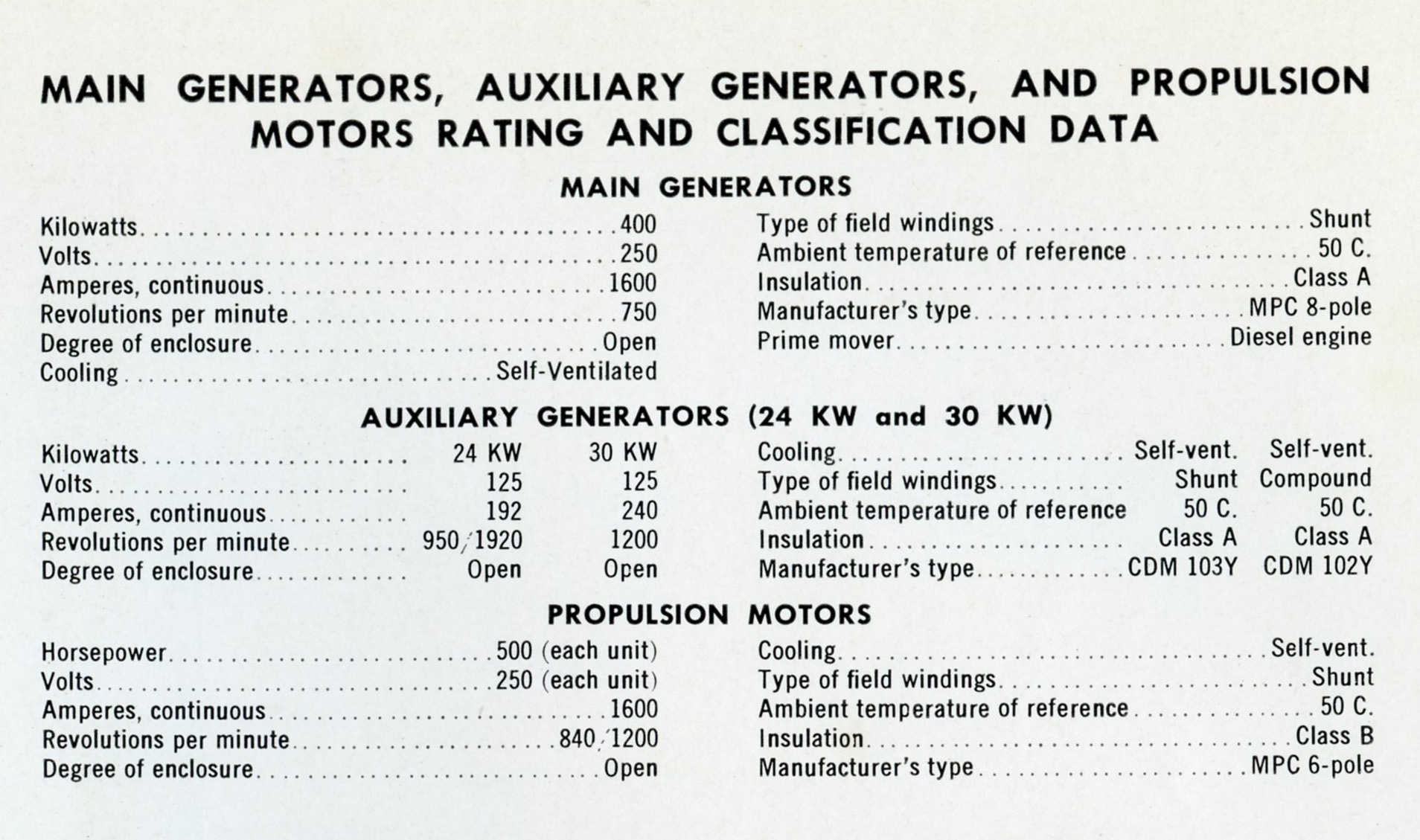
Electrically, the tugs used General Electric 400kW, 250 volt shunt wound main generators behind each of the 567’s, with belt driven 24kW exciter/shaft generators. General Electric also supplied the pair of 500HP propulsion motors. A common arrangement of the era was using two smaller motors, feeding into one reduction gear, supplied by Farrel-Birmingham. The arrangement was used on numerous fleet tugs throughout WWII. After the Thomas and William, Moran (along with James McWilliams Blue Line) would build several more tugs in 1939-1941 to virtually the same design, however they would be powered with single EMC 12-567 engines (Sagamore, Sheila Moran) and the last ones with Cleveland 12-278 engines (William J. Moran, Agnes A. Moran, Mary Moran, Sheila Moran), the later ones having a more normal, single level deckhouse (more on that later).
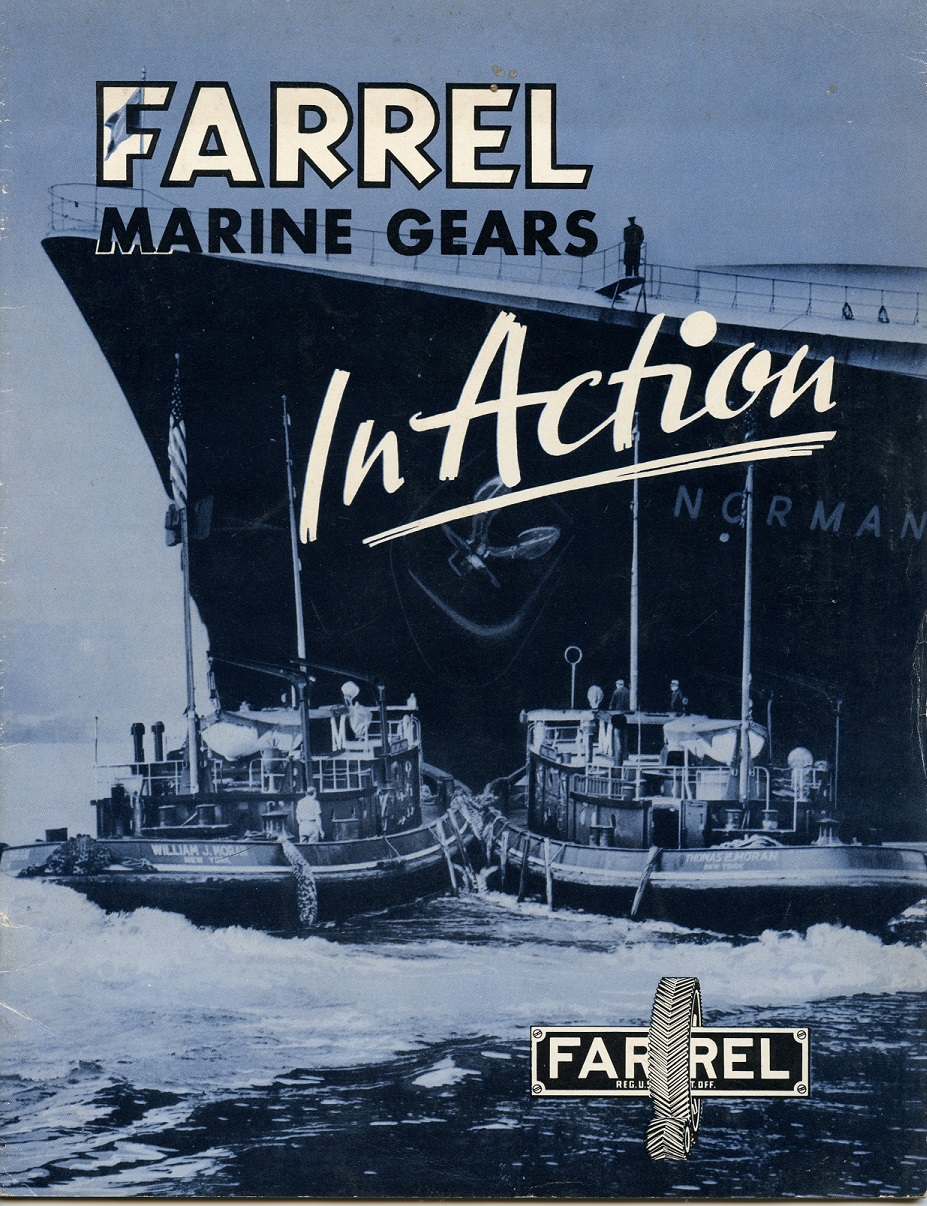
Farrel-Birmingham catalog pages showing the tugs. Click for larger.

Along with the 24kW shaft generators, the tugs each had a single Detroit 3-71, which drove a 30kW generator. The 71 was also a newly introduced engine in 1938. Click for larger.

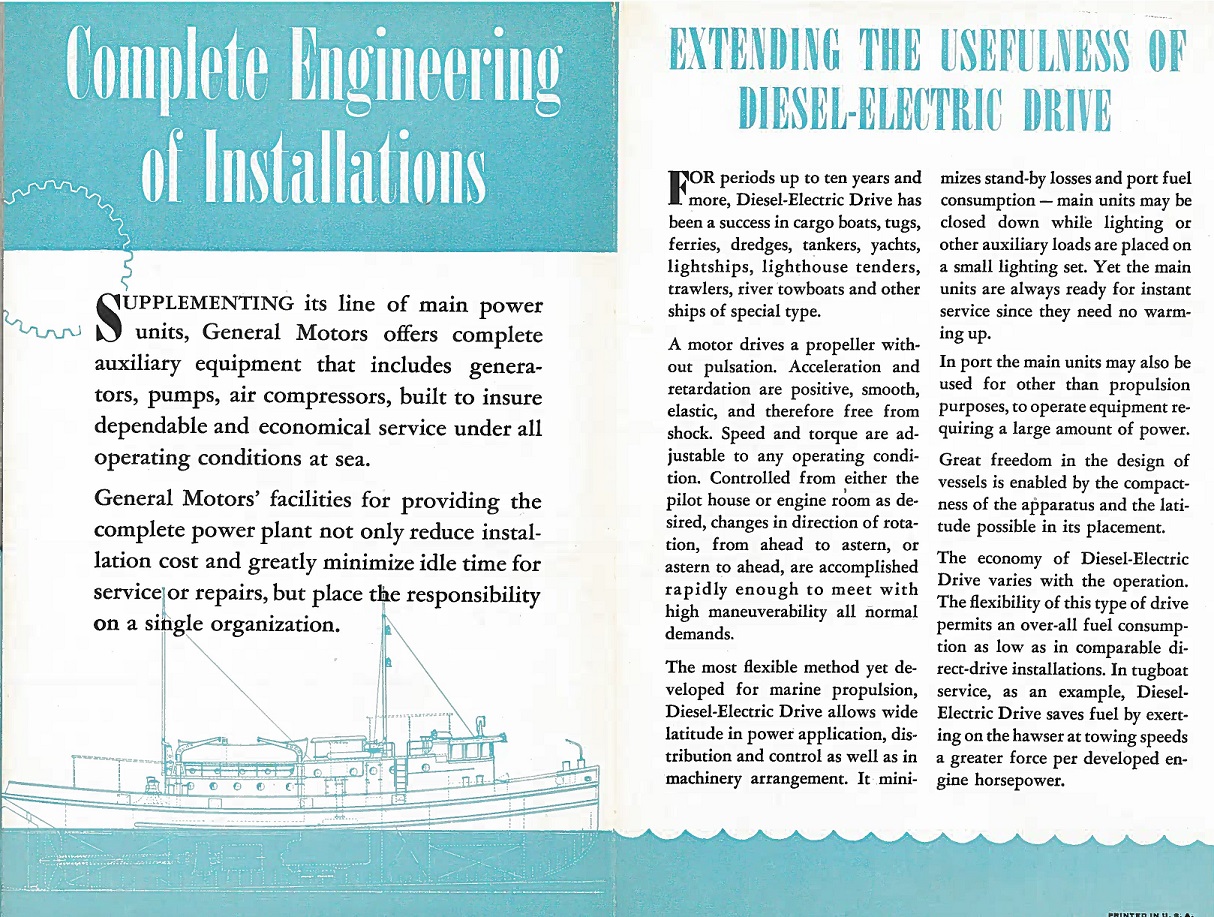
A small booklet produced by GM featuring the new 567 engine. Ironically only the Thomas had the 567! Click for larger.

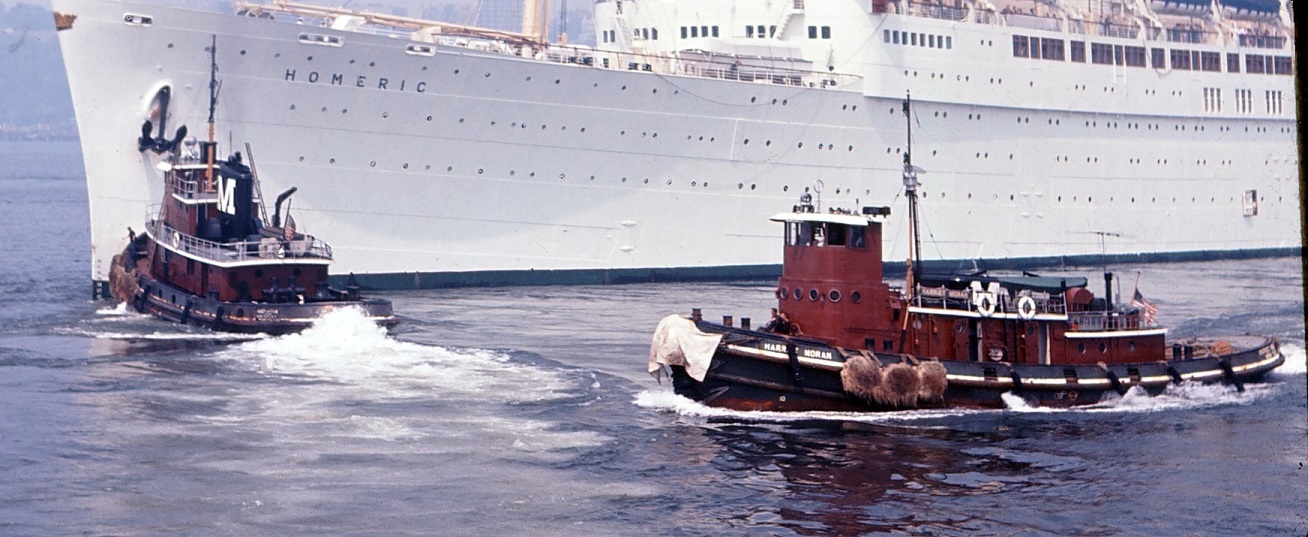
With World War II looming in the distance, the US Navy would requisition these tugs in 1940. I have long since been told that the Thomas and William were the prototype design for the YTB series that would be built in mass throughout the war. Part of me wonders if the Navy financed these in some way, with an agreement that they would be used during the war. But these details are likely lost to history. The Thomas would become the Namontack, originally classed as a Yard Net Tender (YN-46), Net Yender (YNT-614) and finally Yard Tug, Big (YTB-738). The William received the same treatment, and was named Wapasa, and also did time as a Yard Net Tender (YN-45), Net Yender (YNT-613) and finally Yard Tug, Big (YTB-737). After the war, the tugs would be returned (resold? I am not sure how those requisitions worked, if anyone knows, please drop me a line!) to Moran, however would be renamed. Originally the Thomas E. Moran, her new name was now the Harriet Moran. The William J. Moran became the Anne Moran.

The Anne Moran at home in the canal, made up in push gear with a grain barge (which looks to be an old motorship). The tugs had 4 control stations, the wheelhouse, the upper deck, the aft deck, and the engine room. Note the “box” on top. This was the upper wheelhouse to gain a little more height to see over the barge. The primitive wooden box was installed in the fall/winter and would fold up in inclement weather. Click for larger. Courtesy of the Dave Boone Collection.

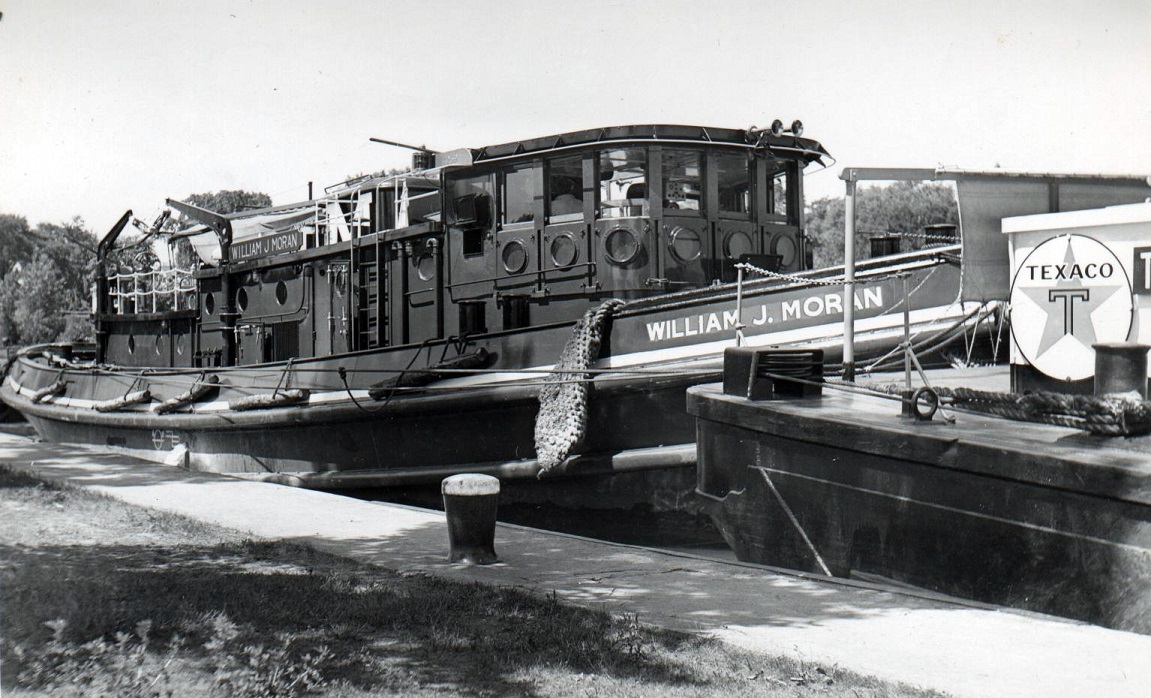
After the war, Cleveland Diesel went heavy on marketing, producing numerous booklets and brochures. These are from the late 1940’s book “Commercial Vessels Powered by Cleveland Diesel”. Note that they used older photos of the Thomas and William, and airbrushed the original names out in favor of the new, post war renaming’s. Not only that, but they incorrectly spelled the one! An interesting feature of these tugs is the sliding heavy weather portholes, that would slide up the cover the large glass windows. Click for larger.

In 1956, Moran embarked on a modernization program for the canal tugs. The Harriet and Anne would both be repowered with single war surplus (from PCE vessels, unfortunately the records do not note which) Cleveland 1000HP 12-278A engines and Allis-Chalmers 814kW main generators, however the original propulsion motors were kept. Along with the repowering, the tugs received a new retractable wheelhouse. Introduced in 1950 by Lake Tankers Corp. on their tug Canal Cities, the retractable wheelhouse was a revolutionary advancement for working in the canal.  A large air or hydraulic cylinder raised and lowered the wheelhouse to see over the barge, but to “duck” when a bridge or other obstruction was approached.  Virtually all “modern” diesel canal tugs would be retrofitted with these by the mid 1950’s, with all new tugs being built with them from then on out. 

Now with her new retractable house, the Harriet Moran would still work the canal, but by the 1970’s was regulated to doing assist and barge work in the harbor. The Harriet and Anne would keep their stepped deckhouses, and sliding “portholes”, however the other Moran canal tugs mentioned above would get more modernized single level deckhouses, and square retractable wheelhouses. Note that the new wheelhouse fits inside the profile of the original one. Even the original Marie S. Moran of 1936 was retrofitted with one! Click for larger. Courtesy of the Dave Boone Collection.
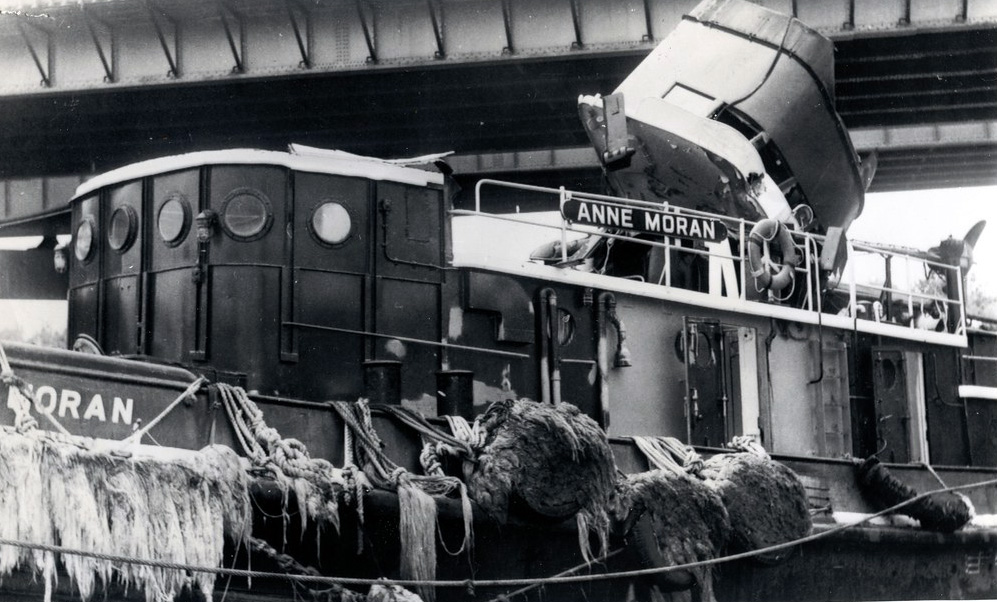
Unfortunately, working in the canal with a retractable wheelhouse had its downfalls. You need to pay attention! (To quote Buford T. Justice in Smokey and the Bandit: “Duck, or you’re gonna be talkin’ out yo ass!”) The wheelhouses essentially floated in a pocket, with some very basic guiderails. So when the captain forgets to drop the wheelhouse, the bridge is usually going to win, as what happened in 1965 to the Anne. Numerous canal tugs were decapitated over the years, but because they were so simple, the dents were pounded out, wires rerun, and back off to the races they went. I spent a few years working on a canal tug, and its an all hands on deck operation spotting for obstructions, especially high tension wires at night. Click for larger. VDD collection.

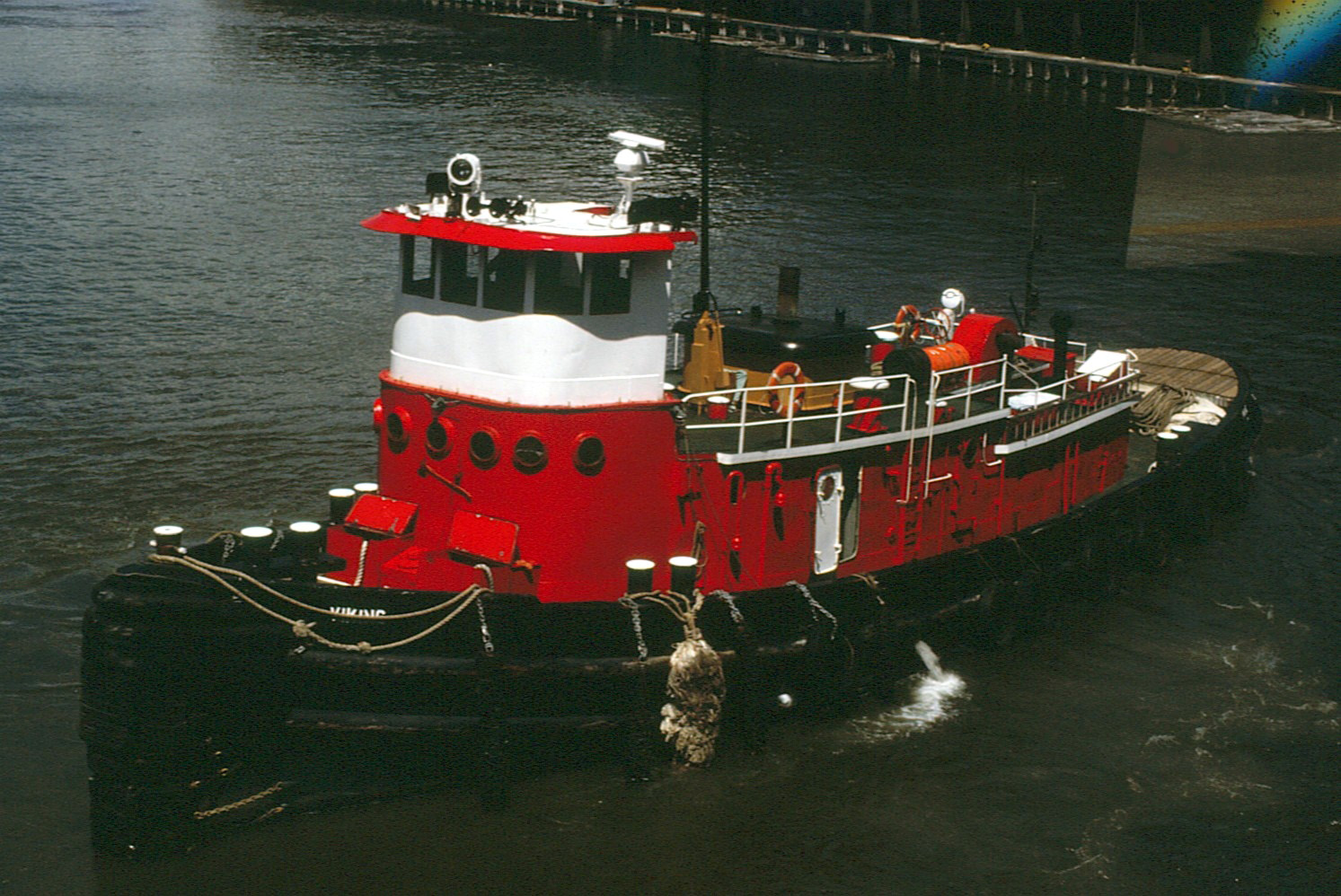
Typically a “last stop” for tugs working for Moran was to be put on the garbage barge run before being retired. The Anne is moving one of the DSNY scows in 1970. Click for larger. Courtesy of the Dave Boone Collection.

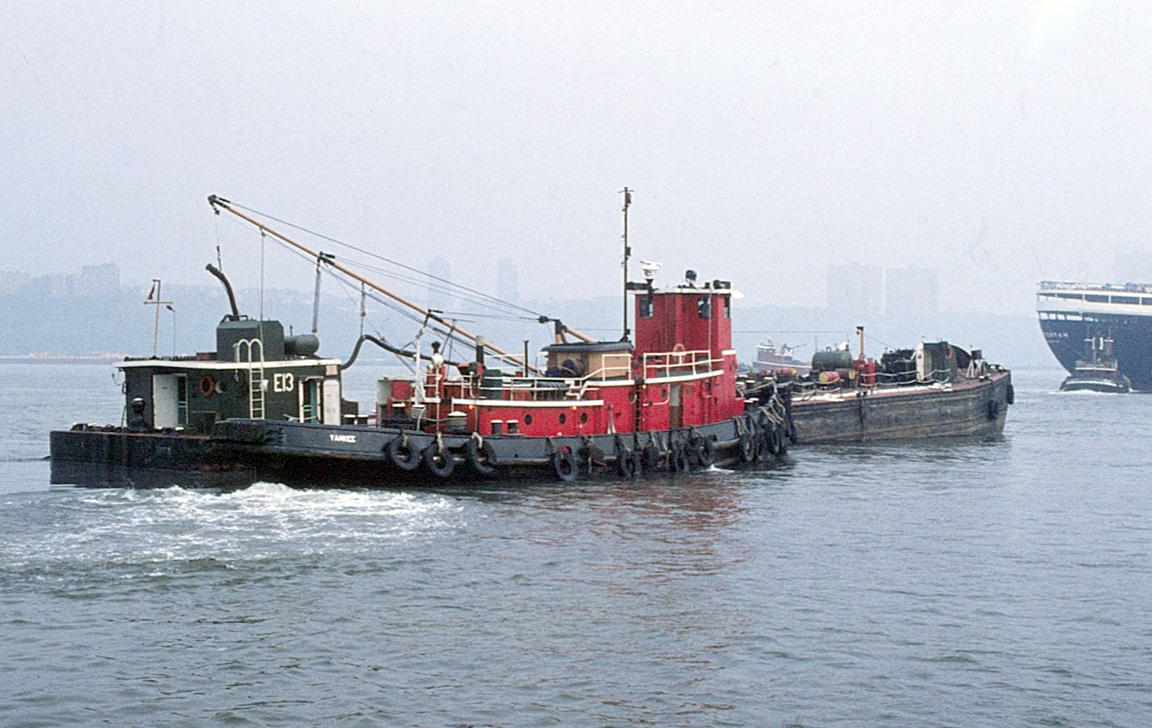
Moran would sell both of the tugs to Eklof Transportation in 1975/6 with the Harriet becoming the Viking, and the Anne the Yankee. Eklof would use the tugs for moving oil barges around the harbor for the next 15 or so years. Unfortunately, the road would end here for the Yankee (William J. Moran) and was scrapped in 1993. Our story does not end here though. Click for larger. Courtesy of the Dave Boone Collection.

Now the McAllisters Sharon Elizabeth in Georgetown, SC. Click for larger. Photo courtesy of Franz A. von Riedel.

A small towing company, Georgetown Towing, based in Georgetown, South Carolina purchased the Viking, and named her as the Georgetown, doing ship and barge work in the area. McAllister Towing would purchase the company in 1999, and renamed the tug as the Sharon Elizabeth. Zenith Tugboat of Duluth, MN purchased the tug in 2005, and brought it up to the Great Lakes via the Erie Canal – right at home, 67 years after being built.
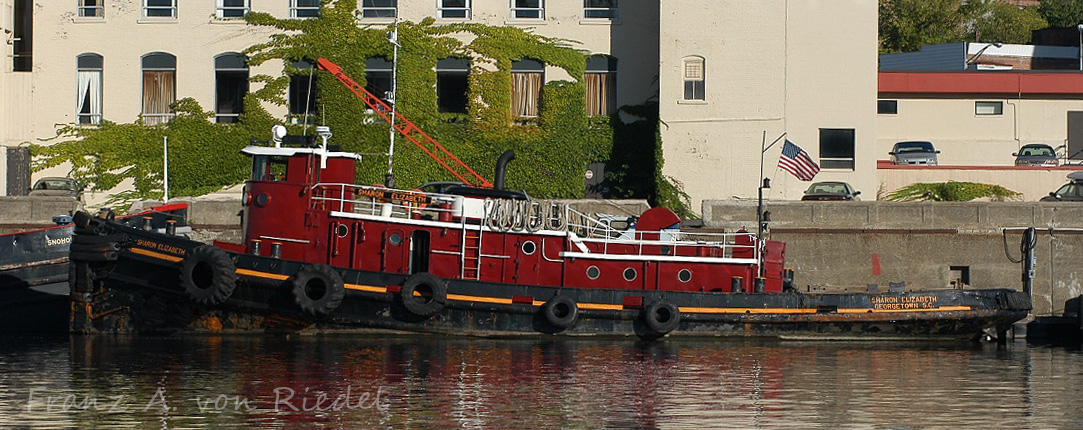
Now sporting Zenith’s stack colors, the Sharon Elizabeth is laying over in Troy, New York on her way to Duluth. Click for larger. Photo courtesy of Franz A. von Riedel.
Photo courtesy of Franz A. von Riedel.

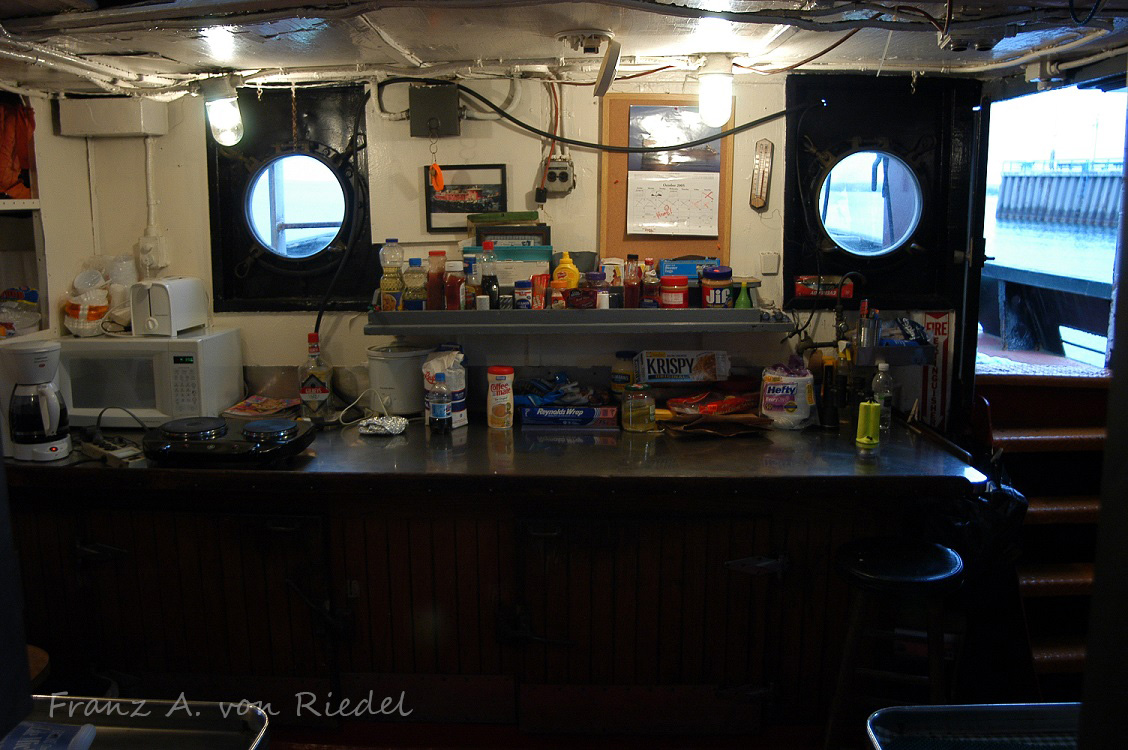
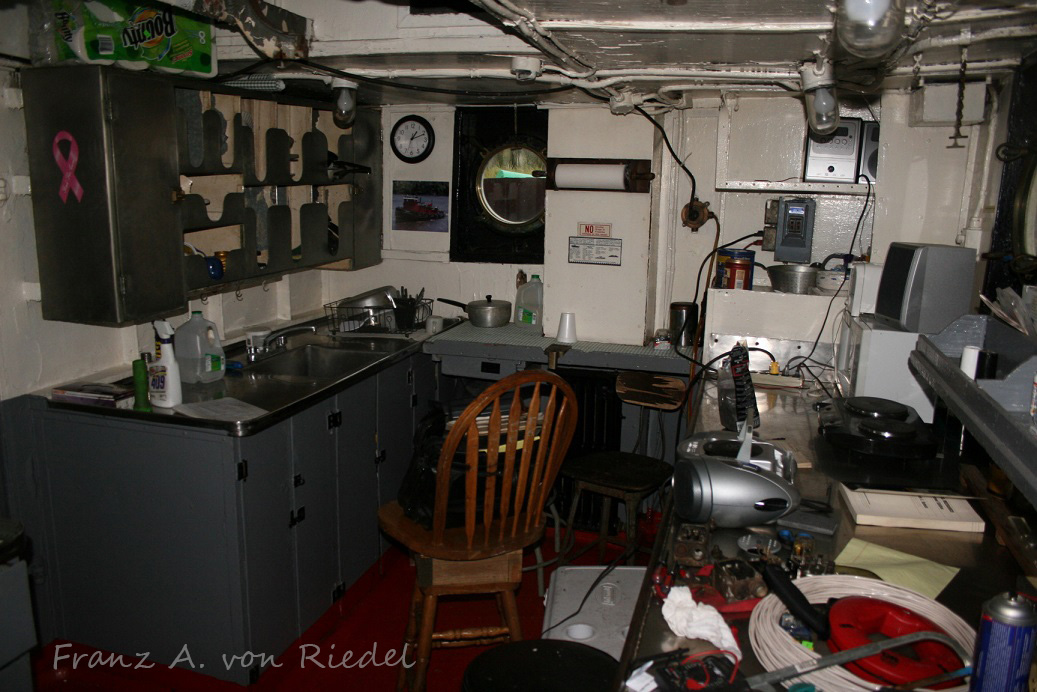
Lets take a quick walk through the Sharon Elizabeth, starting in the stern. I always wondered the reasoning behind the stepped deckhouse design. Entering in from the door, you head down a few steps into the galley, complete with giant cast iron Webb diesel stove that every tug and ship of the era had. Click for larger. Photos courtesy of Franz A. von Riedel.

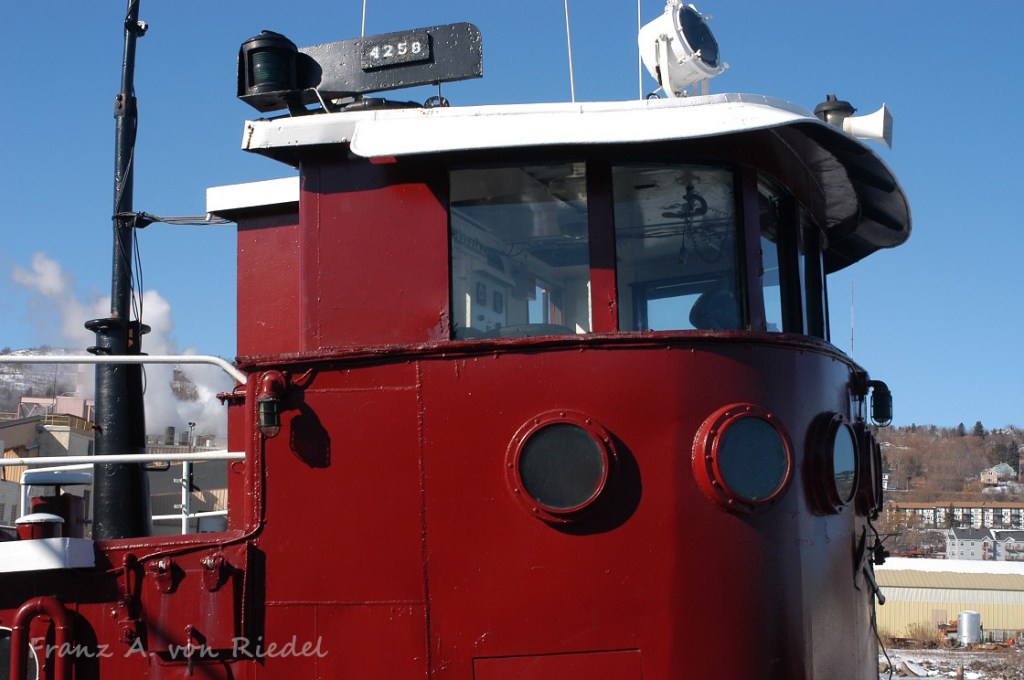
Canal tug wheelhouses are usually pretty spartan, simply because they lack any extra space. The Sharon’s wheelhouse had the typical Lakeshore Diesel-Electric control stands, and Benson electric steering, likely all installed during the 1950’s rebuild. Along the back wall is the running light panel, and the field amp/prop shaft RPM gauge and steering changeover switch. At some point in her life, Moran welded the sliding window portholes in a fixed position, and removed the tracks. It was not uncommon for canal tug wheelhouses to be kept in a semi-lowered position (especially when they get older and the system fails). The one on the Sharon is not all the way down here. Click for larger. Photos courtesy of Franz A. von Riedel.

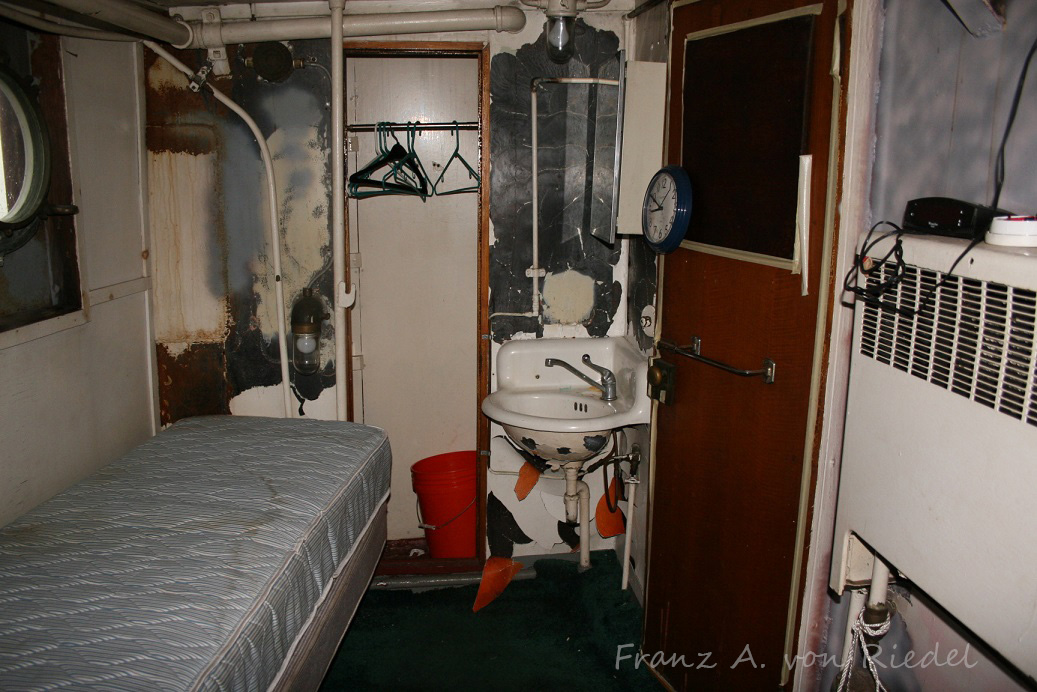
By the time smaller companies have these older boats, the staterooms are usually pretty tired – as often times the tugs are used as day boats, meaning no full time crews are living on the tug, which also means that maintenance starts to dwindle. For a canal tug however, these are some pretty big rooms! Click for larger. Photos courtesy of Franz A. von Riedel.

Photo courtesy of Franz A. von Riedel.

The Sharon had her twin 8-567 engines replaced in 1956 with a single Cleveland 12-278A removed from a Patrol Craft. An Allis-Chalmers main generator was utilized from a Destroyer-Escort, a common package used in Diesel-Electric tugs of the era. Click for larger. Photos courtesy of Franz A. von Riedel.

Electrically, the Sharon kept her original twin GE propulsion motors and Farrel-Birmingham reduction gear. A lakeshore propulsion panel connected the motors and generators. A Detroit 3-71 is seen in the forward end. Click for larger. Photos courtesy of Franz A. von Riedel.
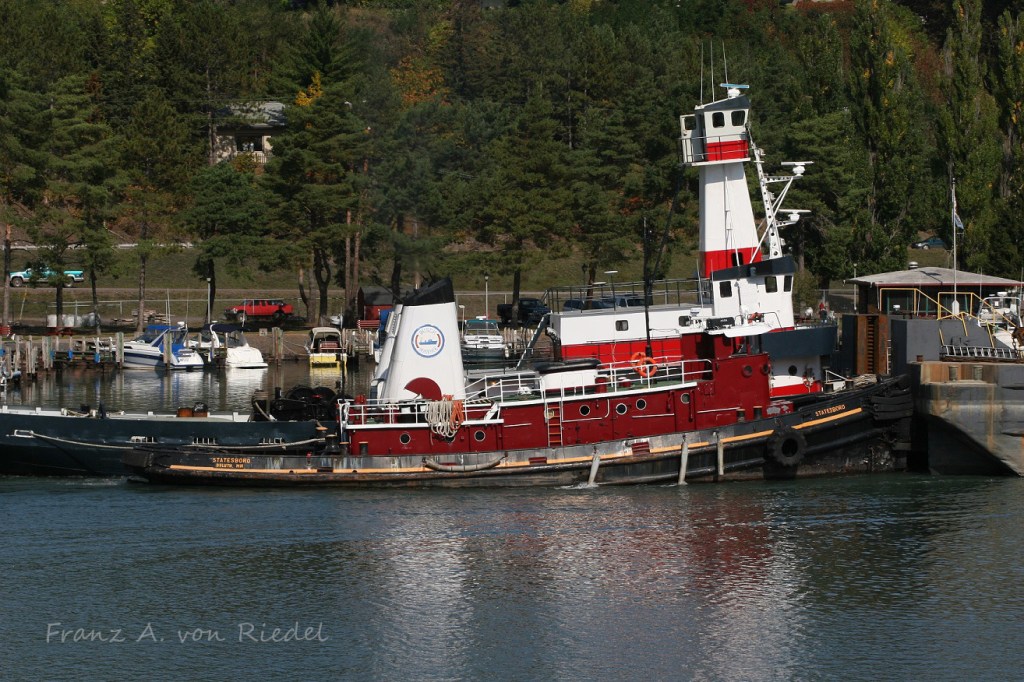
Zenith renamed the Sharon Elizabeth as the Statesboro in Spring of 2006. For an almost 70 year old tug at the time, she still looked sharp. Photo courtesy of Franz A. von Riedel.
The tug was sold in the fall of 2006 to Busch Marine of in Carrollton, MI. The tug is being towed by their own tug, the Gregory J. Busch. Photo courtesy of Franz A. von Riedel.

Busch Marine renamed the tug as the Barbara Merry Busch. The tug was tied up at their dock in the Saginaw River, only a few miles up from where she began her life in 1938. Unfortunately, the tug was never used by Busch, and she sits tied up listing heavily, waiting for what is likely an inevitable date with a scrapper one day. Even Busch’s large tug – Gregory J. Busch is laid up. This is another tug I would love to see inside, as she is powered by Alco 12-244 main engines.
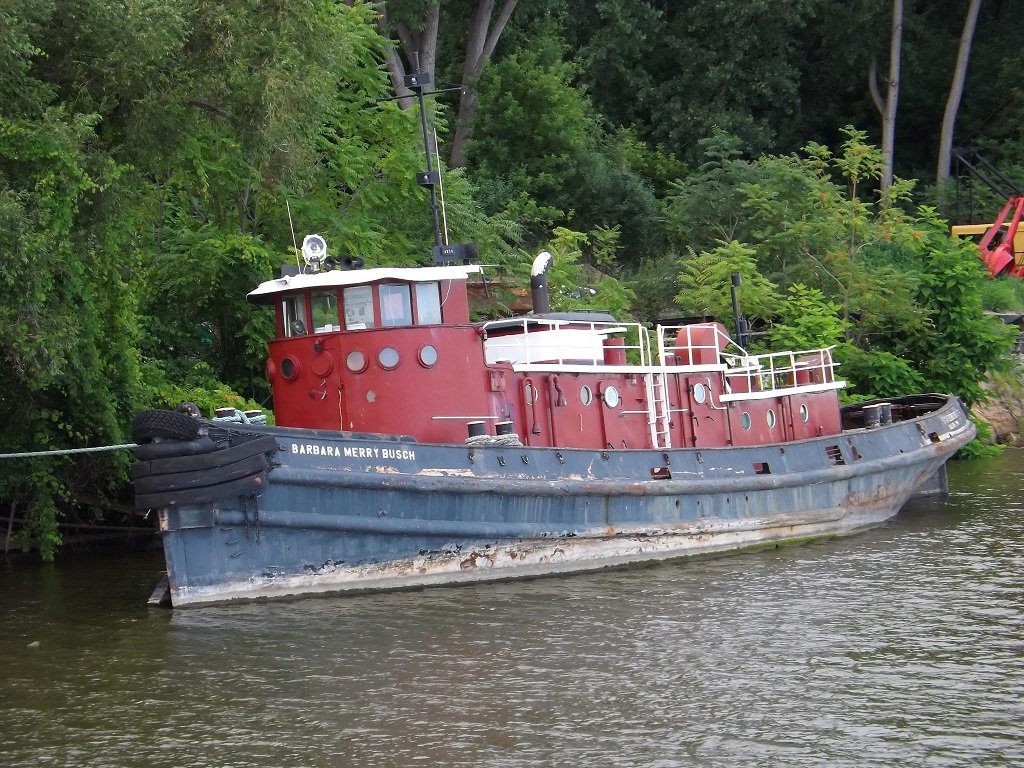
Click for larger. Photos courtesy Todd Shorkey

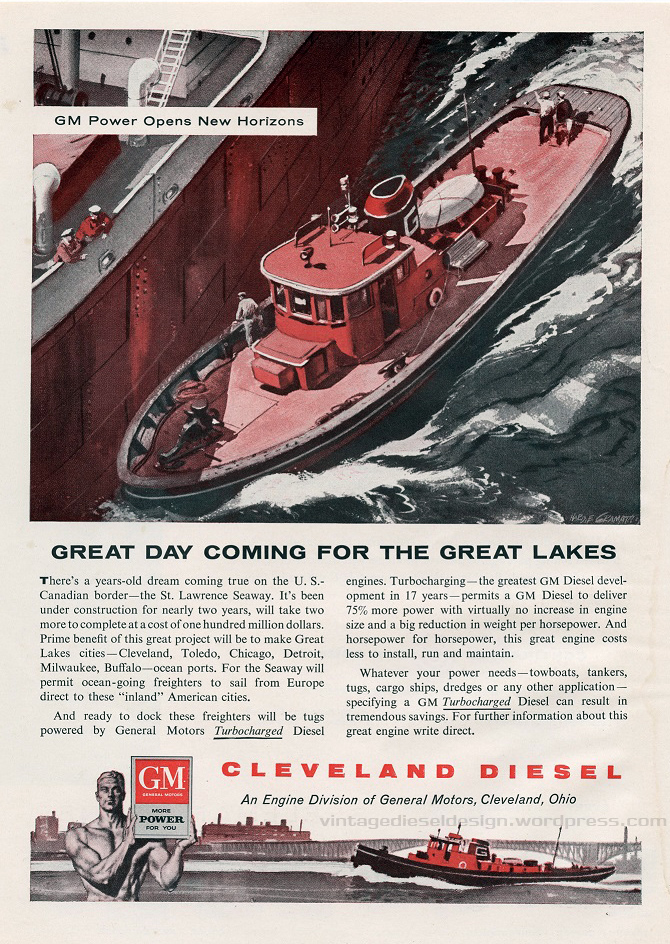
Thomas E. Moran was featured in numerous GM advertisement’s.

While just a footnote in history now, the Thomas E. Moran will go down in history as being the first use of the EMD 567 engine, the engine that went on to become one of the most successful diesel designs even built, and used in countless tugs, locomotive’s and stationary applications. Moran would wind up working almost exclusively with Tams (and successor GM Design and Marine Design Inc.) over the next 30+ years, building some of the most recognizable tugs on the east coast – all powered with General Motors Diesel-Electric Drive. Following the Thomas and William, several 567 stationary gensets would be built, as well as a bunch of 12-cylinder models used in Navy and USCG tugs in 1939.

Be sure to visit our other pages highlighting historic vessels – https://vintagedieseldesign.com/historic-vessels/


Many thanks to Franz A. von Riedel for sharing his photos of the Sharon/Statesboro. Thanks to Dave Boone for sharing numerous photos with me over the years, Todd Shorkey, Isaac Pennock & Jay Boggess as always for scanning and sharing more then I can recount.

More reading –
https://tugboatinformation.com/tug.cfm?id=798
https://tugboatinformation.com/tug.cfm?id=802
https://gltugs.wordpress.com/barbara-merry-busch/
http://www.navsource.org/archives/14/22046.htm
http://www.navsource.org/archives/14/22045.htm
A Turbocharged Failure – The Story of the Cleveland 498, Part IV

Part IV, the final part of this series will be a photo documentation of the tug Idaho.

Be sure to view the previous parts:
A Turbocharged Failure – The Story of the Cleveland 498, Part I – Introduction
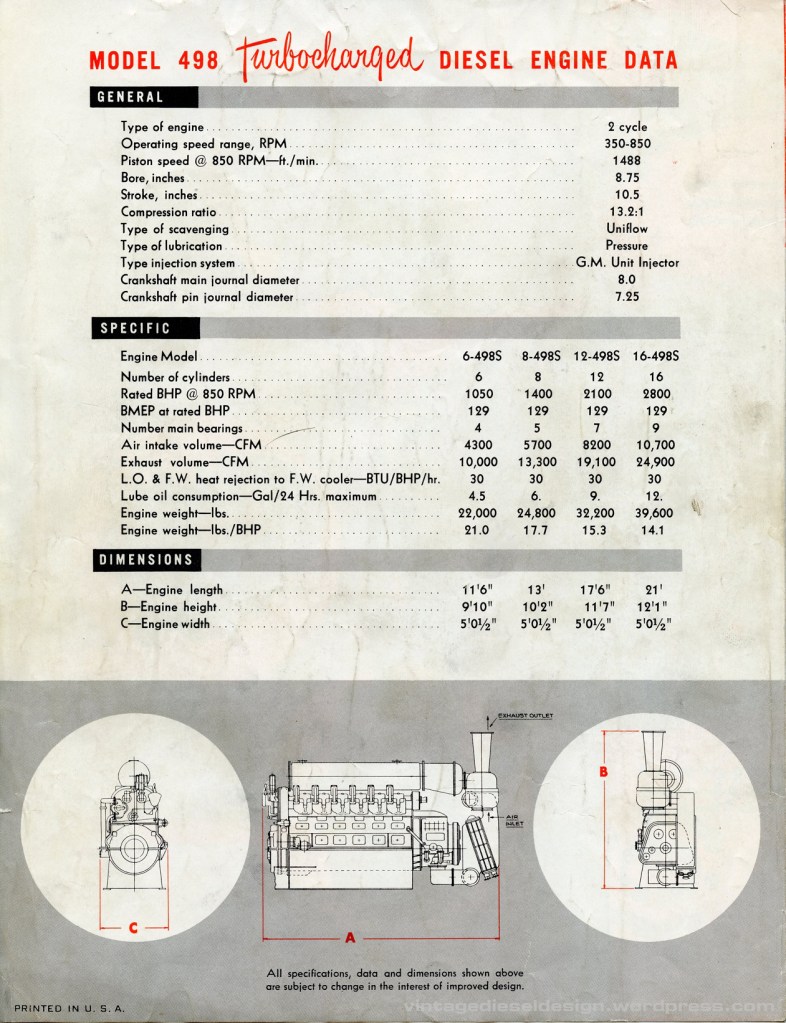
A Turbocharged Failure – The Story of the Cleveland 498, Part II – Engine Design
A Turbocharged Failure – The Story of the Cleveland 498, Part III – Engine Installations

By the early 1990’s, the Great Lakes Towing Company (GLTC) would have the only running Cleveland 498 engines left in the US (See note on the bottom). The Towing Company as they are known has a rich history dating back to its formation in 1899, consolidating several smaller tugboat companies on the Great Lakes. GLTC currently serves numerous ports across the Great Lakes, and is the largest user of Cleveland 278 (A and non A engines) left in the country.

Starting in 1907, the company began to build their own tugs in house, in their own shipyard. The yard, originally in Chicago, and moving to Cleveland is still churning out all new tugs for the company today, as well as doing outside work.

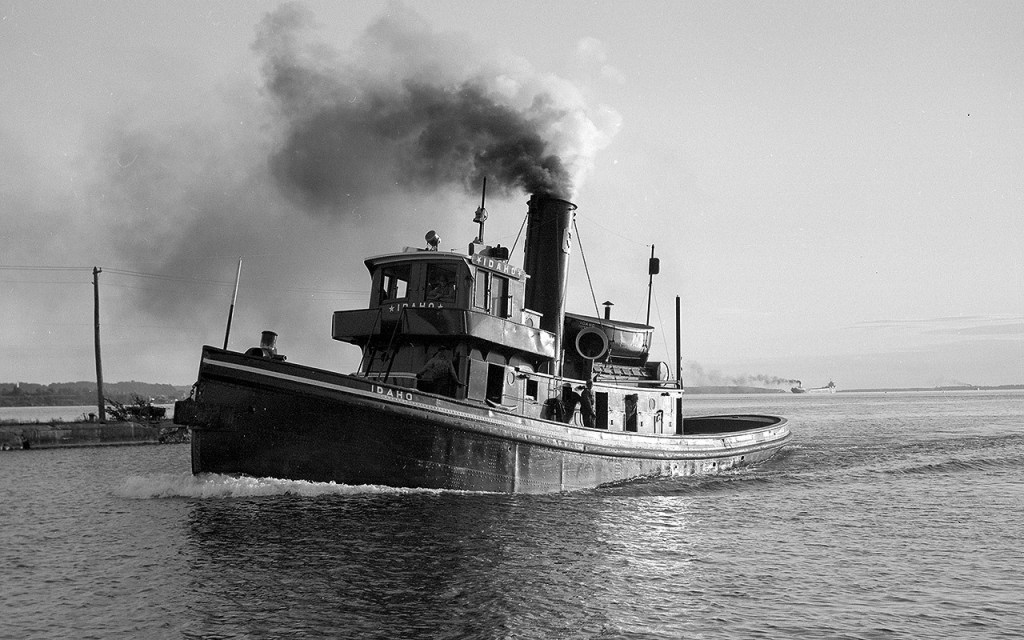
In 1931, the yard constructed Hull # 67, and named her the Idaho. GLTC had two sizes of tugs, the smaller, “Type I”, which were named after cities, and larger “Type II”, named after states. The Idaho would be the last new tug built until 2008.

The Idaho was originally powered by a single cylinder, 26″ x 28″ steam engine. The tug was 84′ 4″ long, 20′ beam and a 12’6″ depth. The tug was one of three that would receive a raised height wheelhouse for doing lake towing.

The Idaho after receiving her raised wheelhouse. Please note that this photo is not in my collection, simply one from my files. If anyone knows the photographer or archive please send me a message so it can properly be credited.
Ironically, one of the very first pieces of Cleveland Diesel ephemera I would add to my collection would be one depicting the new 498 powered tugs of the Great Lakes Towing Co.

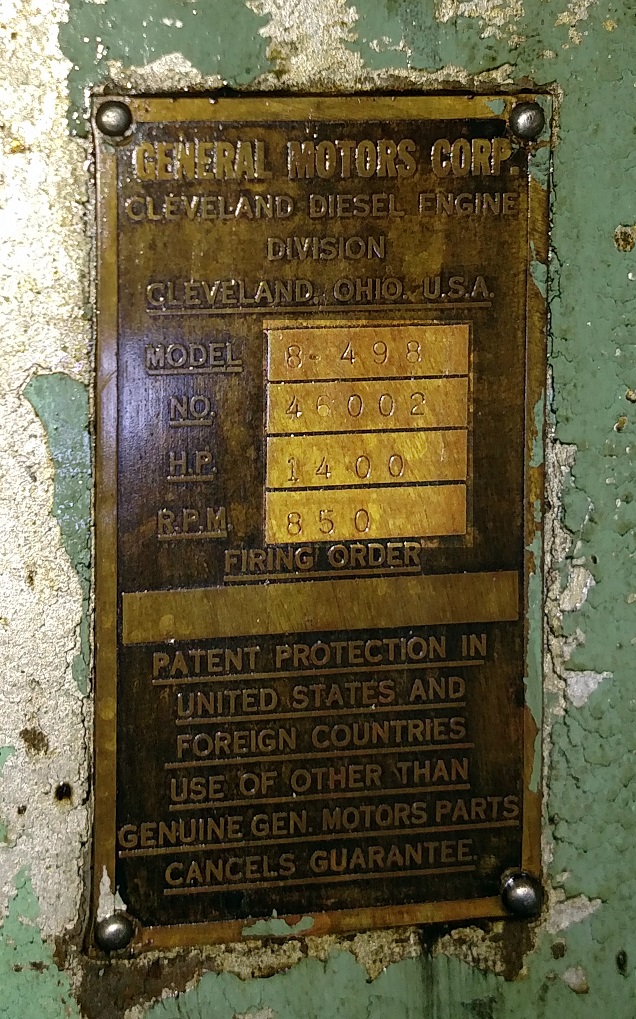
In 1956, the Idaho was on the block to be converted to Diesel propulsion. The engine chosen was the new 498 from Cleveland Diesel, as outlined in previous posts. Cleveland Diesel Order #1640 was placed in early 1956, for a pair of left hand rotation, 1400HP, 8-cylinder 498 engines to convert the tugs Montana and Idaho (Montana was an identical sister, Hull #60 of 1929). The engine for Idaho, #46002 was shipped from the factory on 12/13/1956, having to only go a few miles up to the companies shipyard. The tugs would receive Diesel-Electric propulsion packages, utilizing WWII surplus Destroyer-Escort main generators and propulsion motors. Disaster struck the Idaho shortly after being rebuilt on 10/21/1960. The tug was assisting the lake ship C.H. McCullough, Jr. in Chicago, when the tug was sunk. She would be raised, dried out and put back in service. A photo of her being raised appears in Alexander Meakins “The Story of the Great Lakes Towing Co.”

The 498 powered tugs would never stray too far from the main yard in Cleveland, typically working the ports of Cleveland, Ashtabula, Toledo or Detroit. The porthole aft of the wheelhouse is the tugs small bathroom. Photo by Isaac Pennock.

Great Lakes Towing Company would ultimately have a quartet of 498 powered tugs. The Diesel-Electric Montana and Idaho, and the Clutch tugs Tennessee and Pennsylvania which were converted in 1960 from Steam. Montana would be retired in 2006, Tennessee in 2012 and the Pennsylvania in 2019. Ironically, the Pennsylvania would wind up receiving a replacement engine at some point in her life, originally out of the towboat Leila C. Shearer. This too was replaced with an EMD 12-645, however the conversion was never finished.

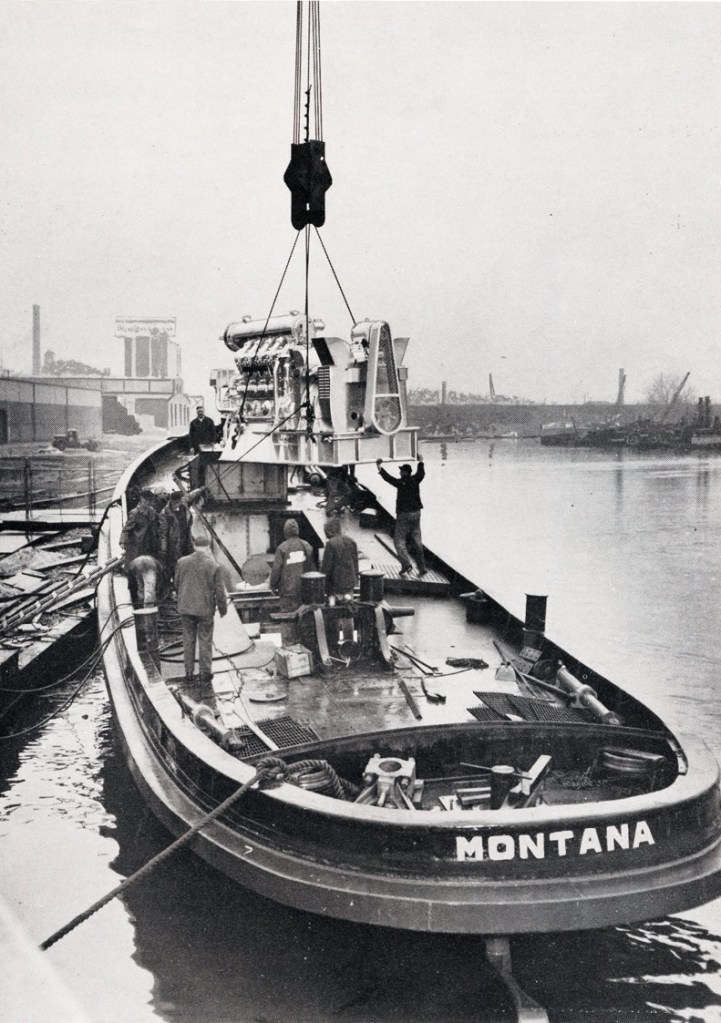
Sister tug Montana received the first 498 engine to be sold, seen here being lowered into the tug at the Cleveland yard. From Cleveland Diesel’s “More Power For You” brochure.

Noting that the last surviving 498 was likely nearing the end of her life, we reached out to the company to see about the possibility of documenting the engine and tug, and maybe see about preservation options. Unfortunately, we would be a touch too late. While the tug was still around, it was sitting laid up having suffered a catastrophic engine failure in 2016, however we were welcome to document her anyway.

The tug was laid up in Detroit for a few years, and was being used for parts for the other tugs in the GLTC fleet (while the engines were different, the tugs still share many parts between them).

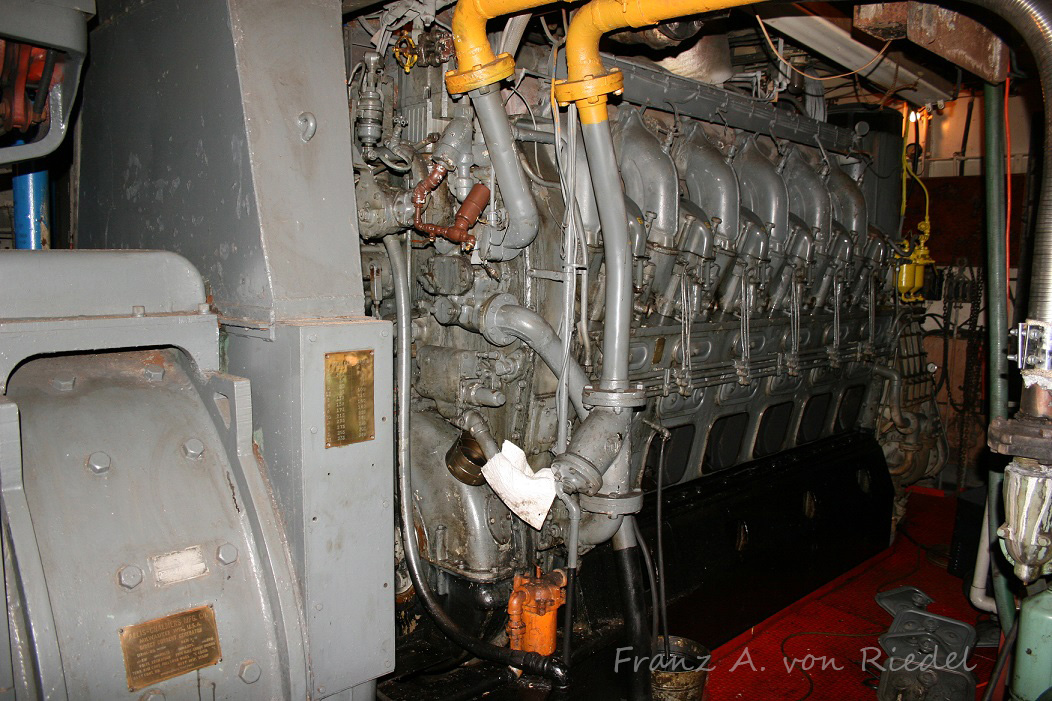
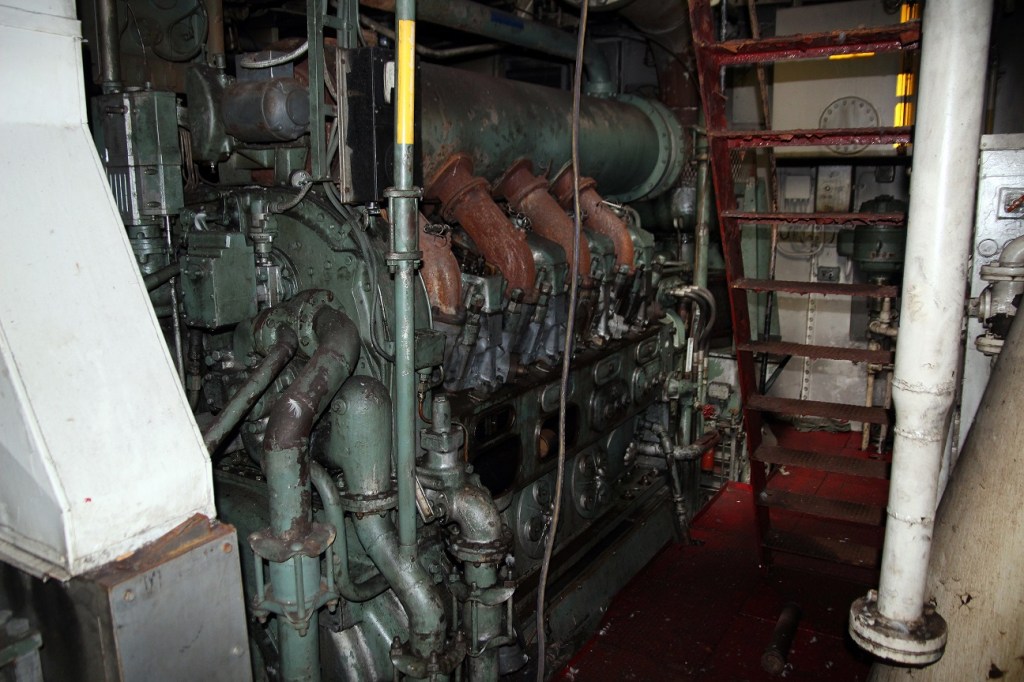
The heart of the Idaho is her Cleveland 498 engine. Note the exhaust jumpers are rusty, having no water jacket around them, and by this point, no insulation either.
The tug had a WWII surplus, Allis-Chalmers 525V DC propulsion motor, rated for 1090kW at 720RPM. On top is a 120V DC shaft generator.
The power package installed in the Idaho. From Cleveland Diesel’s “More Power For You” brochure.
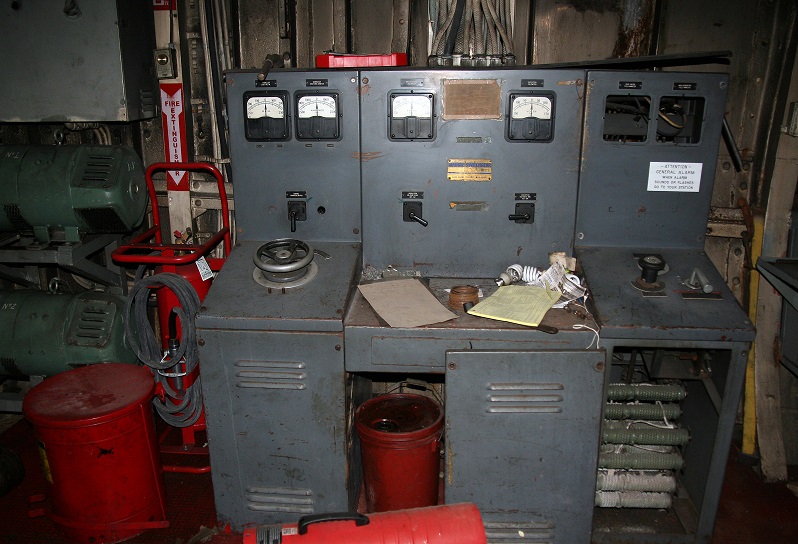
The propulsion switchboard. At left is a pair of excitation generators.
Also from the Destroyer-Escort is the propulsion motor. This was built by Westinghouse, and rated for 1225HP.
Farrel-Birmingham reduction gear, with a 4.233:1 ratio. The tug has a 102″ x 87″ stainless 3 blade propeller.
The portside, aft end of the engine room has the steering gear pump, as well as a motor-generator set. The fuel tanks are located behind the aft bulkhead.
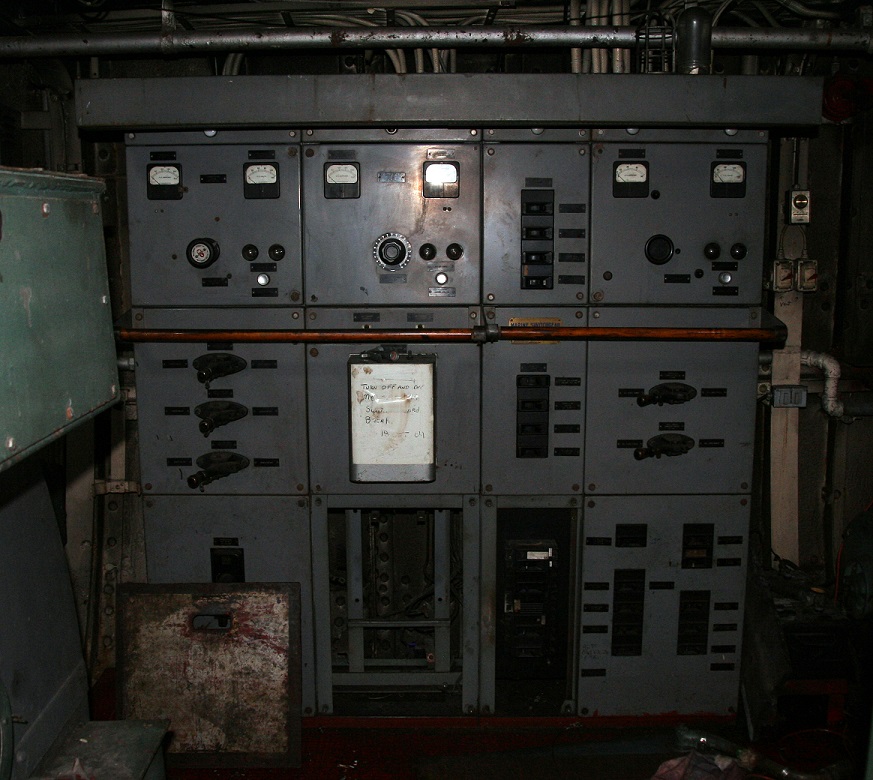
Switchboard.
Portside of the engine, the air starter is mounted on the floor level. On top are the various gauges and governor.
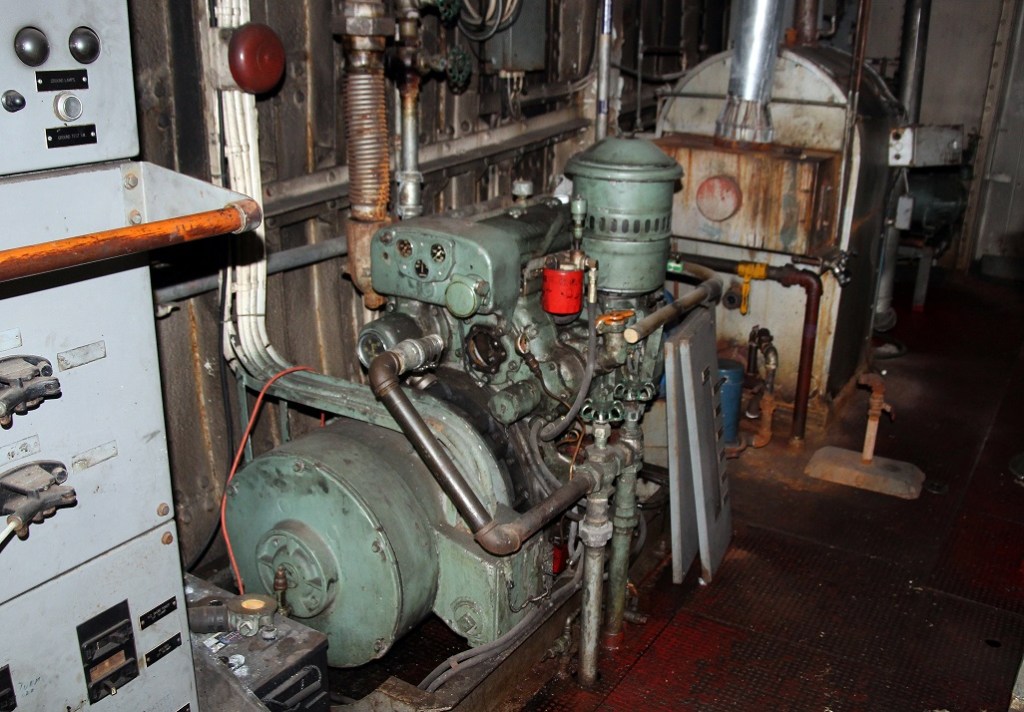
Detroit Diesel 3-71 with a 30kW generator. In front is the tugs oil fired steam boiler for heating.
Air compressors.
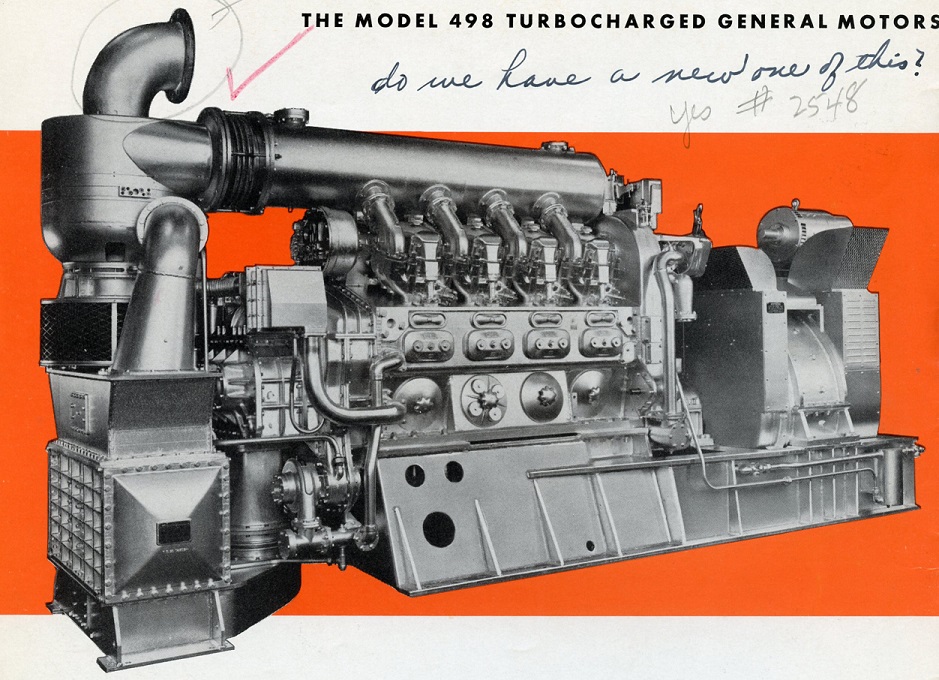
The heart of the 498 is the De Laval turbocharger. The air intake filter is seen in the middle, with the compressor on top. A discharge tube feeds air into the intercooler on the bottom.
From the intercooler, the air fed into the roots blower (at left) from the bottom end. It was mentioned these engines sounded like helicopters.
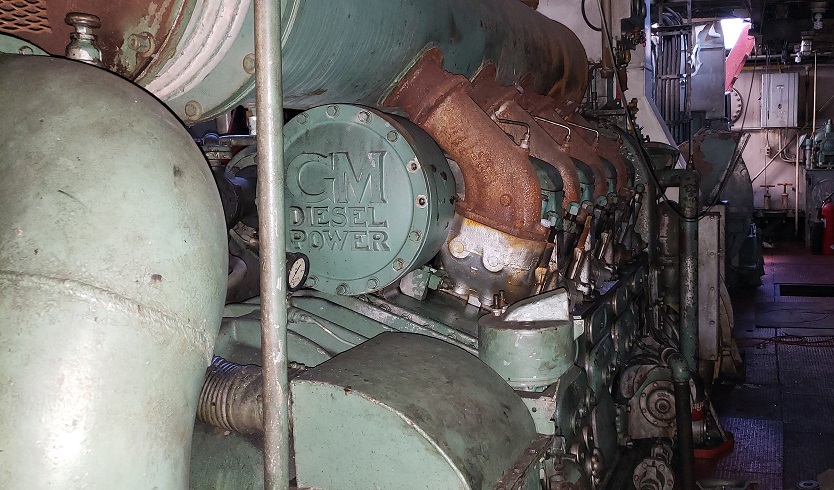
Looking aft, the large cast cover is over the camshaft balancer, proudly displaying the maker of the engine.
Taking on ode from the 248 engine, the 498 used a two piece top cover. On the bottom right is the blowdown/safety valve. Former engineers for this boat mentioned heads and head gaskets were a big failure point being addressed often.
The reason the Idaho was retired. Shortly after startup, the #4 piston locked up, thus the connecting rod snapped, in turn swinging around and slamming into the airbox and both liners.
Unfortunately, parts for the 498 were long since unavailable, and a failure like this is typically a death sentence anyway, especially in an 80+ year old hull.
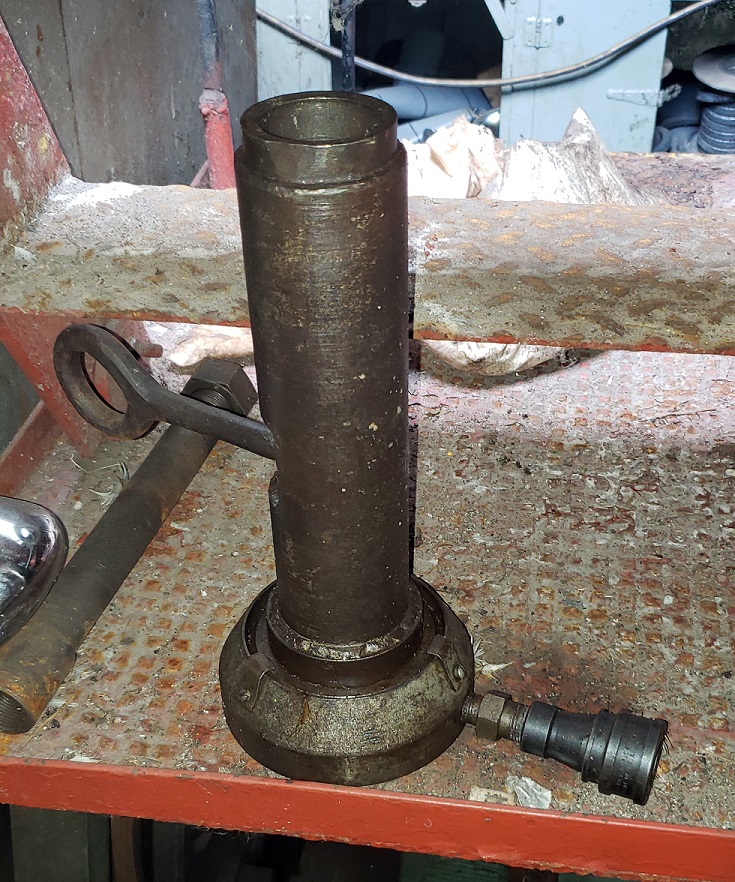
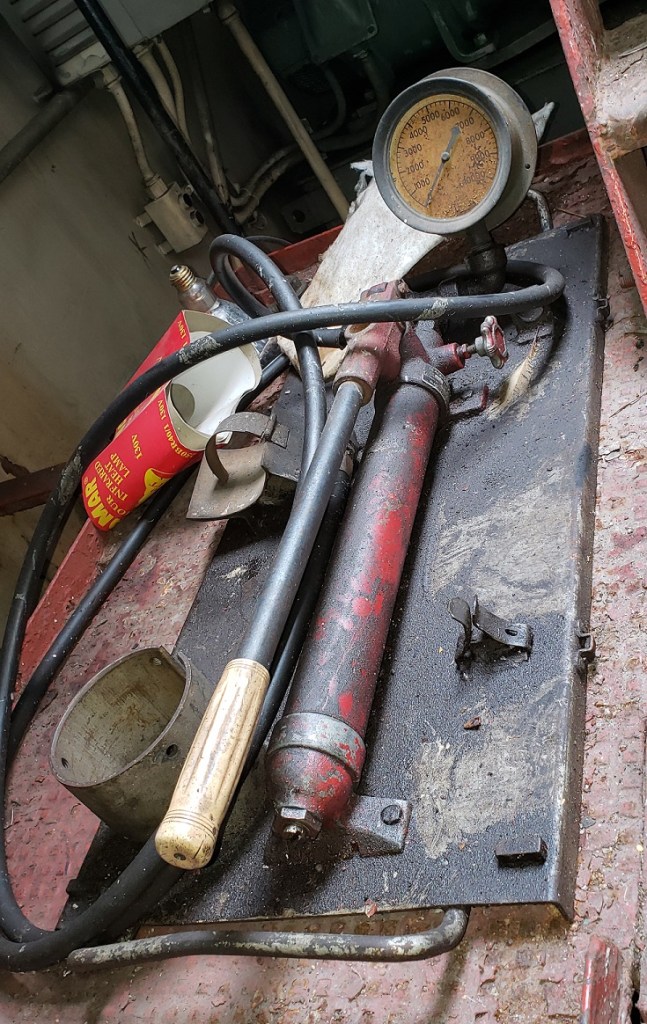
The hydraulic power pack and head tightening tool.
G tugs still have a tiller handle for rudder control, along with the Lakeshore throttle stands.
Wheelhouses were rather spartan, with a simple bench, small chart table and propulsion gauges. These tugs were only intended to do day work, with no real provisions of any kind.
These tugs were built for one purpose, docking ships, thus the low profile deckhouse. The stairs in front lead down into the forecastle.
A few basic bunks, lockers and a simple table in the bow.
The tugs official number, gouged into the steel 80+ years ago.
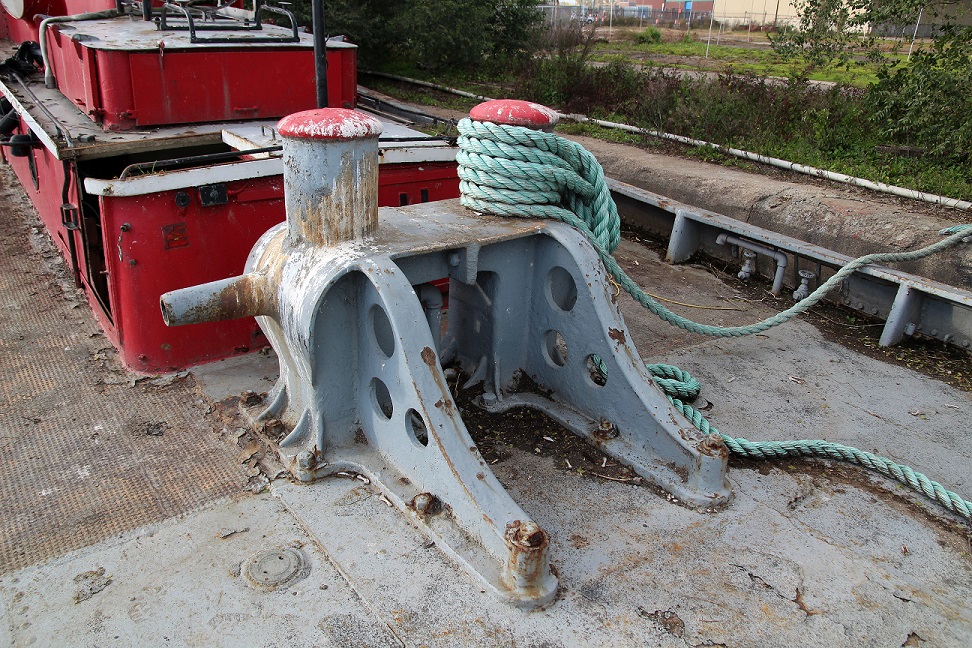
Great Lakes Towing exclusively used towing bitts manufactured by the Montague Iron Works in Northwest Michigan.
“G” tugs as they are known in the lakes, got their name from the large stack insignia.
The Idaho returning from a job in her last year in service on the Detroit River. Photo by Isaac Pennock.
Removal of the stack insignias traditionally mean the end is near. This was likely the last photo of the Idaho in one piece. Bill Kloss Photo.

Unfortunately, all things must come to an end. In January of 2019 the tug was towed back to Cleveland, and with the last few usable parts removed, the tug was scrapped. We can’t thank the Great Lakes Towing Company enough for allowing us to photo-document the tug.

With only 58 engines built, and being that virtually all of the engines stateside were replaced long ago, it is highly unlikely any of the foreign sold engines remain. We heard a rumor of one driving a water pump in Egypt, but again, this would have had to have been a relocated engine, and is highly unlikely it exists. Somebody please prove us wrong!

That wraps up our four part series on the Cleveland Diesel 498 engine. Please be sure to view the previous posts on this engine, linked on the top of this page. I will say it again, if anyone has any 498 manuals, brochures, stories, parts, anything, please get in touch with us. Should anything new arise, we will make another follow up down the road.

2022 Update – At some point this year we will post another part in this series, with some additional information we found.

A Turbocharged Failure – The Story of the Cleveland 498, Part III

Part III of A Turbocharged Failure will be fairly straightforward – a listing of ALL 498 engines built.

Be sure to view the previous two parts:
A Turbocharged Failure, Part I – Engine History
A Turbocharged Failure, Part II – Engine Specifications

Production of the Cleveland 498 commenced with the first engine shipped in May of 1956. Most production would take place in the fall of 1956 (16 engines built), and the summer of 1957 (17 engines built). 1958 saw only a pair of engines, a trio in 1959, and the last 4 were built in 1960. A total of 29 8-cylinder, 9 12-cylinder, 17 16-cylinder and 3 test engines (one 8, and two unknown) were built over the course of production, for a grand total of 58 engines.

A brochure for the engine issued not long after being announced at Powerama. Click for larger.


1) Tug Montana – Great Lakes Towing Company, Cleveland, Ohio
Engine 46001, Shipped 5/2/1956, Order #1640, 8-498, 1400HP/850RPM

2) Tug Idaho – Great Lakes Towing Company, Cleveland, Ohio
Engine 46001, Shipped 12/13/1956, Order #1640, 8-498, 1400HP/850RPM

Great Lakes Towing Company needs no introduction here, they are the largest tug company performing shipdocking on the Great Lakes, using “G Tugs”.   We will do a more detailed feature on these down the road.   Great Lakes put in the very first order for 498 engines, with the first one going into the tug Montana.   Montana was built in 1929, with a single cylinder steam engine.   Idaho followed a few months later.  Idaho was the last “new” tug built, in 1931.   Both tugs were identical and built-in house, receiving electric drive propulsion packages using surplus Destroyer-Escort generators and propulsion motors***.   The Montana was retired and scrapped in 2006, and the Idaho was scrapped in 2019.  The 4th and final part will be dedicated to the Idaho

Tug Idaho shortly after being converted to Diesel power. VDD Collection.

————

3) Tug Hoboken – Delaware Lackawanna & Western Railroad – NY, NY
Engine 46003, Shipped 10/31/1956, Order #1807, 8-498, 1400HP/850RPM

4) Tug Buffalo – Delaware Lackawanna & Western Railroad – NY, NY
Engine 46004, Shipped 11/30/1956, Order #1807, 8-498, 1400HP/850RPM

5) Tug Syracuse – Delaware Lackawanna & Western Railroad – NY, NY
Engine 46005, Shipped 12/28/1956, Order #1807, 8-498, 1400HP/850RPM

6) Tug Utica – Delaware Lackawanna & Western Railroad – NY, NY
Engine 46006, Shipped 1/14/1957, Order #1807, 8-498, 1400HP/850RPM

7) Tug Nazareth – Delaware Lackawanna & Western Railroad – NY, NY
Engine 46007, Shipped 1/21/1956, Order #1807, 8-498, 1400HP/850RPM

Delaware Lackawanna & Western placed an order for 5 Diesel-Electric tugs with Bethlehem Steel of NY, built to General Managers Association (GMA) design for moving carfloats in NY Harbor.   Erie Lackawanna started to sell off the tugs in the early 1970’s, these were the first to go, and every one of them was repowered not long after being sold (all being repowered by the early 1980’s).  Two would go on to get GE engines, two would get Alcos, and the last an EMD.  The Utica, the last survivor, is now working in Panama.   These tugs will be covered extensively in my upcoming book on Railroad Tugs, coming out later this year.  

Diesel Times/J. Boggess Collection

————

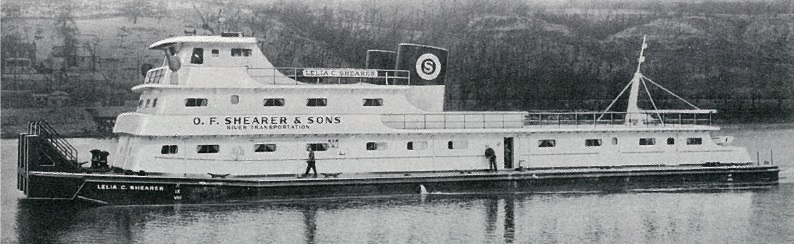
8/9) Towboat Lelia C. Shearer – O.F. Shearer & Sons, – Winchester, KY
Engines 46008, 46009, Shipped 10/19/1956, Order # 1883/1884, 8-498, 1230HP/750RPM

Hillman Barge & Construction both designed and built this 2700HP diesel-clutch twin screw towboat for the O.F. Shearer & Sons company.   She was repowered in 1964 with a pair of EMD 16-567C engines.  The towboat kept her name through several companies and was finally scrapped in 2014.    This was the first 498 powered towboat. 

Diesel Times/J. Boggess Collection

————

10/11) Tug M.P. Anderson – Brown & Root, Inc.
Engines 46010, 46011, Shipped 7/30/1956, 731/1956, Order # 1974, 8-498, 1400HP/850RPM

M.P. Anderson was designed by Brown & Root and built by Gulfport Shipbuilding.  This 123-foot, twin screw, Diesel-Electric tug worked in the Gulf for most of her life and was also repowered with a pair of EMD 16-567C engines, with reverse-reduction gears in place of the electric drive.  She is now working in Baltimore as the Austin Krause (and has one of the largest tug engine rooms I have ever been in).

The M.P. Anderson was covered in the June 1959 issue of Diesel Times. J. Boggess Collection

————

12) Tug William C. Gaynor – Great Lakes Dredge & Dock Co.
Engine 46012, Shipped 9/11/1956, Order # 1956, 8-498, 1400HP/850RPM

This 94’ tug was designed by Joe Hack under Cleveland Diesel for Great Lakes Dredge & Dock.  The tug was built by DeFoe shipbuilding and spent her entire life in the Great Lakes doing dredge work.   Today she is working (under her original name) for Sarter Marine in Sturgeon Bay, WI.   The tug was repowered with an EMD 12-567C in 1990.

————

13) Test Engine
Engine 46013, 8-498

————

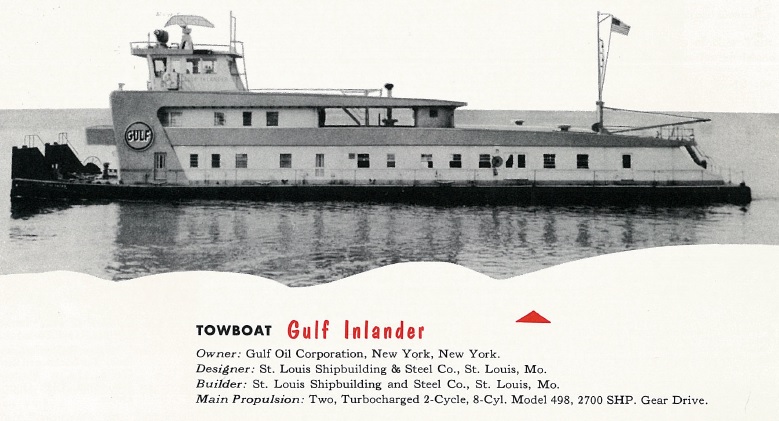
14/15) Towboat Gulf Inlander – Gulf Oil Corp.
Engines 46014, 46015, Shipped 10/26/1956, 11/30/1956, Order 1923/1924, 8-498, 1400HP/850RPM

Gulf Inlander was a twin-screw towboat built by St. Louis Shipbuilding for Gulf Oil.   Now known as the Mary Lynn, she was repowered and now has a pair of EMD 16-645 engines. 

Diesel Times/J. Boggess Collection

————

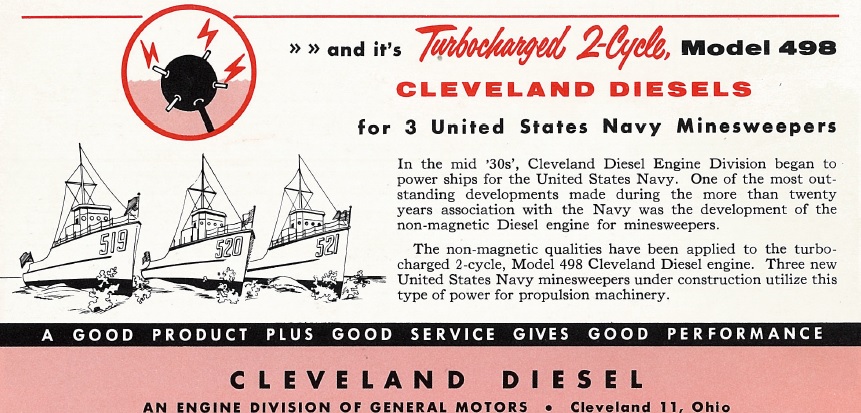
16-26) All engines 8-498 Non-Magnetic, 1400HP/850RPM

MSO-521 Assurance, Engine 46016, Shipped 10/28/1957, Order # 62562
MSO-519 Ability, Engine 46017, Shipped 7/29/1957, Order # 62562
MSO-520 Alacrity, Engine 46018, Shipped 8/5/1957, Order 62562
MSO-519 Ability, Engine 46019, Shipped 6/22/1957, Order 62563
MSO-520 Alacrity, Engine 46020, Shipped 8/7/1957, Order 62563
MSO-521 Assurance, Engine 46021, Shipped 9/10/1957, Order 62563
Naval Supply Depot (spare engine?), Engine 46022, Shipped 11/30/1960, Order 62672
MSO-519 Ability, Engine 46023, Shipped 7/31/1957, Order 62572
MSO-520 Alacrity, Engine 46024, Shipped 8/27/1957, Order 62572
MSO-521 Assurance, Engine 46025, Shipped 11/6/1957, Order 62572
Naval Supply Depot (spare engine?), Engine 46026, Shipped 11/30/1960, Order 62675

USS Ability MSO 519 stricken 1971
http://www.navsource.org/archives/11/02519.htm
USS Alacrity MSO 520 sold for scrap Dec 1979
http://www.navsource.org/archives/11/02520.htm
USS Assurance MSO 521 scrapped in Dec 1979
http://www.navsource.org/archives/11/02521.htm

All we know about these three minesweepers with non-magnetic 498s is what we can find in Wikipedia & Navsource. We have no idea how long the 498s lasted or how well they did – it is likely the reason these ships were retired was because of the 498’s.  Since these three ships were scrapped over 40 years ago, we suspect that information is lost to the ages.  BUT, if there are any ex-Navy sailors out there, drop us a line.    

Diesel Times/J. Boggess Collection

————

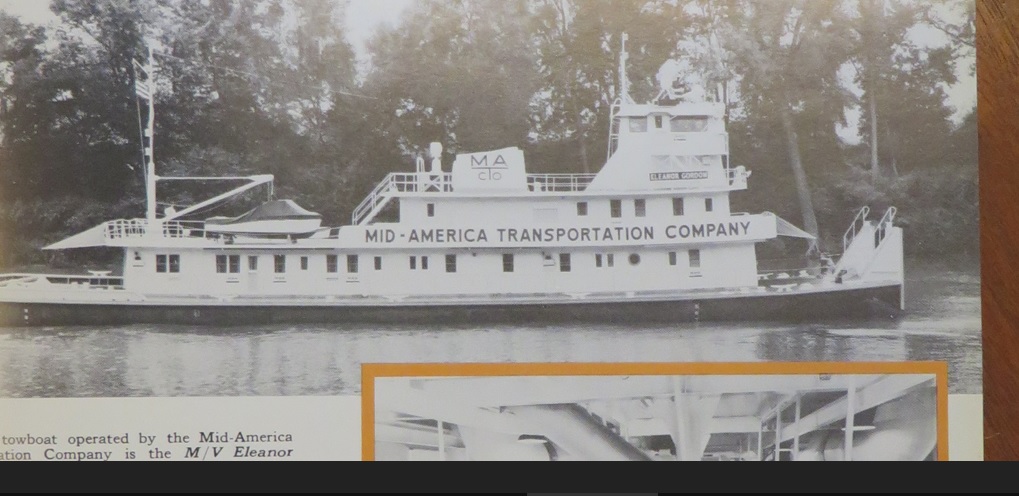
27/28) Towboat Eleanor Gordon – Two engine order, shipped 4/24/1957, Order 2039/2040, 8-948, 1400HP/850RPM. 

Designed and built by Nashville Bridge Co. for Mid America Transportation Company.   This 149’ towboat was powered by the pair of 498 engines with Falk reverse reduction gears.  Apparently Mid-America was so displeased with these engines that the towboat was repowered within 18 months. 

Diesel Times/J. Boggess Collection

The engines were sent back to Cleveland, who rebuilt them and reshipped them under a new order to Great Lakes Towing Company, who installed them into a pair of tugs, the Pennsylvania and Tennessee

 Pennsylvania would be one of the tugs assigned to work all the way down in Florida on a Navy contract in the 1990’s.   Tennessee was scrapped in 2012, with the Pennsylvania being scrapped in 2019.  The Pennsylvania was repowered with an EMD 12-645, however the repower was never completed before GLT decided to scrap her (?). 

Tennessee was an identical sister to the Pennsylvania, and also worked in Florida.  Both of these tugs were the only “G” tugs to have fixed Kort nozzles, with 102” wheels. 

Tug Pennsylvania
Engine 46027, Shipped 11/30/1959, Order 3936

Tug Tennessee
Engine 46028, Shipped 11/30/1959, Order 3937

The Pennsylvania and Tennessee on the job in the early 1970’s. VDD Collection.

————

29) Tug Alexander Wiley Robinson Bay, St. Lawrence Seaway Development Corp.
Engine 46029, Shipped 11/15/1957, Order 2573, 8-498, 1400HP/850RPM

Robinson Bay is a 103’ Diesel-Electric ice breaking tug designed by Merritt Demarest for use in the St. Laurence Seaway.   The tug was repowered by Great Lakes Towing in 1991, who kept the engine as a spare parts source.  The tug is now powered by a Cat 3606 with a 1750HP GE 581 propulsion motor. 

The Robinson Bay at work in Northern New York. Will Van Dorp Photo.

————

30) Development Engine
Engine 51001. 12-498S

————

31/32) Towboat Cypress, Chotin Transportation
Engines 51002, 51003, Shipped 8/31/1956, 12-498, Order 1653/1654, 2100HP/850RPM

Cypress was a 140’ towboat for the Chotin Transportation Company designed and built by J&S Shipbuilding.   The towboat has been out of documentation for some time and repowering/disposition is unknown.

Diesel Times/J. Boggess Collection

————

33) Tug Ralph E. Matton, John E. Matton & Sons, Cohoes, NY
Engine 51004, Shipped 7/31/1957, 12-498, Order 1726, 2100HP/850RPM

Ralph E. Matton was a New York Canal tug, designed and built by Matton.  The tug was repowered with an EMD 16-567C, and later became the Mary Turecamo, and Albany.  It was scrapped about 15 years ago. 

Courtesy of Dave Boone

————

34) Tug Spartan, James McWilliams Blue Line, NY, NY
Engine 51005, Shipped 9/14/1956, 12-498, Order 1893, 2100HP/850RPM

Spartan was a NY Canal tug, designed by Cleveland Diesel (Joe Hack) and built by Calumet Shipyard.   The tug became part of the Ira Bushey & Hess family of companies and was reefed in 1986. 

VDD Collection

————

35) Tug Matton #25, John E. Matton & Sons, Cohoes, NY
Engine 51006, Shipped 10/20/1956, 12-498, Order 1939, 2100HP/850RPM

Matton 25 was a New York Canal tug, designed and built by Matton.  The tug was repowered with an EMD 16-645, and later became the Joan Turecamo, and Everglades of Seabulk Towing.  It was reefed in 2017.

————

36) Tug Matton, John E. Matton & Sons, Cohoes, NY
Engine 51007, Shipped 4/29/1957, 12-498, Order 2210, 2100HP/850RPM

Matton was a New York Canal tug, designed and built by Matton.  The tug was repowered and later became the Kathleen Turecamo, and Troy.  It was reefed in 1990.

Courtesy of Dave Boone

————

37) Test Engine
Engine 51008, Order 3133

————

38) Gen-Set, Bell Telephone Co., Philadelphia, PA
Engine # 51009, Shipped 7/17/1957, Order 2118, 12-498, 1840HP/720RPM

————

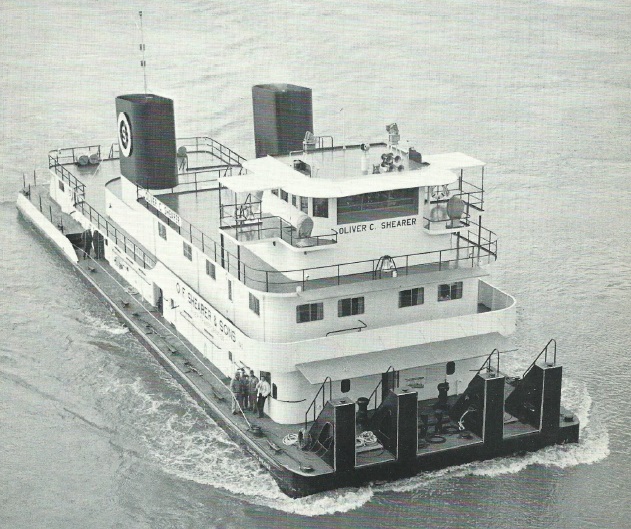
39/40) Towboat Oliver C. Shearer, O.F. Shearer & Sons, Cedar Grove, WV
Engines 51010, 51011, Shipped 7/14/1960, Order 5058/5059, 7/21/1960, 12-948, 2100HP/800RPM

Shearer returned for another set of engines for a second towboat, the Oliver C. Shearer.  She was designed by Friede & Goldman Inc. and built by Marietta Manufacturing.   The towboat was repowered in 1965 with EMD 16-567C’s and has since been repowered several times with EMDs.  The towboat is still in service under her original name. 

Diesel Times/J. Boggess Collection

————

41) Development Engine
Engine 57001, Order 4150, 16-498S

————

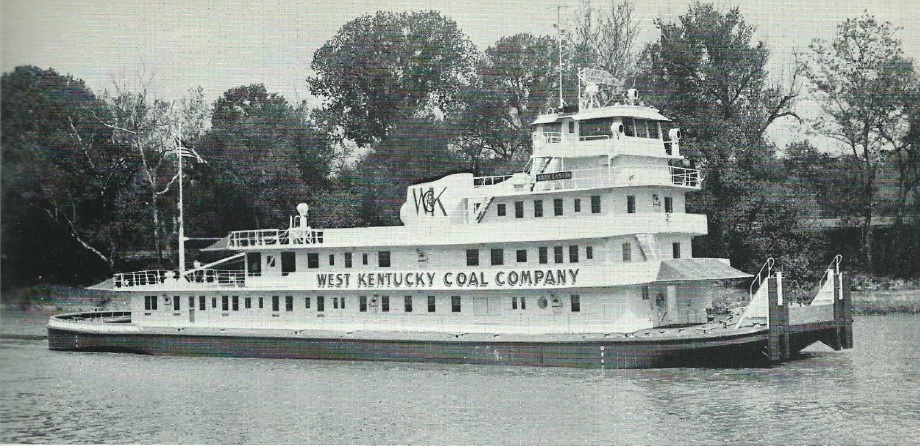
42/43) Towboat Mark Eastin, West Kentucky Coal Co., Madisonville, KY
Engines 57002/57003, Order 1775/1776, Shipped 12/14/1956, 11/30/1956, 16-498, 2800HP/850RPM

The 177’ Towboat was at the time, the most powerful twin screw towboat on Inland Rivers.  Repowered in 1969 with EMD 16-645 engines.   In service today as the Kevin Michael

Diesel Times/J. Boggess Collection

————

44-53) Gen-Sets, Cia Cubana de Electricidad, Havana, Cuba
All engines are 16-498, 2850HP/720RPM, Order 2361

Engine 57004, Shipped 7/13/1957
Engine 57005, Shipped 7/19/1957
Engine 57006, Shipped 7/31/1957
Engine 57007, Shipped 8/6/1957
Engine 57008, Shipped 8/30/1957
Engine 57009, Shipped 8/31/1957
Engine 57010, Shipped 9/14/1957
Engine 57011, Shipped 9/21/1957
Engine 57012, Shipped 9/26/1957
Engine 57013, Shipped 9/30/1957

The largest order of 498 engines were these stationary 2000kW engines for a Cuban powerplant.   It is unknown how long, or if they still exist.   Anybody in Cuba want to go exploring for us? 

Diesel Times/S. Zelinka Collection

————

54/55) Gen-Sets, Saudi-National, LTD, PEX-583007
Engines 57014, 57015, Shipped 12/3/1958, 12/12/1958, Order 2982, 16-498, 2800HP/720RPM

————

56-58) Dredge Alaska, Great Lakes Dredge & Dock

Pump Engines
Engines 57016, 57017, Shipped 9/24/1959, Order 3756, 3757, 16-498, 2770HP/800RPM

Gen-Set
Engine 57018, Shipped 12/28/1959, Order 3760, 16-498, 2800HP/800RPM

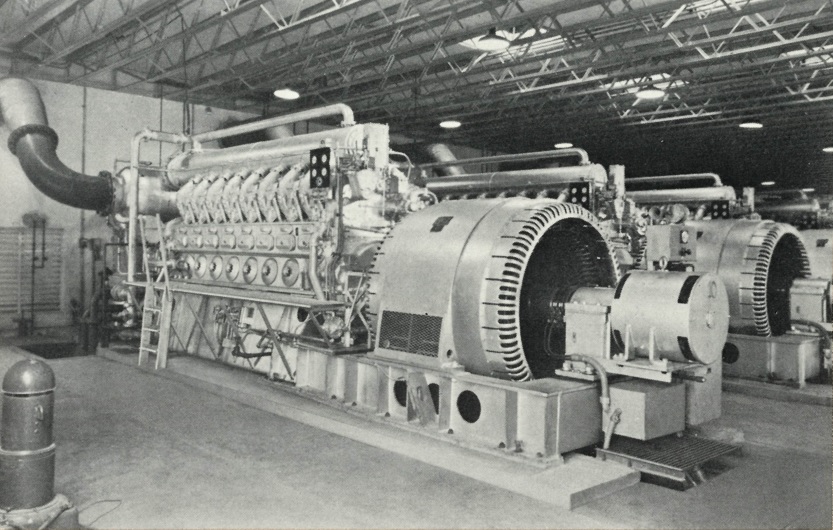
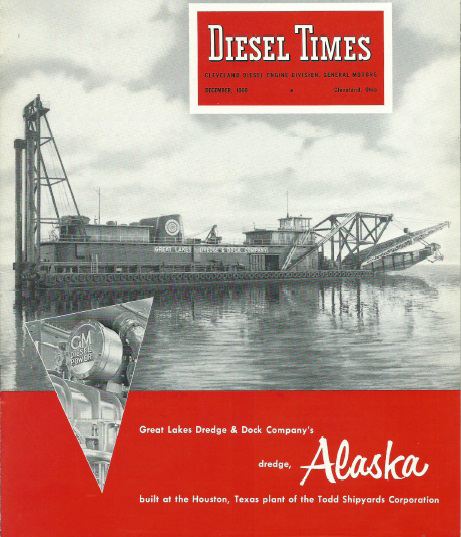
Hydraulic Dredge Alaska used a trio of 498 engines.  Two engines drove the main pump drive unit, with the 3rd driving three generators, a 1250kW, 500kW and a 200kW, all on a common frame.   The Alaska is still in service, but of course was repowered, and currently has EMD 710 engines. 

Diesel Times/J. Boggess Collection


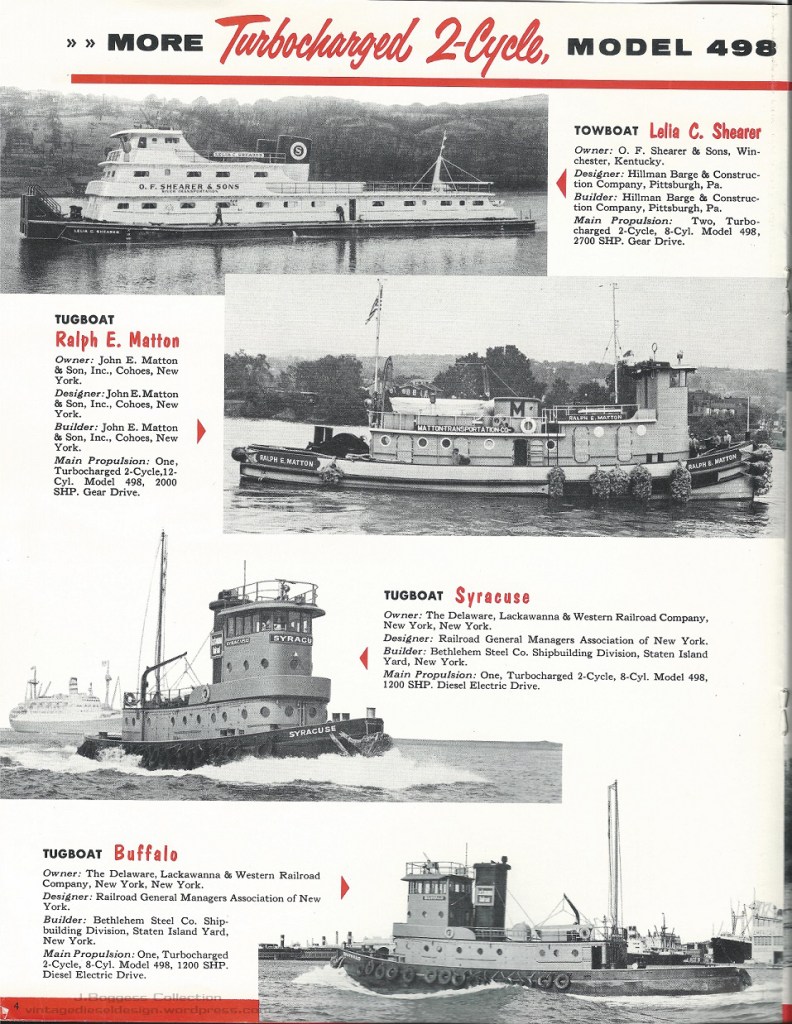
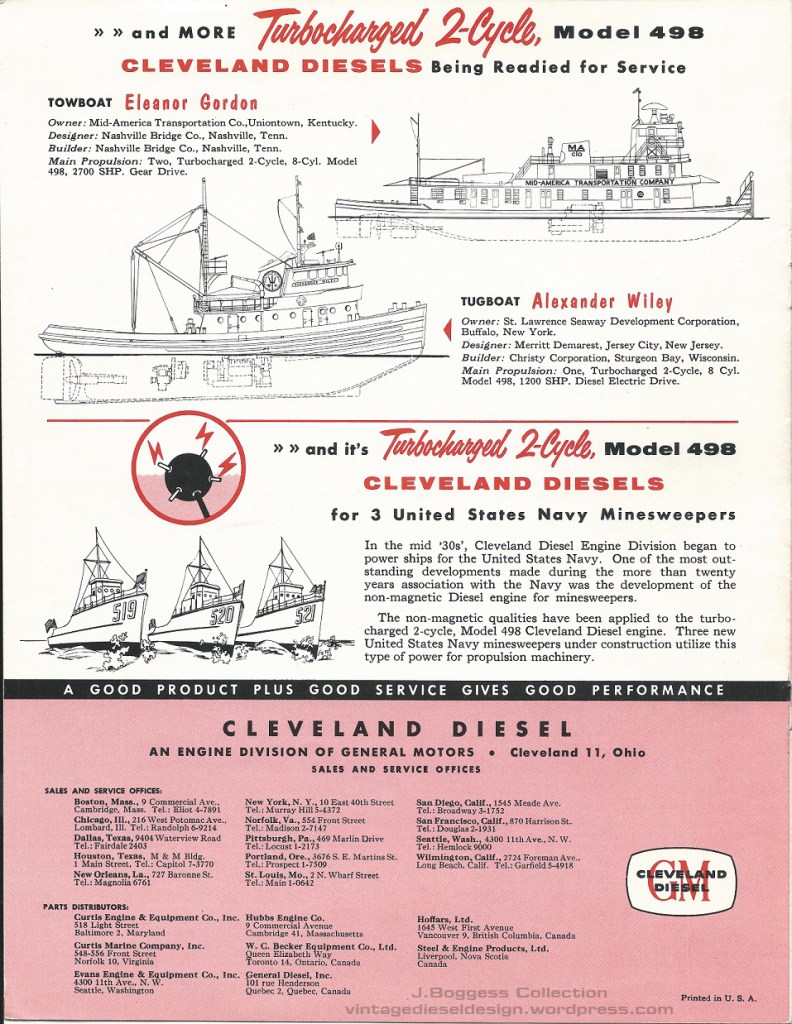
While most of the above users of the 498 were featured in a dedicated issue of Cleveland Diesel’s newsletter Diesel Times, the 9/1957 issue showcased the current maritime users of the engine. Click for larger.

Coming up in the final part of A Turbocharged Failure will be a post dedicated to the Great Lakes Towing tugboat Idaho, the last known 498 engine to be in use.

Thanks to my Cleveland Research Partner J. Boggess for proofing and sharing the above issues of Diesel Times.