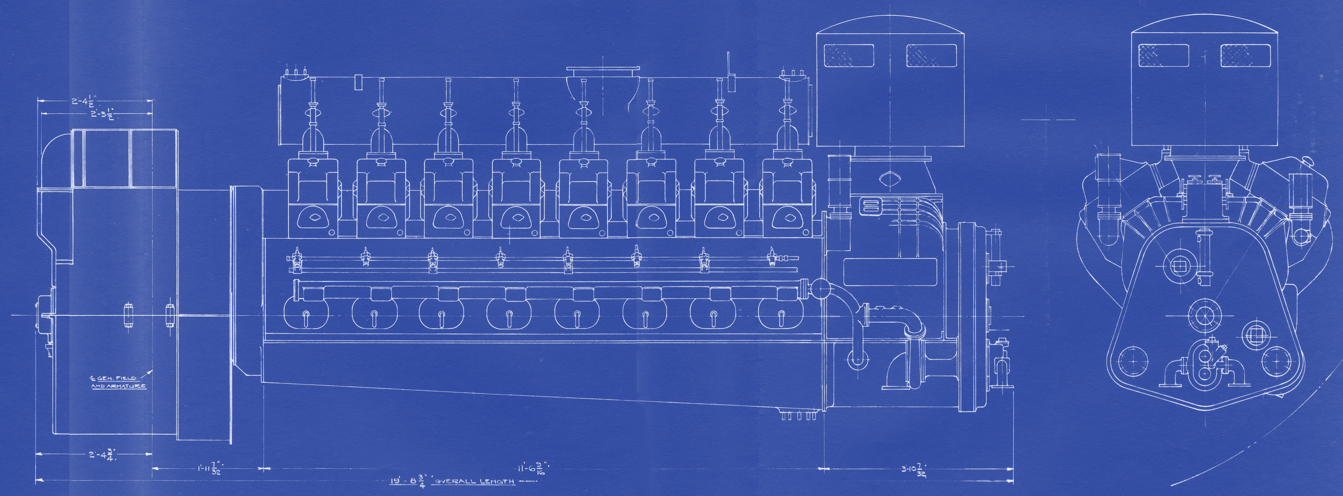
One of the most ubiquitous locomotives of the century is the Alco-GE-IR boxcabs, produced in the early 1920’s through the late 1930’s. What began as an experimental project in the 1910’s, would be the first strong foothold in the eventual dieselization of the nation’s railroads.

From a 1935 Ingersoll-Rand Locomotive Catalog I have
The Boxcab project began under General Electric in 1904, unfortunately, due to the lack of a practical & more importantly, an engine that actually “worked”, the project never really took off. The project was reignited in 1920, now with Ingersoll-Rand onboard supplying the diesel engine. The American Locomotive Company would supply the running gear and body, with General-Electric suppling the electrical gear (generator, traction motors & switch gear). Three locomotives were built at General Electrics Erie, PA plant as stock to sell, finished in the later part of 1924.
The trio would become:
GE #9681/Alco 65979 – Central RR of New Jersey #1000 (credited as the first diesel locomotive placed in service on a US railroad)
GE# 9682/Alco 65980 – Baltimore & Ohio #1
GE# 6983/Alco 65981 – Lehigh Valley #100

Even though these were more of a GE locomotive then anything, since it stemmed from their idea, Ingersoll-Rand would be the ones that would do the majority of the press work and really “push” these locomotives. Alco was merely a contractor, and more then happy to keep building steam.
The timing for these engines was perfect – In 1923, New York City passed the Kaufman act, in which railroads operating in NY City would need to electrify and ban the use of steam engines by 1926. You can read more about this act and its requirements here: http://members.trainweb.com/bedt/IndustrialLocos.html#Kaufman
So, being that this is a diesel engine website, let’s talk about the real reason for this post. Inside the boxcabs, were 6-cylinder Ingersoll-Rand model PR “oil” engines. I wrote about the PR engine, and its use in early railroad tugboats, in my book. The PR stood for the engine’s original designers, William Price and George Rathbun. Ingersoll-Rand licensed the design and started to build these slow-speed oil engines. In the era, what we know now as the diesel engine, was more commonly referred to as an “oil” engine, since there was still lots of anti-German mentality floating around the country at the time.
Ingersoll-Rand built the PR engine in a larger, 14” x 19” size, which was used in marine service mostly, and a slightly smaller 10” x 12” size, used in these locomotives. These were super basic engines, 4 stroke, with solid injection.

Ingersoll-Rand 14″x19″ PR engine used in tugboats. IR Catalog Photo
Thanks to one of our viewers who wished to remain nameless, we were sent in a batch of photos of a walk-through of one of these original survivors, B&O #1, now at the St. Louis Museum of Transportation. Amazingly enough, CNJ #1000 also survives, at the B&O museum in Baltimore, and is immaculately restored. 3 other early Alco/GE/IR Boxcabs also survive.

B&O #1 (now numbered 8000) at the West 26th Street Yard in Manhattan. Unknown Photographer/Bobs Photo Archive Collection/ Freightrrofnyc.info
In 1942, the B&O #1 was renumbered as #195, and again in 1957 to #8000. The engine was retired in 1959, and became part of the museum collection in 1960, where it still sits today.
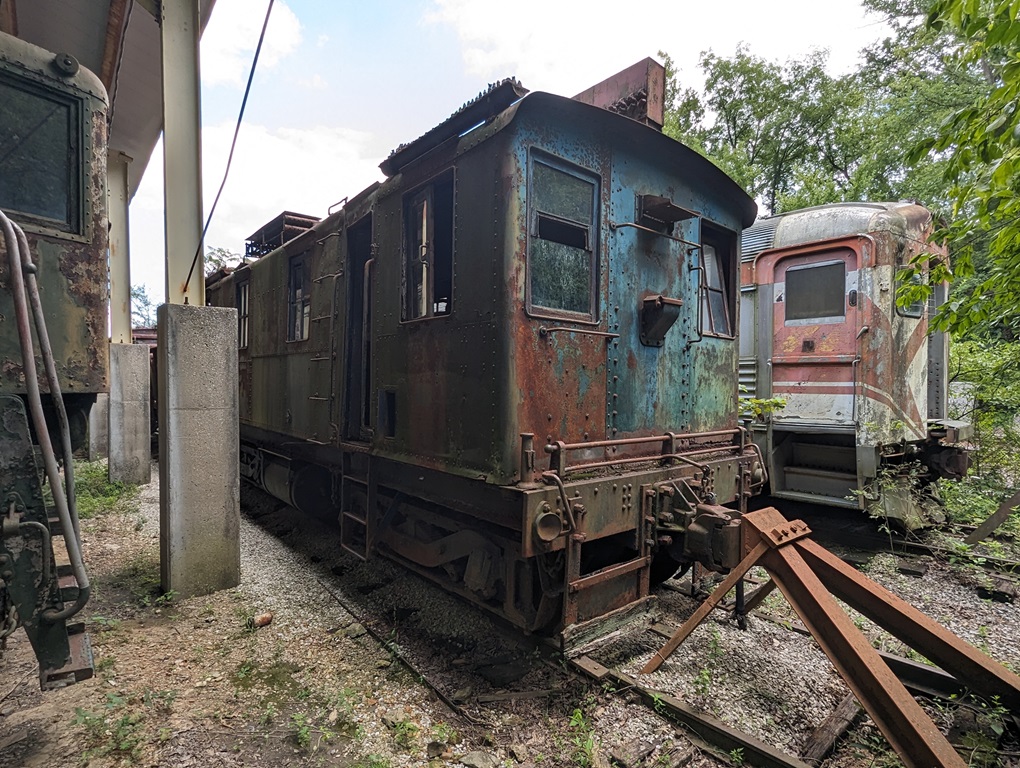
Unfortunately, B&O#1 is consigned to the back lot of the museum. The engine is in pretty rough shape, with all of the copper missing from the roof radiators, and it looks like it has some significant crane damage on the carbody above the cab doors.

Stepping inside and looking to the left, is the giant GE generator, with air tanks on either side.

Looking to the right, is the rear controls, including a 14EL brake stand, throttle, and trolley-style controller.
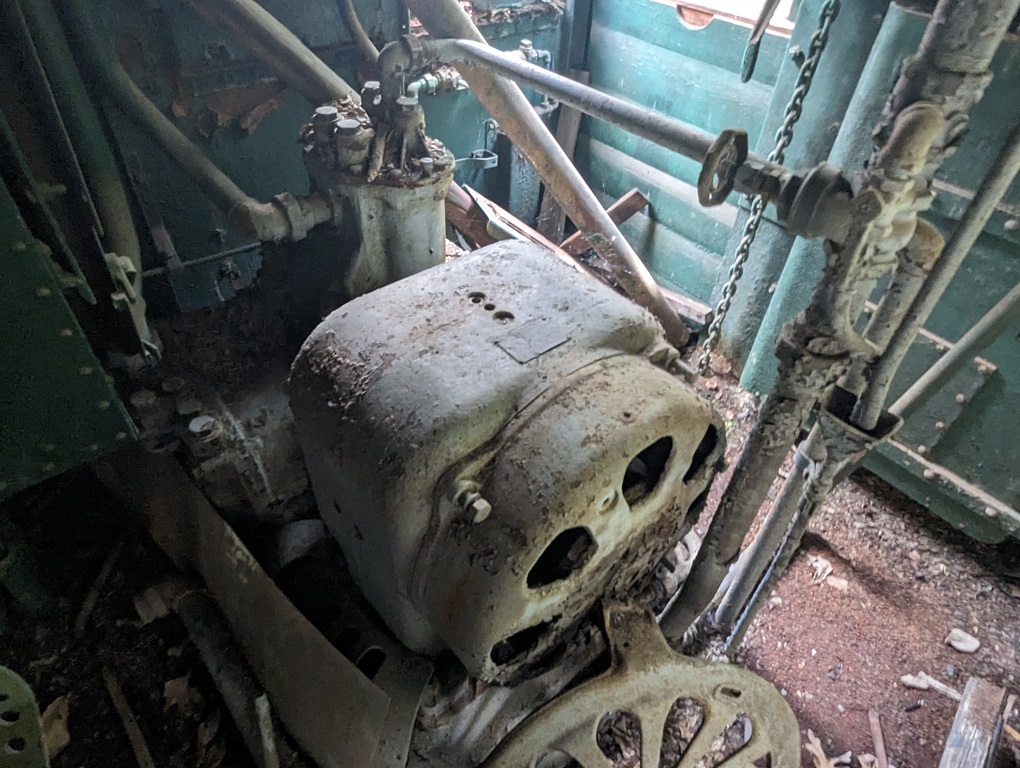
Left of the rear controls is the air compressor, with the handbrake chain visible on the wall in the back.

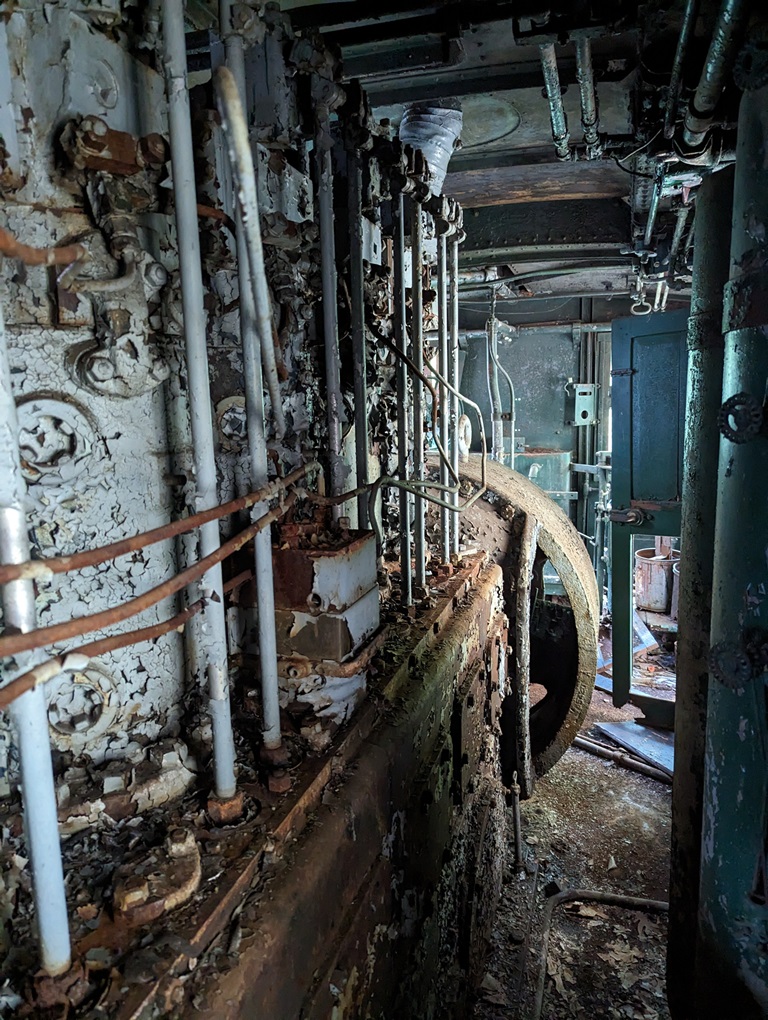
Walking towards the front of the locomotive, you pass next to the massive IR engine. Yes – those are indeed exposed push rods leading up to the rocker arms.

The walkway between the engine and the air tanks is extremely narrow to say the least. On either side are air tanks, with both train air as well as large storage tanks, as this is an air-start engine. On the front of the engine is the fuel injection and governor equipment.
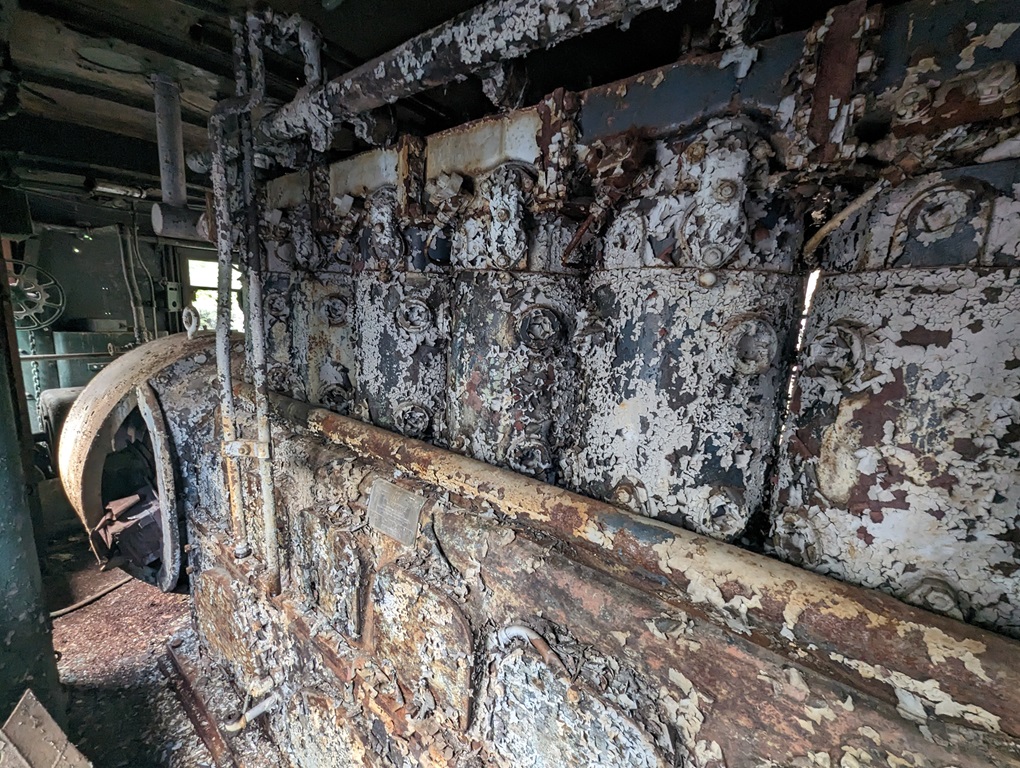
The right side of the engine is rather barren of equipment, with the generator visible in the rear.

The engine plate, giving credit to the Price engine corporation. The engine is rated at 300HP at 600RPM.

Looking back towards the front is a basic partition to the front cab area. I honestly have no idea what the hooded area on the center left was for. If anyone knows, please let me know.

The actual cab on the front end, is simply an exact duplicate of the one on the rear.
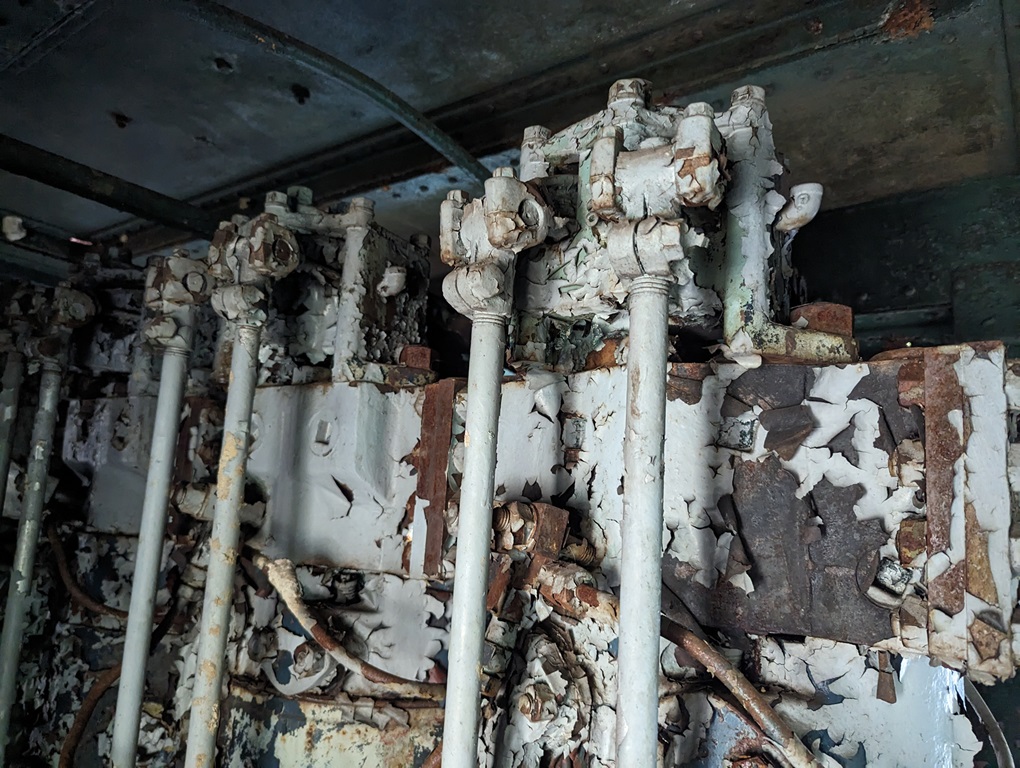
A closer look at the push rods and valves.
As we are approaching the 100th year of some of the early diesel engines, I could hope that one day this boxcab can be restored, being that it is in fact the second successful diesel locomotive used in the country. The museum is also home to several other early historic diesels with several powered by Winton engines, including Gas-Electric motorcar B&M 1180, EMC NC switcher Youngstown & Northern 202, the CB&Q Silver Charger power car from the General Pershing Zephyr and the B&O #50 EMC boxcab locomotive.
Richard Steinbrenner has a great section on these boxcabs in his book, Alco: A Centennial Remembrance.
Alco/GE/IR Boxcab Roster: https://www.thedieselshop.us/Alco-GE_Boxcabs.HTML
B&O’s W 26th Street yard & B&O #1: http://members.trainweb.com/bedt/indloco/bo26.html#Locomotives
 Vintage Diesel Design
There is also one of these IR box cab locomotives at the Henry Ford museum in Dearborn ,Michigan
LikeLike