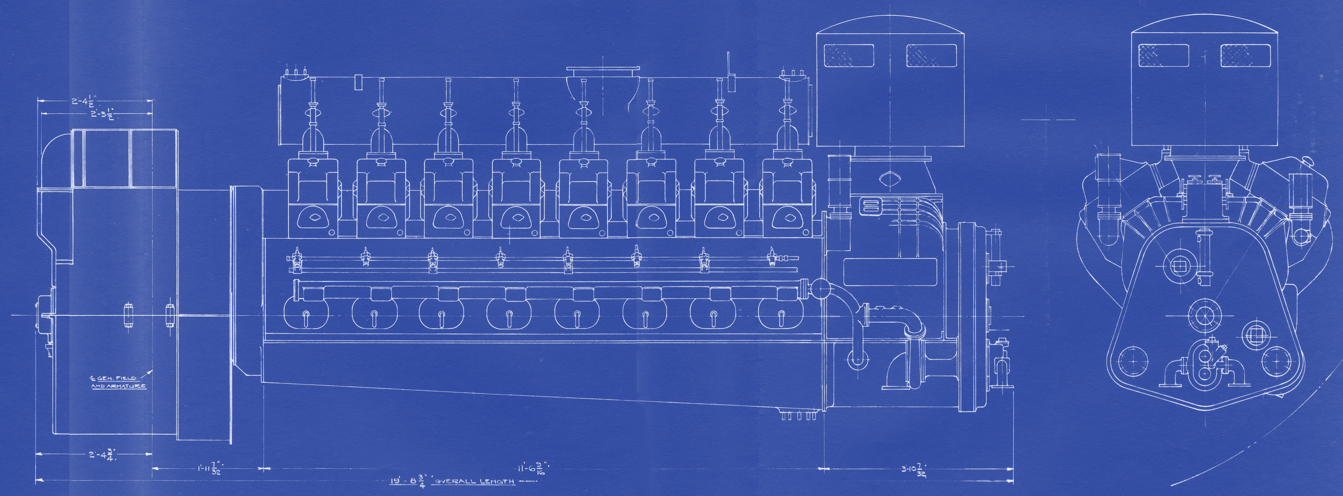
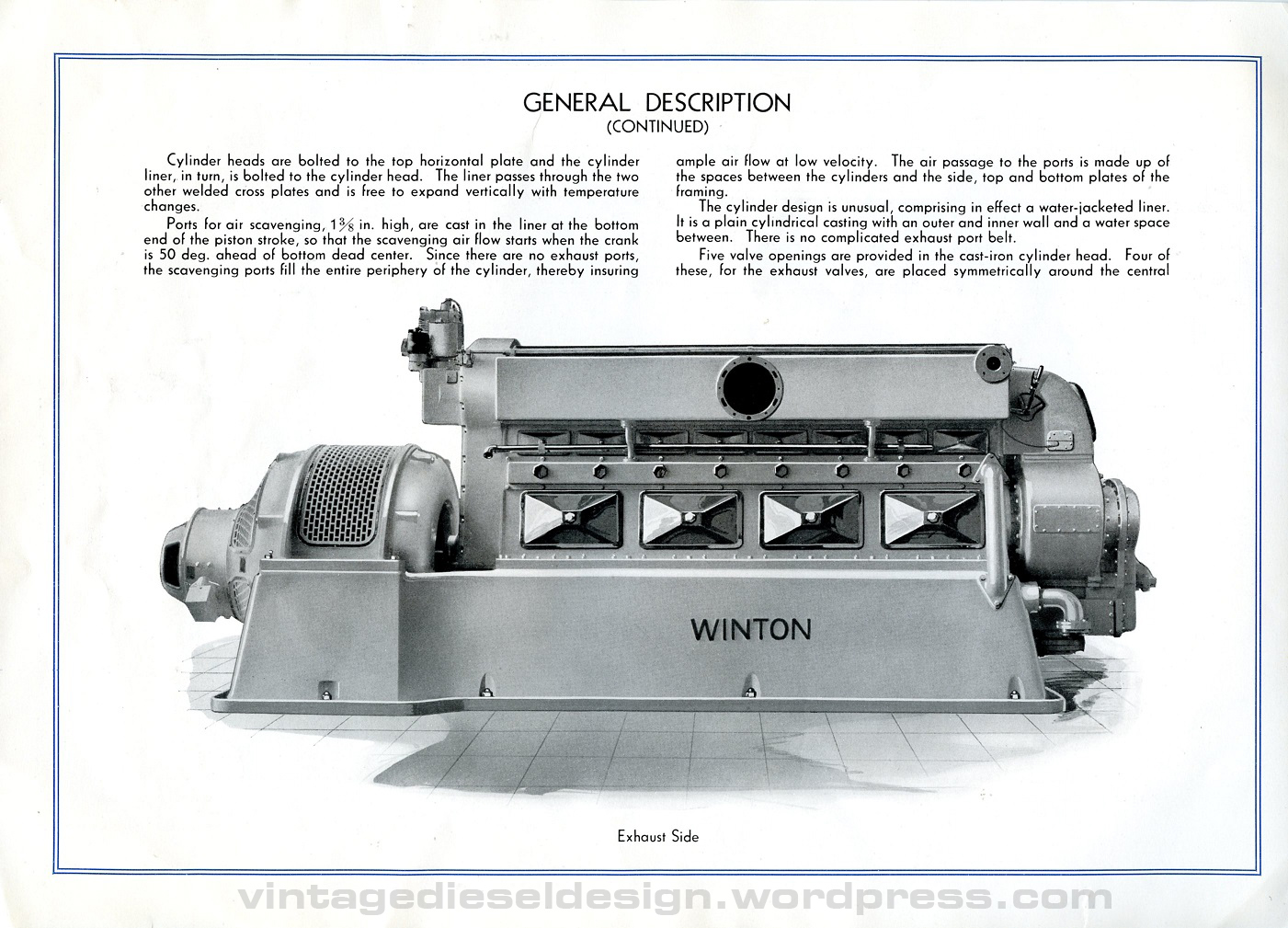
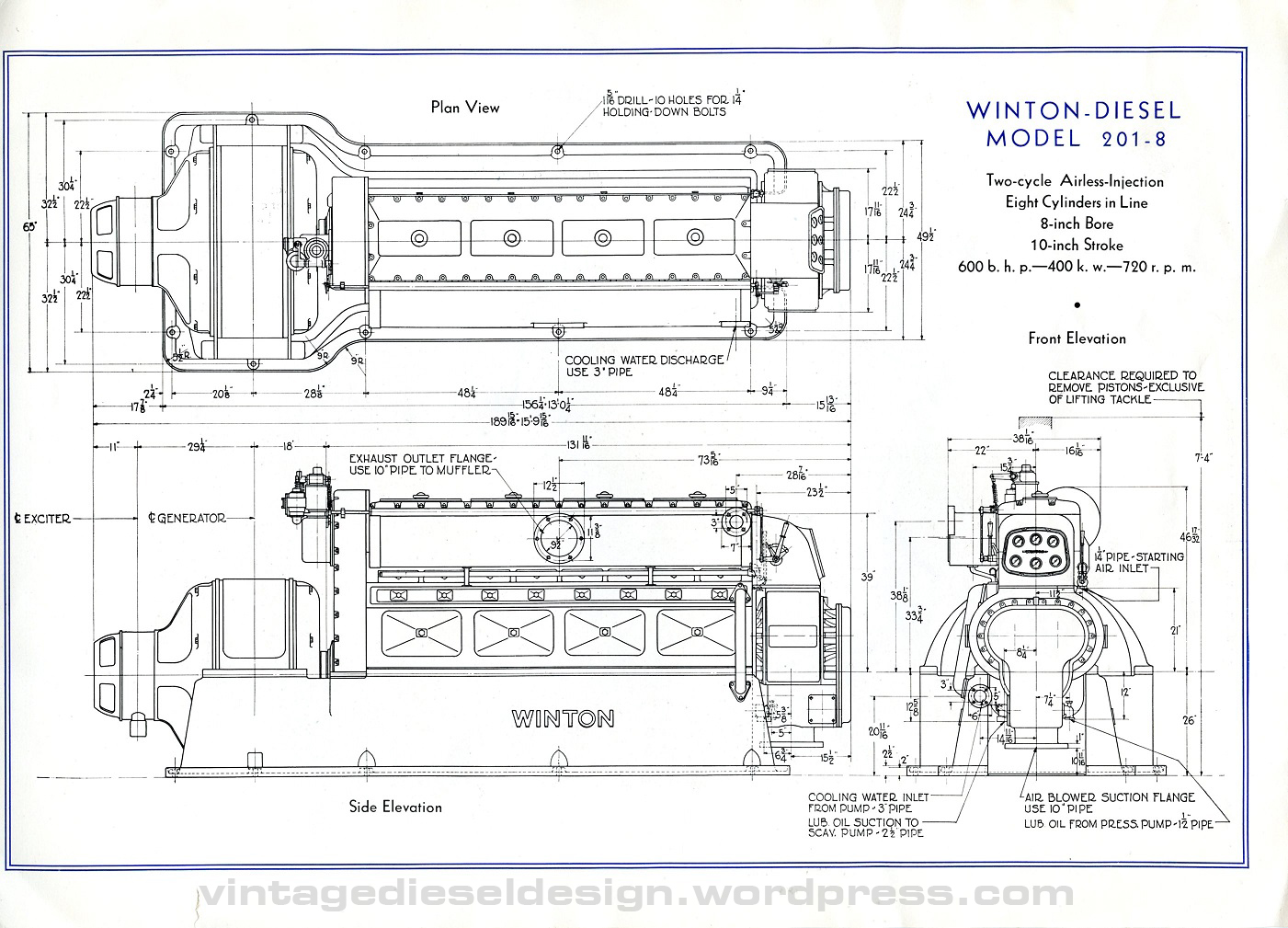
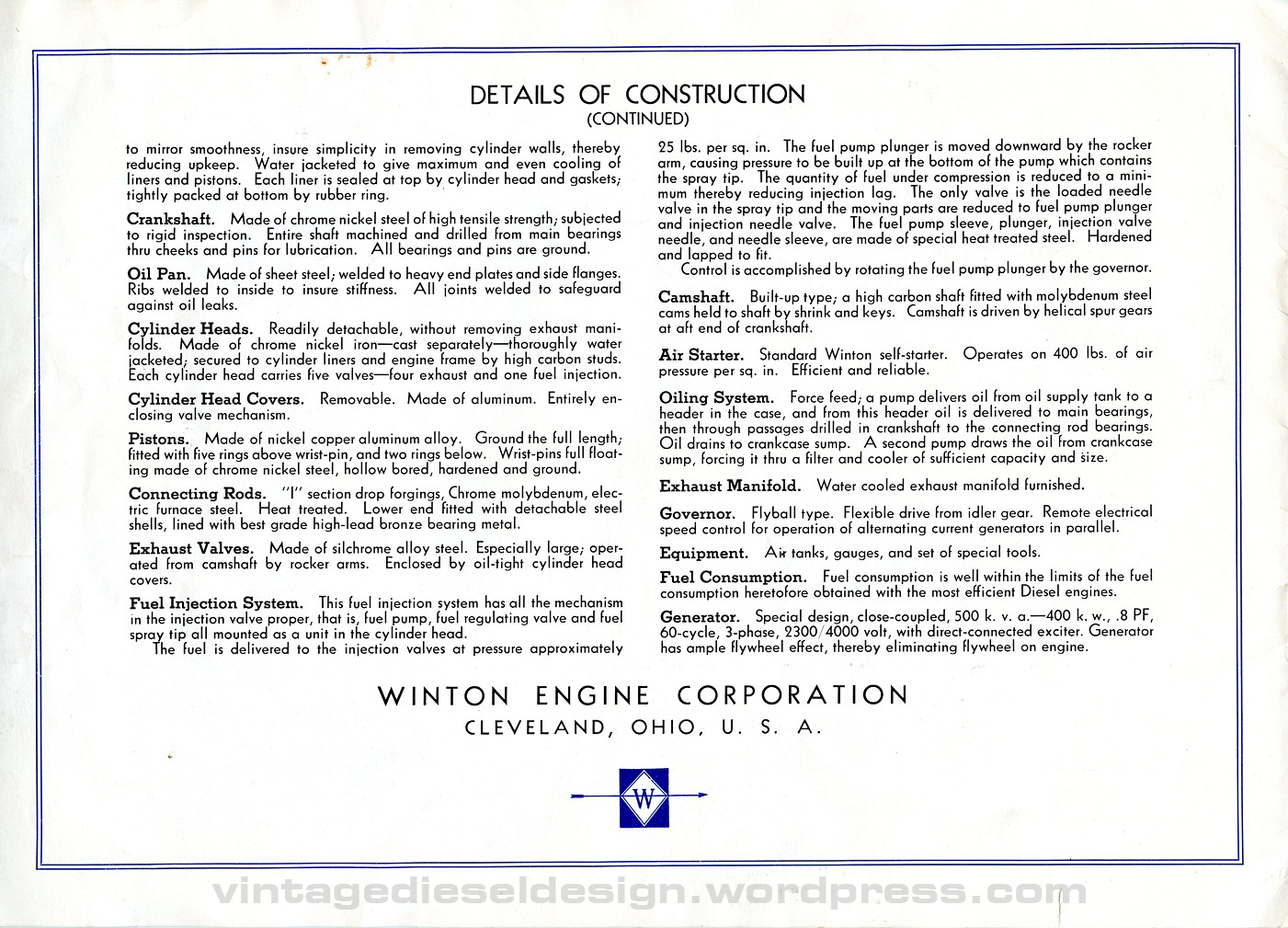
Happy New Year! We shall begin this year with a brochure – the Winton 201 engine used to power the Century of Progress Exposition in Chicago, held in 1933-4. I was able to get a copy of this a few years back, so here is a scan. Click them all for a larger version.
It even came in its original, unused mailing envelope!
Winton News
Eugene Kettering would state in his 567 development paper the following about these engines at the expo:
“The boys worked all night and hoped the engines would run all the next day. It was no fun, but we learned fast and a new design study was soon underway at Winton. To mention the parts with which we had trouble in Chicago would take far too much time. Let if suffice to say that I do not remember any trouble with the dip stick.”
Needless to say, the engines did work at the end of the day, and provided an important stepping stone for Winton and the developments with which would become the 201A engine, to be used in many railcars, locomotives and submarines. While the engine was not entirely a success in the long run, it did lead to the development of the Winton 248 engine for Marine use, and the 567 engine for locomotive use, and the Detroit Diesel 71 line.
Amazingly enough, one of these engines is a survivor, on display at the Illinois Railway Museum in Union, IL. It would become a trade show display for General Motors through the years. Unfortunately, the sister engine to my knowledge disappeared.
I truly hope one day we can see a Winton 201A run again for display.
A few months back, I made a post on the tug Luna and Venus, of the Boston Towboat Company, dubbed Historic Tugs I. The intention was to highlight museum vessels and whatnot with historic documentation and photos. To change that a bit, I am going to start a new series covering just tugs of the 1930’s-1970’s, including both new and repowered boats, using several styles of propulsion. This first tug profiled, will be the M. Moran.
Not much has to be said about Moran Towing, one of the oldest and well known tugboat companies in the world, founded in 1860 by Irish immigrant, Michael Moran. Moran Towing is a well established company, using a vast fleet of tugs, ranging from small 80′ direct reversing Canal tugs, to large, WWII surplus ocean going 165′ tugs, many of which were on charter from the US Navy. Fast forward to 1960: These were all single screw tugs, never exceeding much more then about 2000HP. Moran Towing had a long history of working with TAMS Inc., and later the General Motors Marine Design Section under naval architects Richard Cook and later Joe Hack.
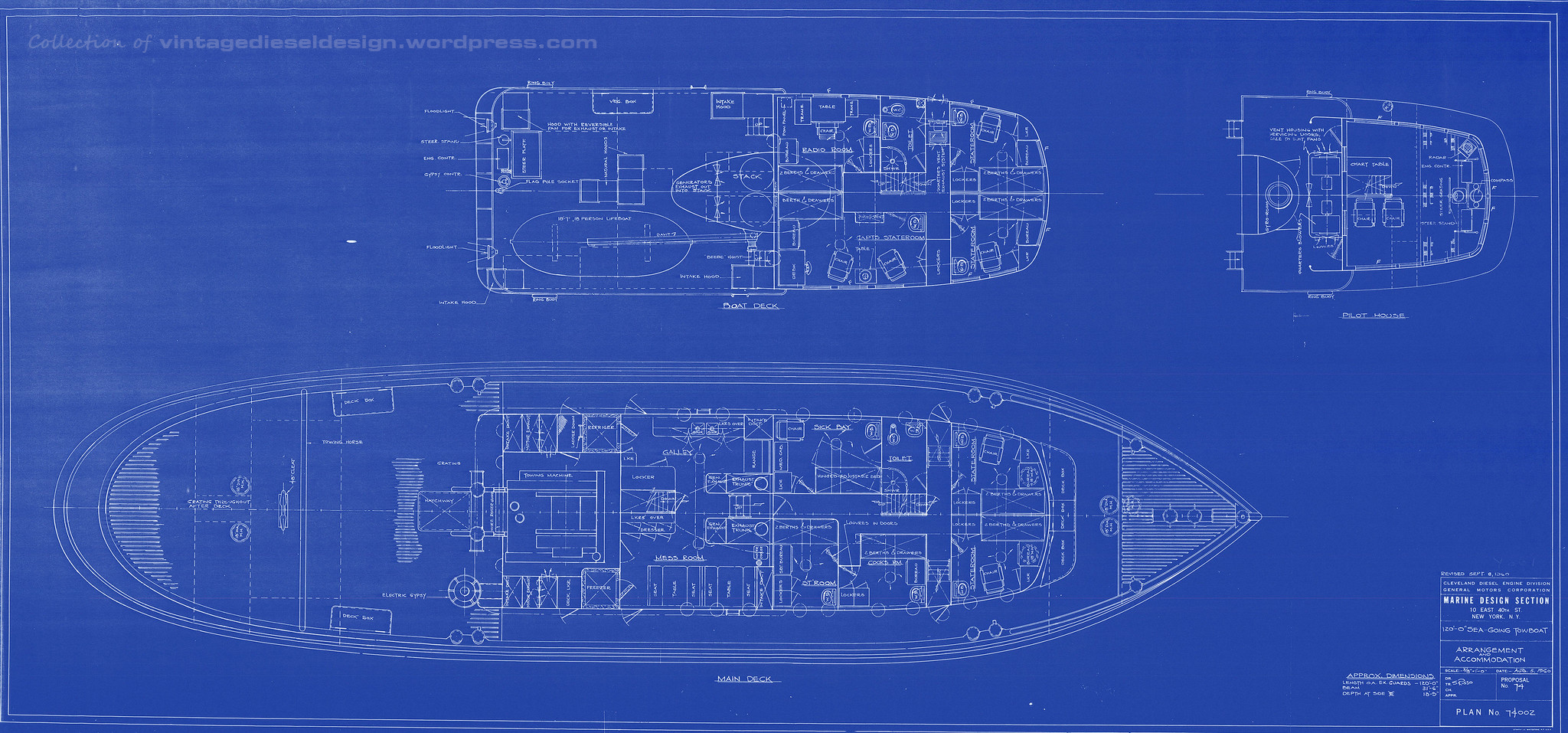
In the era, just about every tug was considered “Ocean Going” (a scary thought..), however in reality only the larger, WWII era tugs really were just that, with the rest being glorified harbor and coastal tugs. Joe Hack would design Moran a 120′ tug, with a 31′ beam, and an 18’9″ depth. A new first for Moran was also introduced – twin screw propulsion.
Click for larger – CDED Drawing, collection of VDD
The tug was named the M. Moran, after the founder of Moran Towing’s Michael Moran. She would be the 7th tug named for him. The M. Moran was designed for an 11,000 mile range, or anywhere in the world – holding a capacity of 75,000 gallons of fuel. The M. Moran was built in Texas, by Gulfport Shipbuilding.
Click for larger – CDED Drawing, collection of VDD. I acquired these original drawings several years ago, they are several feet long! Thanks to Jay for scanning them.
The M. Moran had a rather unorthodox layout, using two split levels underneath the wheelhouse, giving her a rather odd, low profile appearance, but affording a massive amount of interior space. 9 full staterooms, two of which were dubbed a radio room, and a sick bay. A large central galley was located over the engine room – thus she lacked any actual upper engine room, also known as a fiddley. Behind the galley was a space for a 75HP Almon-Johnson towing machine.
Diesel Times – Collection of J. Boggess
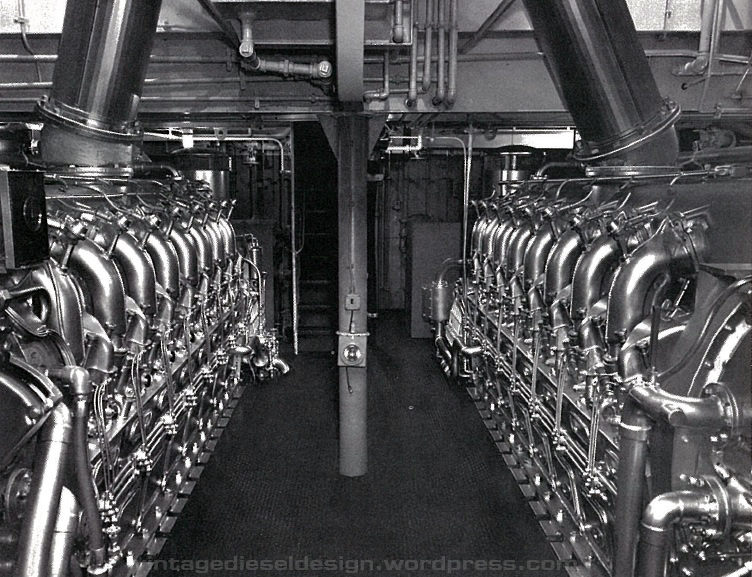
You guessed it – the M. Moran was Diesel-Electric, powered by a pair of Cleveland Diesel, 1750HP 16-278A engines, with Allis-Chalmers main generators – all WWII surplus equipment, giving her a rating of 3,500HP. The engines were factory rebuilt, and were originally installed in US Navy Landing Ship LSM-529 (engine #55810), and LSM-324 (engine #55284). Ironically the other engine from LSM-324 would also go to Moran, re-powering the steam tug Michael Moran. The tug had a pair of Detroit Diesel 6-71’s for generators, as well as a piggyback shaft generator belt driven on top of each main generator. The tug had a pair of 9′ 10″ wheels, and a rated bollard pull of 95,000lbs.
Diesel Times – Collection of J. Boggess
The wheelhouse of the M. Moran featured American Engineering electric-hydraulic steering system, and the same Lakeshore throttle stands used by Cleveland for a number of years, of course modified for twin screw. A Sperry gyro, and radar rounded out the interior – pretty spartan, even for its time. While the maneuverability of Diesel-Electric is well known, an interesting feature of the M. Moran – being twin screw, was the cross-compatibility. The tug could run on only one engine, and power both propulsion motors when running around lite tug, somewhat of a throwback to the Destroyer-Escorts of WWII (where the propulsion motors in the tug originated), where various combinations of engines could power certain groups of motors.
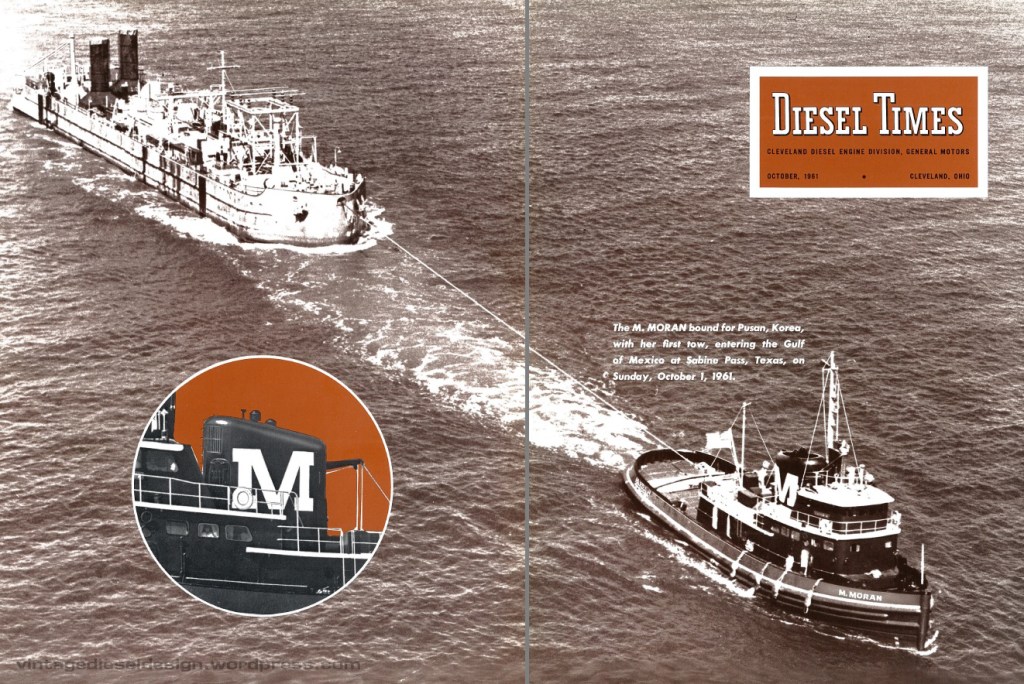
Diesel Times, 10/1961 – Collection of J. Boggess
The M. Moran was placed in service on 9/27/1961, and her very first trip, just a week later – would take her all the way to Pusan, South Korea, towing the 30,000kW generating barge Resistance, a WWII LST converted into a powerplant. The M. Moran was well covered in Cleveland Diesel’s Diesel Times newsletter Diesel Times, as well as several issues of Moran Towing’s own newsletter, Tow Line.
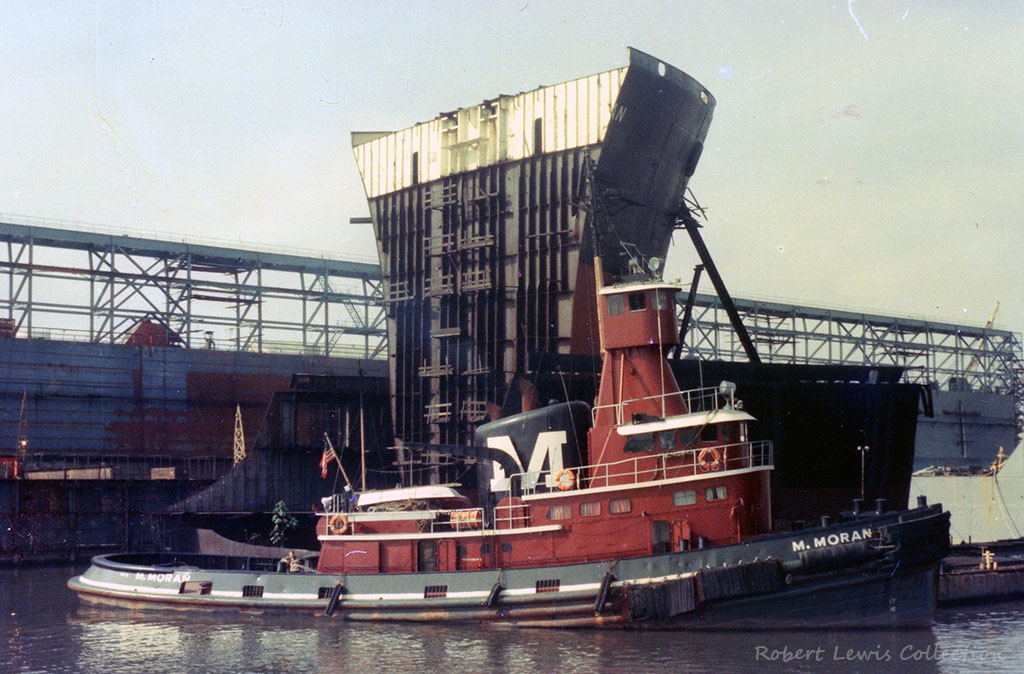
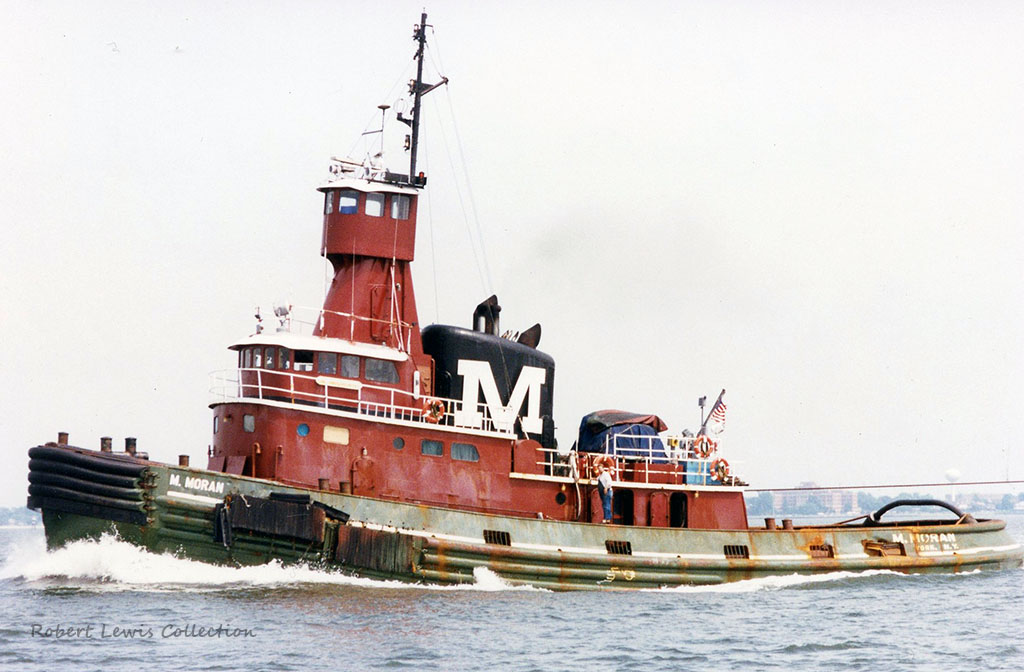
By the late 1960’s the M. Moran would gain a large upper wheelhouse. She would spend many years running around the Gulf area towing large project cargo, as well as the occasional foreign tow. The M. Moran was briefly renamed as the Port Arthur for a brief time in the early 1970’s, likely operating under a charter.
Robert Lewis Collection
Moran would go on to order a 2nd tug, to the same design as the M. Moran, named the Esther Moran. The Esther would be built in New York, by Jakobson Shipbuilding. At the same time, Jakobson also built the Patricia and Kerry Moran, which used the same hull design, however it was shortened 12′ with the tug being setup for harbor work, thus lacking the towing machine and split levels. These three tugs would be the last new tugs powered by Cleveland 278A engines. Cleveland was rolled into Electro-Motive in late 1961.
Robert Lewis Collection
Both the M. Moran and the Esther were not Cleveland powered very long. Both tugs would be repowered with EMD 16-645E engines with air clutches by the end of the 1960’s, giving them a new rating of 6,300HP – a massive amount of power at the time. Joe Hack would revisit the split level design with a pair of tugs for Gulfcoast Transit, the Katherine Clewis and Sarah Hays.
Will Van Dorp Photo
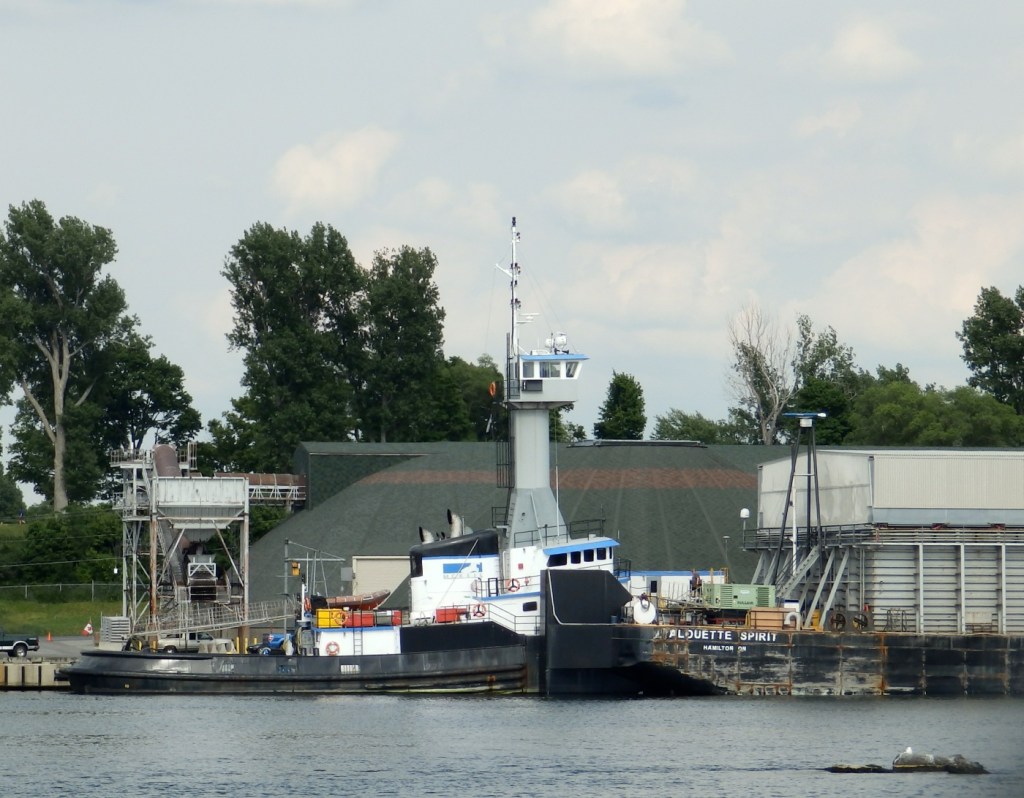
In 2000, Moran sold both the M. Moran and Esther Moran to Canada’s McKeil Marine. The M. Moran became the Salvager, and the Esther as the Salvor. The Salvager became the Wilfred Seymour in 2004, later being shortened to Wilf Seymour. Both tugs operate in the Great Lakes, and both would be converted into Articulated Tug-Barge combinations, with the Wilf getting a Bludworth coupler, and the Salvor a JAK system. The Salvor was laid up in 2018, and the Wilf is still in service. 10/2021 update: McKeil has scrapped the Salvor in Hamilton, Ontario.
Will Van Dorp PhotoPainting by Carl G. Evers
Noted maritime artist Carl G. Evers would do several paintings of the M. Moran, including one of her in Korea. Several of Carl’s paintings have graced the cover of Moran’s Tow Line.
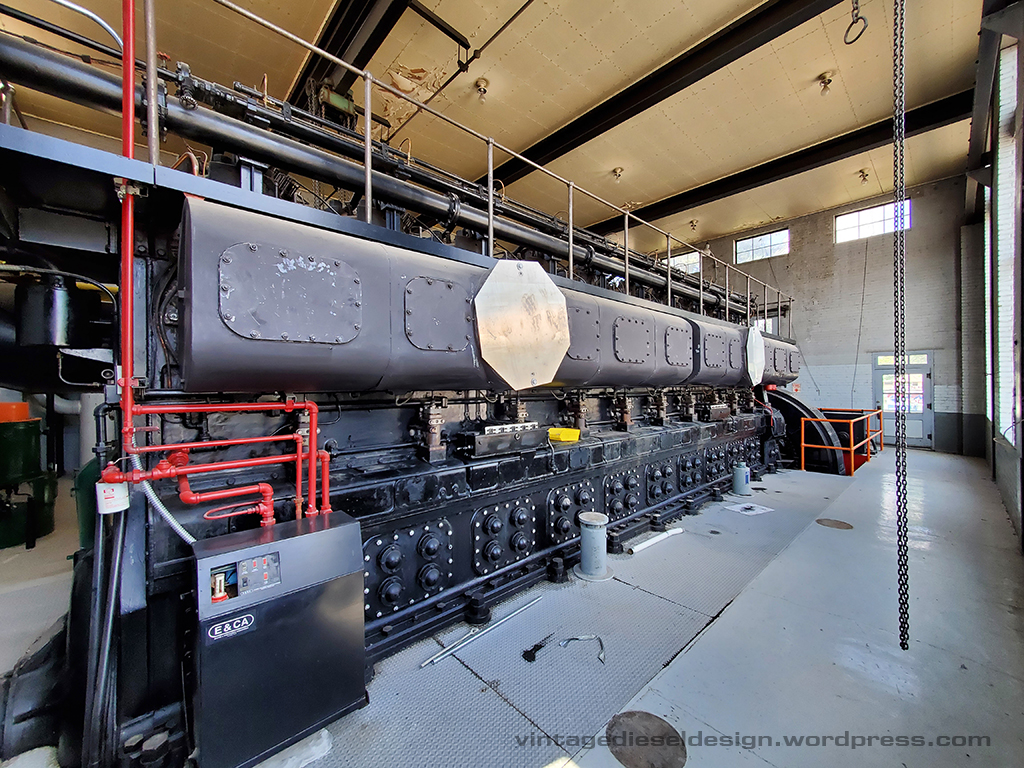
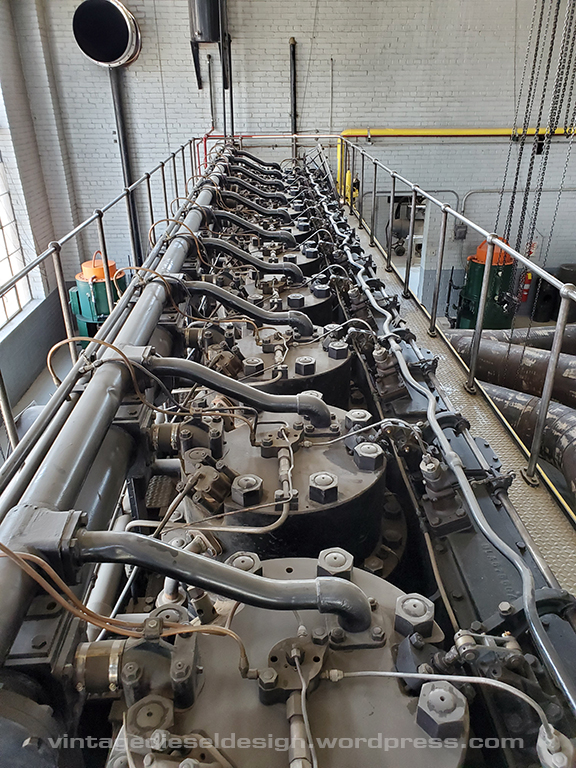
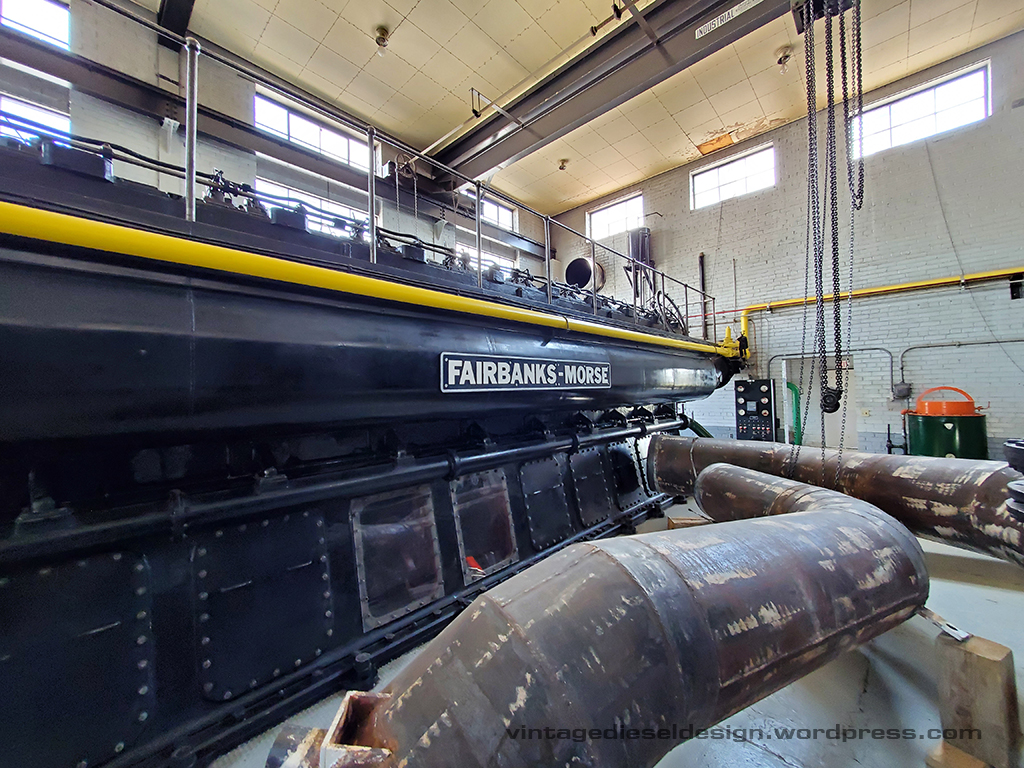
Engine #7 at Delta is a 10 cylinder, 3500HP, Dual Fuel engine. The engine is rated for only 277 RPM, and has an 18″ bore and a 27″ stroke.
Click on all of the photos for a larger version.
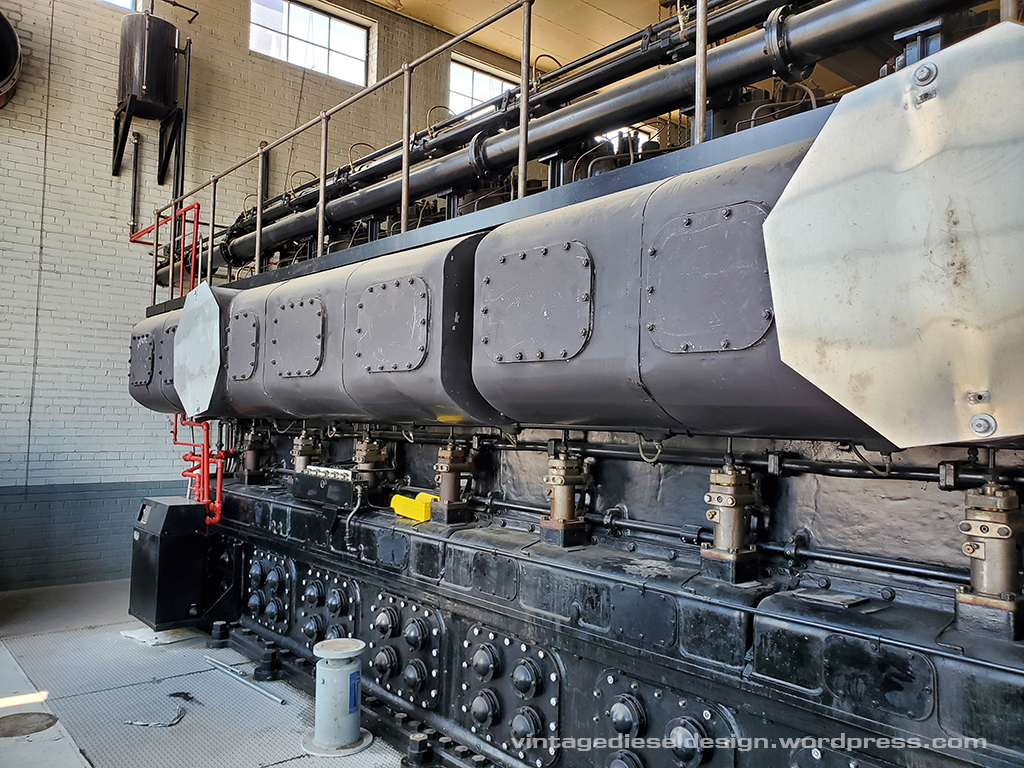
The creative use of old stop signs are covering the exhaust ports, which would turn and enter into the flood in the circular covers.
One of the fuel injection pumps. A camshaft in the box underneath drives these, with a copper line out of the top leading to the fuel injection nozzle in the head.
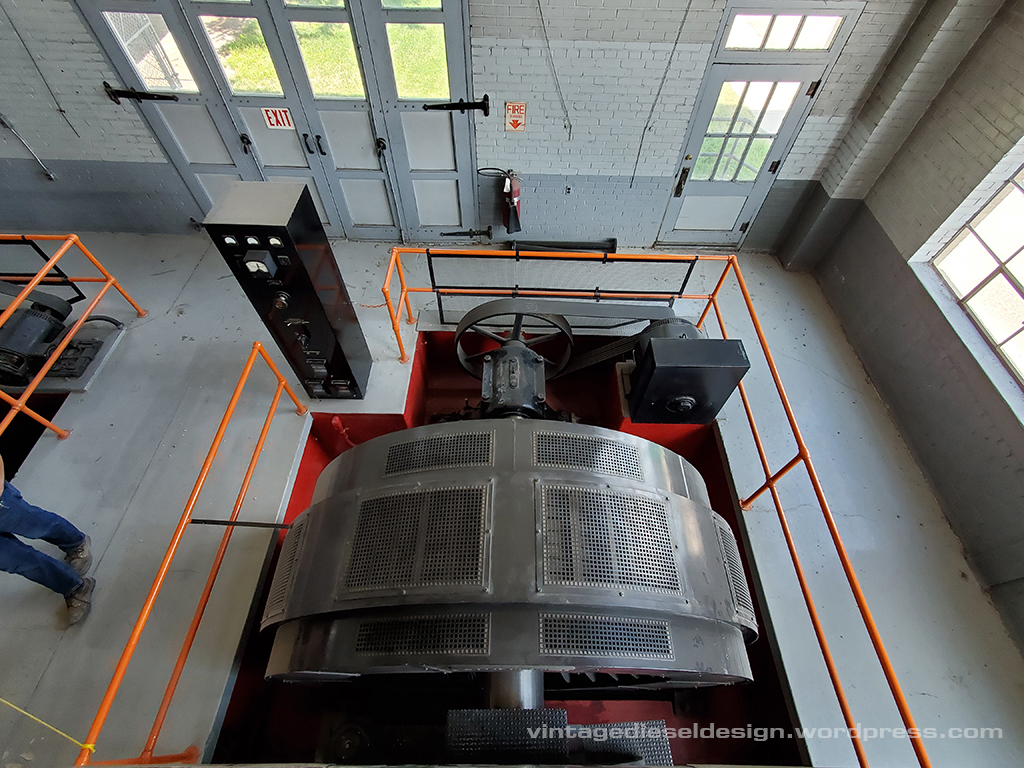
The engine drive a Fairbanks-Morse 2130kW, 2400V AC Alternator. The excitation generator is belt driven off off the end.
Looking down at the top of the cylinder head. The large pipe leading into the top of the head is the incoming Natural Gas supply. Going clockwise, is the gas admission valve driven from the upper camshaft, the air start check valve, with the air supply under it, jacket water exit into the upper water header, above that is the cylinder relief valve. In the center is the fuel injection nozzle. According to the builders plate, this engine is a 31A18 – FM documentation calls the Dual Fuel engine a 31AD18, maybe this engine was converted after installation?
The pipes in the foreground are the previously mentioned exhaust pipes, which were removed for remediation.
Just outside of the engine hall, is a small clean air room. Inside, is the scavenging air blower for the engine (all 10 cylinder engines used an external blower) – a Roots-Connersville 24″ centrifugal blower. The blower, is rated at a whopping 300HP and moves 17,500CFM of air.
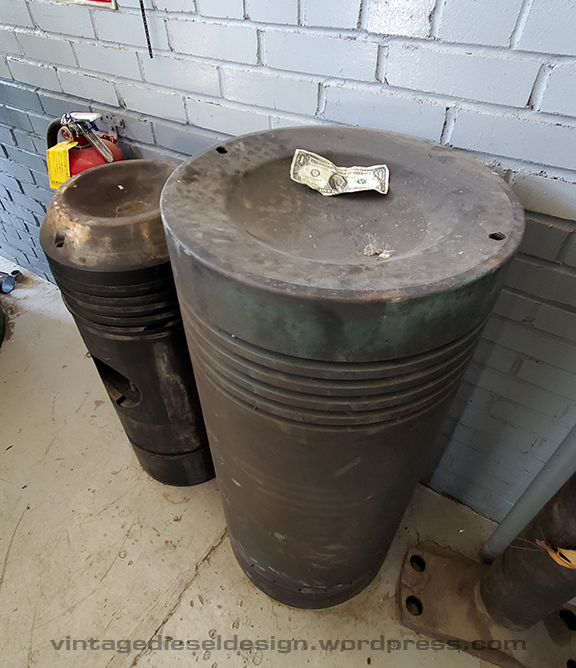
Just how big is an 18″ piston? Here it is with a dollar bill for reference..
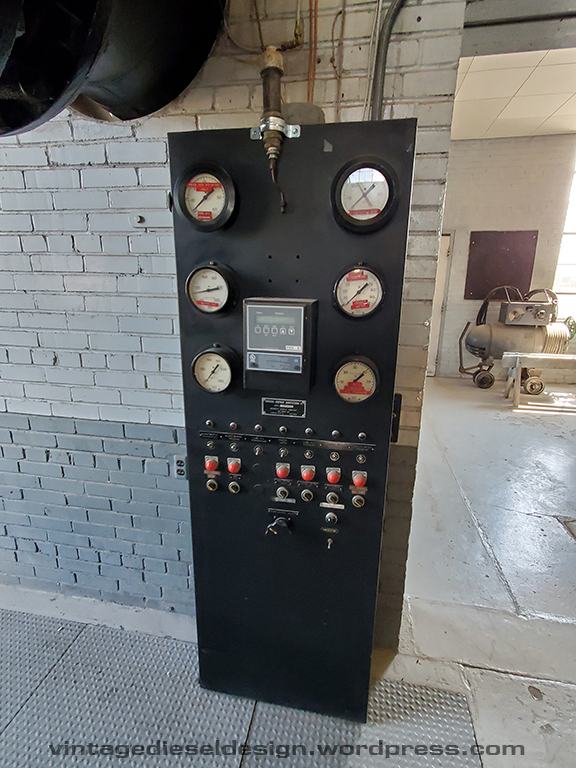
Gauge and alarm panel – Just not as cool as those 1930’s era ones on the 32E engines..
The photos here simply do not do this engine justice, and just how BIG it is!
Lubrication chart for the engine. I would LOVE to add one of these to my collection. Anyone got one they want to sell?
This concludes our tour of the Delta Municipal Light & Power Plant. Thanks again to the guys for the fantastic tour! I can only hope that this plant can be saved, or at least some of the engines. I would love to see the 31A18 saved, but realize that would be one hell of a feat, due to the shear size. That little 4 cylinder 33 would be a neat museum piece as well.. I may make another post down the road with some other random photos in the plant I took.
Next week starts a new series – Historic Boat Profiles, with our first featured boat being the tug M. Moran, Moran Towing’s first twin screw tug.



















 Vintage Diesel Design