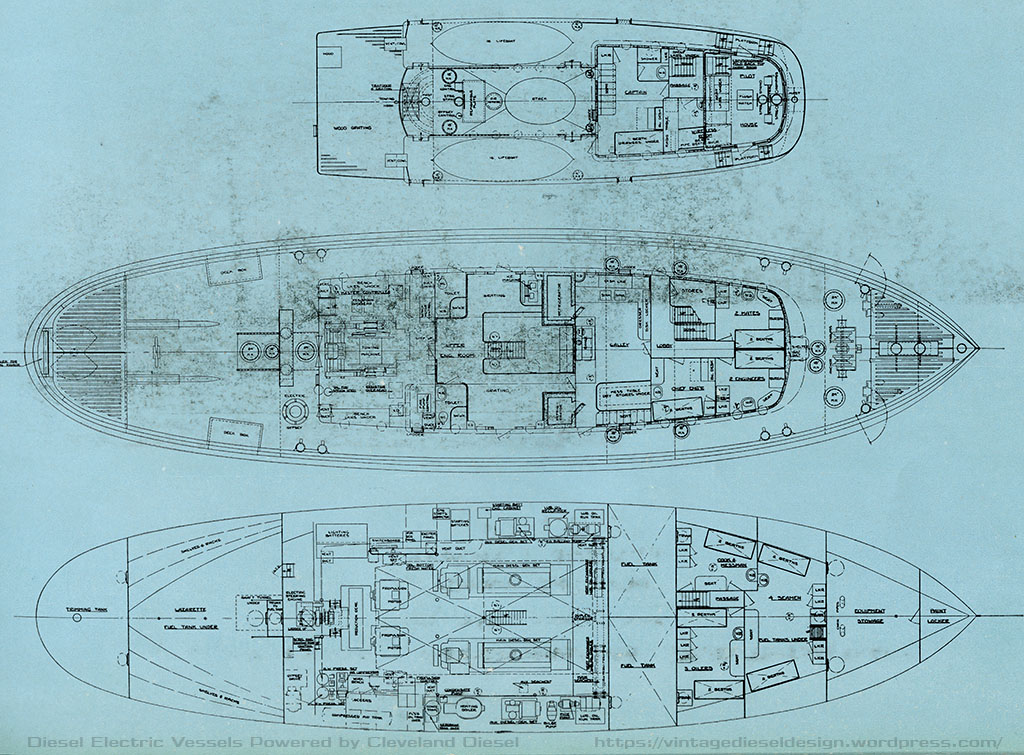
In 1940, Moran Towing would order a 121’ tug, designed by Tams Inc., Naval Architects. The tug would be a decent sized ocean tug for its day (very small by today’s standards), named the “Edmond J. Moran”, after the nephew of Moran Towing’s then president Eugene F. Moran.
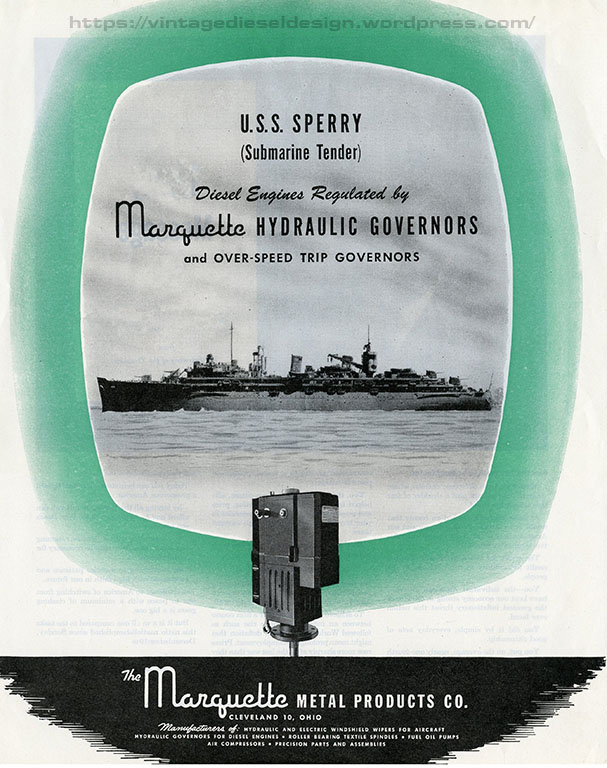
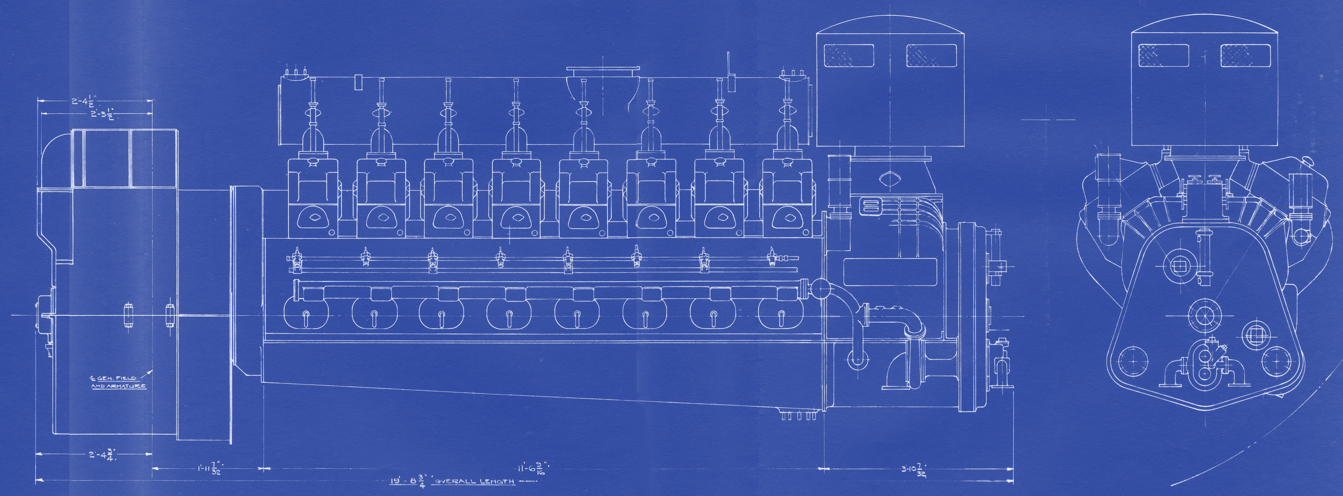
The “Edmond J. Moran” was built by Pennsylvania Shipyards, in Beaumont, Texas, with hull number 231 and was delivered in late 1940 to Moran. The tug was powered by engines supplied by Cleveland Diesel, who worked very closely with Tams Inc. The Diesel Electric tug had the first pair of production Cleveland 12-278 engines (NOT 278A engines), rated at 950HP/750RPM. Each engine drove a generator, which in turn powered a pair of electric motors that fed into a double input Farrell -Birmingham reduction gear, with a single output.

Edmond J. Moran took over Moran Towing as president in 1941, but it was short lived. With the onset of WWII, Edmond re-enlisted, and Eugene would return as interim president. During the war, Edmond would become a lieutenant commander in the Navy reserve. Later on, Edmond would wind up assembling a fleet of tugs that would help lead the charge in the invasion of Normandy. While Edmond J. Moran was doing this, the tug named for him was also doing war work. While the “Edmond J. Moran” was not outright requisitioned for the war, the tug was on a government charter.
During the war, the “Edmond J. Moran” had one hell of a record. She would log over 100,000 miles of service, literally all over the globe. The tug would tow dredges through the Panama Canal, rescue British sailors from a raft at sea, tow various torpedo victims including one specific incident: The tug was towing a British ship to the yard that was torpedoed. There were 91 people onboard. The ship under tow, wound up being attacked again by a German U boat. The tug, under Captain Hugo Kroll, would spend the next several hours playing chicken with the sub, while picking up the survivors. All 91 people were picked up by the tug and would ultimately make it to shore. The tug only had basic armor, a pair of 40mm guns, and the ability to drop a handful of depth charges after 1942.
The war exploits of the tug were well covered in an article published in Popular Science Monthly, September 1944 issue, which was reprinted by Cleveland Diesel in the December 1946 issue of Diesel Times, the company newsletter.

After the war, Edmond J. Moran would return to the states (after being promoted to Rear Admiral for his services at Normandy) and resume running Moran Towing in 1946, and became Chairman in 1964. He would retire in 1984, and ultimately passed away at age 96, in 1993.
The “Edmond J. Moran”, after returning from her war service, would join the Moran fleet and work as one of their main ocean tugs alongside a handful of former Army LT tugs for some years. The Edmond would live out her final days for Moran in Portland Maine, docking ships, now with a lowered stack and wheelhouse.
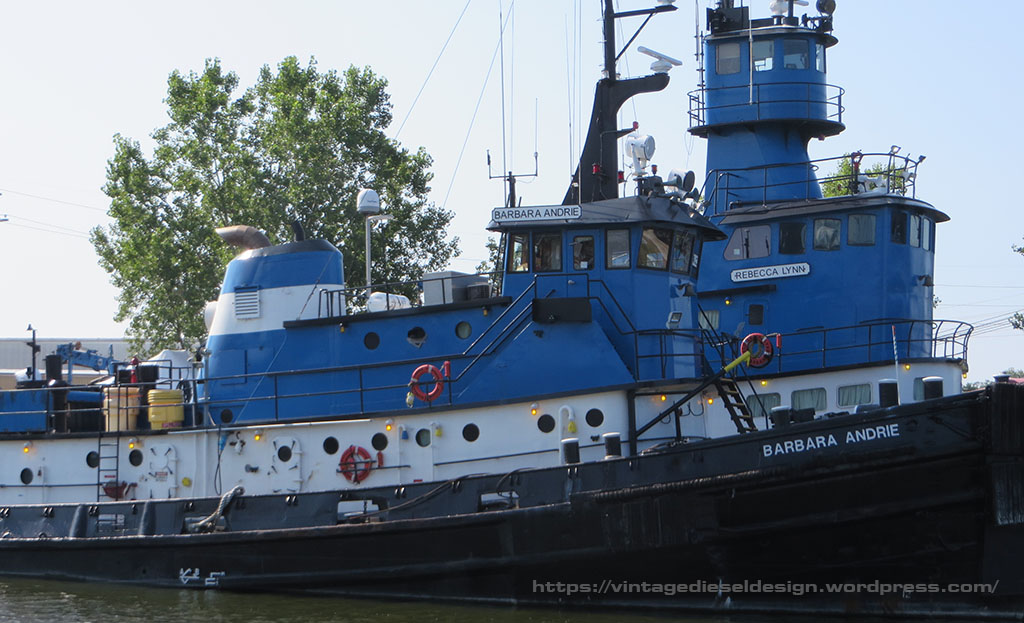
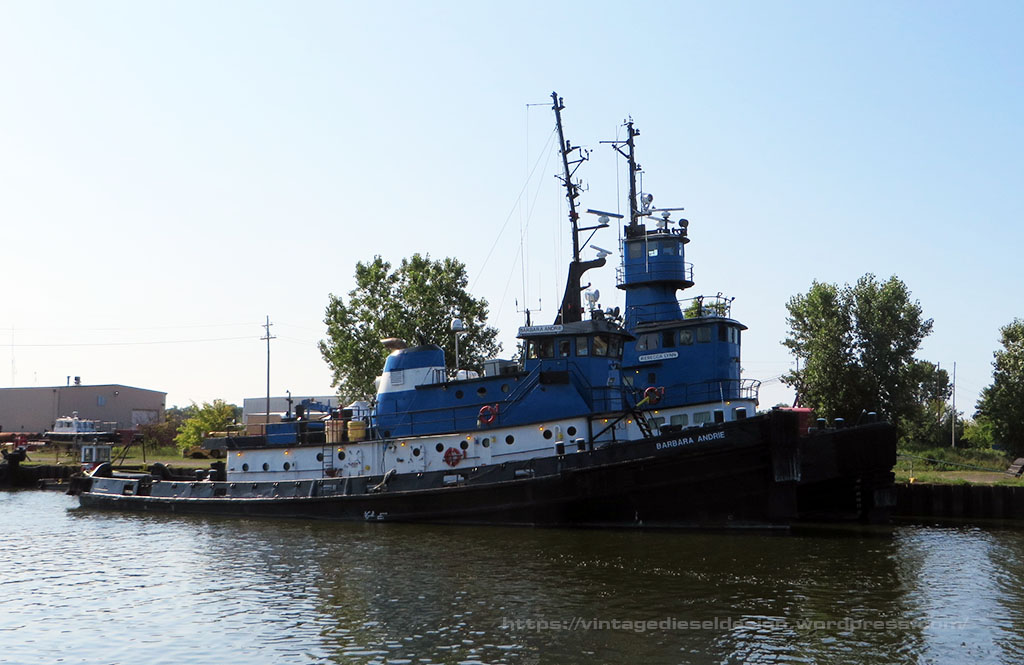
In 1976, Beltema Dock & Dredge bought the tug from Moran and bought her up to the Great Lakes. Before entering service, they had renowned Naval Architect Joe Hack and his firm Marine Design Inc., redesign and update the tug. Included was an all new wheelhouse and captains cabin, as well as a repower with a streamlined stack. Out came the Clevelands and electric drive, and a new EMD 16-567C and clutch package went in. The tug was then renamed the “Barbara Andrie”. Beltema would become Canonie Transportation in 1981, and ultimately Andrie, Inc. in 1988. The tugs main work has been moving an asphalt barge throughout the Great Lakes.

In 2015 the “Barbara Andrie” was removed from doing barge work, and semi-retired. The tug currently lives in Andrie’s yard in Muskegon, and does winter ice breaking work and the occasional assist job or ship tow.
Moran Towing Newsletter “Towline” documenting Edmond J. Moran
Great Lakes Tug & Workboats page on the “Barbara Andrie”
1/2023 update – All things must come to an end, the Barbara was recently towed to Chicago to be scrapped.